HR Guide to Conversational AI — How HR Chatbot Solve Remote work Challenges
It is the month of February when employees are usually looking out for new opportunities. Your HR chatbot receives several questions about benefits, pay raises, bonuses, perks, etc.
Data gathered from the HR bot will tell you that your employees feel under-rewarded and are looking for ‘better’ opportunities. That’s your cue to get things sorted with your employees.
Do you want to create custom metrics to track critical KPIs for your business?
Want to understand what your employees think about the latest changes in your remote working policies?
Do you want to know what your employees feel about the changes in the work timings?
All of the above and more can be handled by HR chatbots. They are an incredible addition to your arsenal of automation tools.
No Code — Free Conversational AI Chatbot Get Started
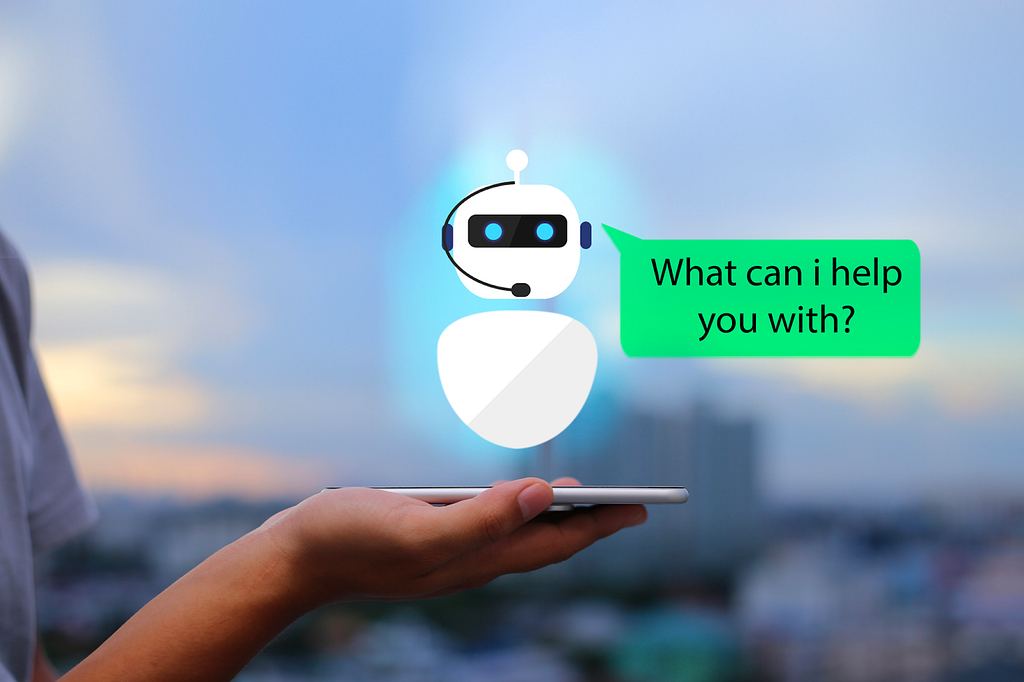
What is an HR chatbot?
HR chatbots are specially trained to reprise the role of HR staff in your organization. They change the way how HR departments function across verticals and geographies. HR management is not only about hiring, interviewing, and payroll management. There is much more to it. HR teams today are strategic business partners, enablers of brands, catalysts in change management, and so on.
Organizations today have turned extensively to AI and automation tools to carry out various HR-related tasks. HR chatbots can automate repetitive tasks and HR-employee interactions.
If your employees working remotely want to understand the leave policy, they don’t have to email HR asking for details or search the length and breadth of the employee portal for answers. They can go directly to the HR chatbot, choose the section for the HR chatbot and get the answers. It will take anywhere from seconds to a few minutes.
By 2024, 75–90% of all queries are projected to be handled by bots. Even though HR chatbots used to deal only with information sharing earlier, they have extended their functionalities and indulge in complex tasks too.
Challenges faced by the HR department:
HR professionals have a lot of ‘grunt work’ such as filling out forms, responding to emails, approving applications, etc. There are many repetitive tasks in payroll management, maintaining employee records, updating policies, and answering emails and calls. They take considerable time and prevent them from doing their core tasks.
Unfortunately, the struggle of manual tasks lowers their productivity and causes burnout. They would instead focus on important tasks such as employee experience, learning, and development, employee retention, employee relations, etc. than perform paper-pusher tasks.
According to the State of Chatbots Report, the #1 use case for chatbots is “getting a quick answer in an emergency,” and the #2 use case is “resolving a complaint or a question.” To sum up, chatbots solve some of the most significant issues that plague HR teams.
How are chatbots used in HR?
According to Gartner, 70% of employees will interact with conversational platforms daily. HR teams get to engage with each employee via HR chatbots. They can communicate with the employees regularly and help them deal with multiple things. These HR chatbots help employees access documents, policies, guidelines, notifications, and forms and track their attendance, leaves, and so on.
Did you know that employees spend more than 3 hours a day on tasks that can be easily automated? That’s exactly why HR chatbots can save the day for HR teams- by taking repeatable tasks off the shoulders of the human resources department.
How can HR chatbots solve remote work challenges?
HR teams are inundated with challenges, day in and day out. When things go well, everyone takes them for granted, but if there are hiccups anywhere, it can affect the organization as a whole. HR teams are one of the most vital cogs in an enterprise. Apart from handling routine and mundane tasks, they are also responsible for bigger issues like employee engagement, employee satisfaction, and increasing retention rate.
1. Improves the onboarding experience:
For any employee, the first day can be tough. There is a lot of uncertainty and unfamiliarity. There are documents to pore through and sign, training manuals to read, and several HR-related tasks to complete. You also need many seniors to make onboarding new employees a smooth affair.
If you have an HR chatbot, the new employees can get most of their queries solved. From perks to job responsibilities, everything will be spelled out clearly. The chatbot can even provide step-by-step onboarding for the employee. Even if the new hire wants access to a particular platform, the HR chatbot can enable it without involving the IT desk.
2. Creates a unified experience:
Organizations that have many employees usually struggle with one thing: inconsistent experience. It so happens because processes and knowledge aren’t shared between teams. Without having to involve multiple departments, HR chatbots can feed the relevant information, and the employees can access it. If you don’t want certain information to be shared across all levels of employees, it also allows you the option to manage access controls.
3. Create automated workflows:
When there are automated workflows, your employees do not get bogged down doing unnecessary tasks. It will result in a sharp productivity increase and high spirits. HR chatbots can help create automated workflows that can provide everything from how to give access to specific tools to getting approvals from other departments. On average, HR chatbots reduce six actions to just one request when an employee searches for something. It enables the employees to focus on what they are hired to accomplish.
4. Provides customized employee support:
For employees that are working remotely, if they do not get their queries answered in a reasonable period, they’ll feel unheard. What if they could get instant answers? HR chatbots provide all the solutions in a single place, and more importantly, it uses previous chat history and other activities to provide personalized employee support. With an HR chatbot, the employee can get personalized employee support that will save time and reduce effort.
5. Offer quick feedback:
Knowing what the employees in your organization think is essential. Chatbots are an incredibly effective tool for candidates and employees who want to share their feedback about the happenings in the organization. Sharing forms, collating the data, and trying to analyze them is a difficult process and takes up a lot of time. Collecting feedback via chatbots helps you collect unbiased feedback within seconds.
HR chatbots can be used to gather information on employee satisfaction. When your immediate boss sends out survey forms, the average employee is more likely to share positive feedback to curry favor with the higher-ups. But an HR chatbot’s anonymity helps them be open about their emotions.
The fact that sentimental analysis and natural language processing can be integrated with HR chatbots raises the expectations from it. The chatbot will be able to detect anger, sadness, frustration, happiness, etc., and special attention can be given to employees who feel negatively about the organization.
6. Reinforcing organizational culture:
Making sure that remote employees are motivated to complete their tasks without hiccups is the holy grail for most organizations. While multiple technologies can uphold employee motivation, nothing compares with a chatbot. HR chatbots can engage with employees frequently and can also personalize interactions to share specific information with a particular employee.
7. 24*7 access:
If you are working in a big enterprise, the chances are that the teams are spread across the world in different time zones. Employees who want certain information immediately will find that they have to wait for at least 24 hours to get back responses. In some instances, they might need immediate redressals, and unfortunately, that is not possible, especially since everyone is working remotely.
With these HR chatbots, instantaneous responses can be given to most queries without any delays or errors. Common queries, such as insurance policies, processes, standard policies, etc., can be handled directly by the HR chatbots. If there are complex queries that the HR chatbot doesn’t have an answer to, it can automatically transfer them to a live agent.
When there are a lot of changes happening in the organization, in terms of organization or strategy, HR chatbots help with change management. Changes can lead to confusion for the average employee, and their worries must be quelled before it boils over. The accessibility that HR chatbots offer is pivotal, especially for staff working in faraway locations. The chatbots give them a chance to be heard.
8. Employee Engagement:
Keeping your employees engaged with the organization, even when they are working from the office every day, is a difficult ask. Imagine if most of them are working remotely in different geographies. Newly joined employees have even more significant troubles to wade through as they are in completely uncharted territories.
HR chatbots can act as an effective self-service portal. AI-powered and NLP-driven HR chatbots can have conversations with employees, understand their sentiments, and offer relevant solutions. HR chatbots can engage with employees at any scale. It will also help the leadership to understand the sentiments of the employees.
Conversational AI HR Chatbot Metrics:
When introducing HR chatbots to your organization, remember that you need to keep evaluating their effectiveness. To do so, you need to have metrics in place to evaluate the chatbot’s performance. Let us look at a few HR chatbot metrics.
- Accuracy rate: How often does the chatbot give accurate information? Anything above 80% is considered good.
- The number of users: How many employees interacted with the chatbot?
- Daily usage: How many employees interact with the chatbot on a daily basis?
- The number of engaged users: Engaged users are those who repeatedly converse with the conversational AI HR chatbot.
- Goal Completion Rate (GCR): Do the employees get sufficient answers to all their questions?
- Transfer to Human Agent: How much percentage of the chatbot requests are transferred to human agents? If it is high, then the chatbot needs more training. There are also instances where the employee prefers interacting with a human agent if it is a complex query at hand.
- Length of the conversation: This is a dicey metric. Why? Because you want the HR chatbot to take as much time as necessary to solve the customer’s problem but not so much that they quit the conversation. The organization needs to find the sweet spot when it comes to timing.
Are you ready to transform your organization with our HR chatbots?
As we have mentioned earlier in the article, HR chatbots are not only to share information but also a vital cog in several circumstances. HR chatbots help the organization get a holistic view of what the employees search for often, the issues that plague them, how they react to a particular policy change, and so on. The analytics gathered from the HR chatbot can be used to make business decisions.
If you are looking to empower your HR team with an intelligent automation platform, try out Workativ’s Conversational AI HR Chatbot. Our HR chatbot solutions are customized according to your specific HR needs. Workativ’s offerings are not standard for everyone, as we understand that each organization has its own unique issues and pressing HR problems. We take all of this into account when developing your HR chatbot.
Disclaimer: This blog was originally published here.
HR Guide to Conversational AI — How HR Chatbot Solve Remote work Challenges was originally published in Chatbots Life on Medium, where people are continuing the conversation by highlighting and responding to this story.