I can say for sure that many of us have already noticed the increase of Amazon Echo users worldwide. This means more people will use Alexa Skills, which means more users for those who create Alexa Skills.
But, creating successful Alexa Skills is not that easy. You may have the best idea for a Skill, but it won’t reach enough users or probably none if not executed correctly.
What to consider when you want to learn to create Alexa Skills?
There are a few things to consider when creating an Alexa Skill. Starting from the type of Skill you will build, to its design. In between, you will have to take care of the customer journey, its conversational capabilities, and the quality of the content provided to the user.
So, the next time you ask yourself how to create an Alexa Skill, these are the main checkpoint you will need to go through. This is where Ipervox can help you with an entire course dedicated to the process of creating a successful Alexa Skill, along with use cases and best practices.
What’s in it for you with Ipervox
The voice world is filled with apps from individuals & companies that can make your life easier.
They do so by letting you communicate in a way that’s more natural and efficient. Voice technology has changed the way we connect — and it’s only going to get better.
In our increasingly voice-driven space, it is of the utmost importance that you are included in the growing voice market. And we have no doubt you already know that. However, you should consider that voice apps are being used around the world to improve every service we already use — and even offer new ones — through voice commands.
What Ipervox offers in its courses is the possibility to start learning more about how voice applications work, how to create one, and their potential.
Here are the phases you can go through:
Learning the basics of Alexa Skills
With Ipervox, the first step in your learning process to create Alexa Skills is the free training called “Play with Ipervox”. It is constructed in such a way, it will allow you to learn the internals of how a voice application works. To make things easier to understand the course is focused only on Alexa Skills.
This first course is separated into 9 different chapters, explaining different steps to follow during the Skill development, which is focused on:
How to navigate the Ipervox Dashboard during the development process.
How to create a new Alexa Skill, how to name it, and the type of Skill you can create.
The variety of content you can add to your voice app and how to channel it.
How to test your Skill, send it for approval by Amazon, publish it and later on analyze its performance.
Of course, everything mentioned above you can complete using our platform. Here you don’t need to have coding knowledge since it has been simplified to make the development process available for everyone. However, if you want to do so, you will have the option available.
Taking the first steps towards successful Alexa Skills
With this course, called Voice Tech Starter, you will go deeper into the voice development space.
You will learn how to create and implement a Voice Application in your business using the right tools for your industry and sector. You will know the features an application should have, how to engage with users, and set up your product for success in a competitive market.
This, along with the needed materials & tools to put into test your newly acquired capabilities.
Mastering the process of creating Alexa Skills
If you want to build your own voice applications and get ahead of the competition, then this course is for you. It’s packed with with more than 60 lessons in which we cover everything from planning to testing. We have included all the relevant videos so that you can learn how to plan, build, and promote a successful voice application. It’s also really well-designed with a great course layout that makes it easy to navigate and follow along.
Here you will learn about how to:
Find the best voice application needed for a specific brand or business.
Find the right kind of content the voice app will contain.
Create a Voice Project from scratch.
Create the customer journey throughout the voice app.
Create a unique yet helpful experience for every user.
How to create voice apps for marketing or monetization.
How to use a voice app for lead generation.
Voice search is becoming a growing trend. It has taken off because it’s convenient and the best way to navigate through web pages. Voice-based search is useful for older audiences as well as younger generations.
To become discoverable by voice-based searches, web content should be optimized to sound like what people say when they ask a question. This means using keywords that match the user’s actual query and making the search results sound similar to the way people speak.
Well, do not worry since this course covers it also, with topics like:
Understanding how voice search works.
Successfully optimize content for voice search.
Now it’s your turn
Voice is a new technology that has been integrated into almost every device in our lives, from computers and televisions to phones and cars. Thanks to the proliferation of smart devices, voice commands have become a critical part of our everyday lives. Voice is not only used in our homes and offices but it can also be used on our phones, cars, and even appliances as well.
This is where having a deep knowledge of this industry comes in handy, especially for companies that are looking to create a voice strategy for their products. You can also create a new career path with a focus on voice application development.
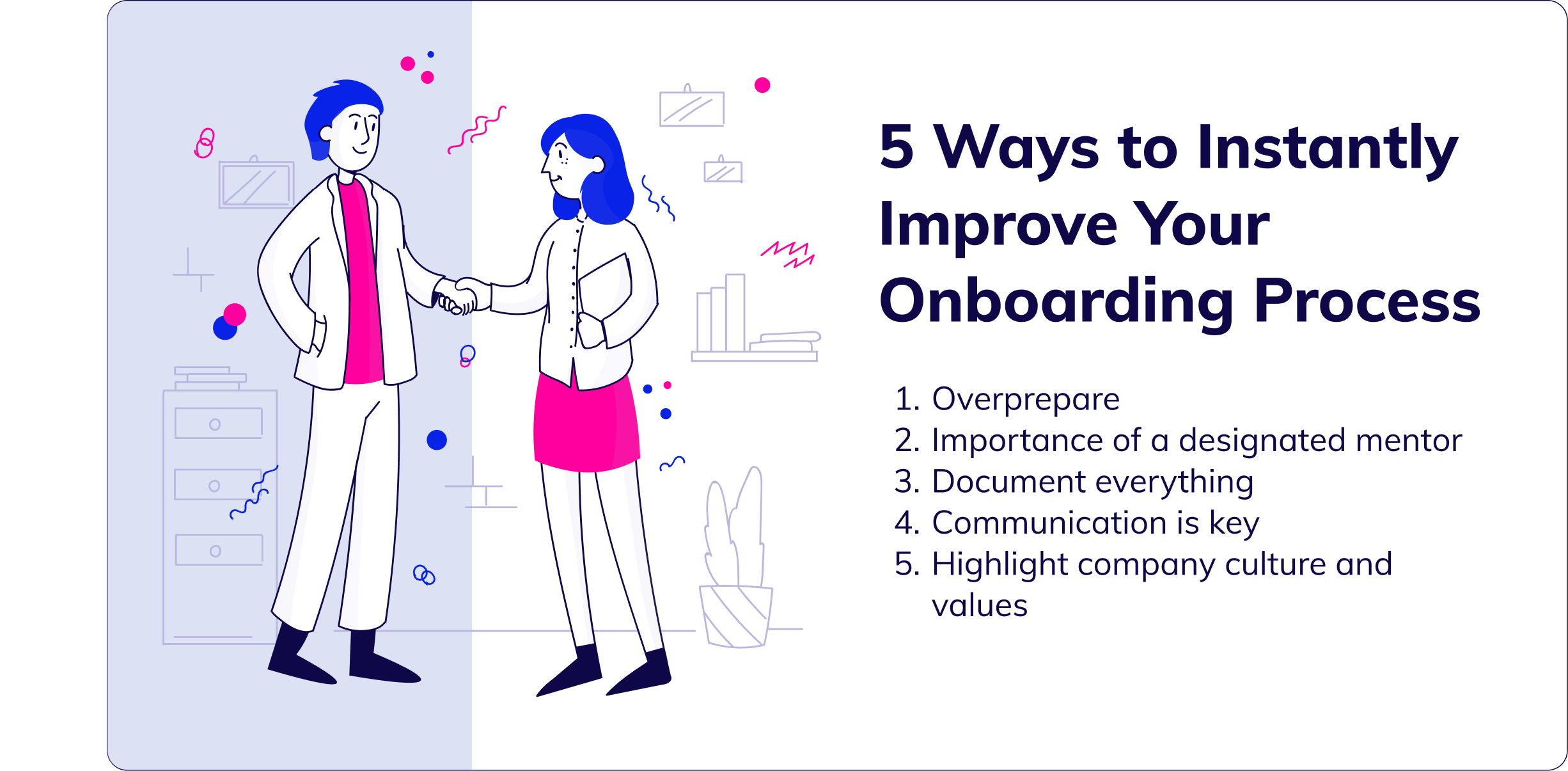
In our previous article, we talked about what virtual onboarding is, how it works, and why it’s important. We even shared a teaser on how you can instantly improve your virtual onboarding process.
If you’ve been waiting patiently for those tips, today’s your day.
Digital-first marketing is a growing trend, even if you think you’re miles ahead of your competition. What you might be missing is conversational AI.
The conversation is the defining element of a digital-first customer experience, and a major shift in the way businesses communicate with customers. Artificial intelligence has led to an evolution of customer service that’s more human than ever before, and customers are beginning to expect much more from their interactions with businesses.
Conversational marketing allows companies to interact with their customers and prospects in the most personal way. Conversations between brands and their customers online facilitate the building of relationships and trust. This technology is proven to generate a happier environment for both the customer and the company.
This will help you convert more and faster, which means happier customers and a happier company.
What is Conversational AI & Conversational Marketing
We’ve become accustomed to automatic responses and a conversational interface, which has increased the expectation for businesses to be able to act quickly. Conversational AI has made it possible for businesses to respond in real-time with a customized experience, resulting in an increase in customer satisfaction.
You’ve probably interacted with a conversational AI these past days.
What is Conversational AI?
Conversational AI is a form of artificial intelligence that uses conversations to help an end-user complete a task. They can be used to engage customers in many types of services such as support, marketing, enter a funnel, and even sales.
As the world moves toward conversational marketing, brands will only become more human. Artificial intelligence, instead of removing the human feeling, has the power to make brands more human, and help engage with customers on a more personal level.
A common use for AI to create different types of conversational marketing experiences is through voice assistants such as Amazon Alexa.
Also, we need to consider that voice assistants like Alexa and Google Home are now built into the homes of millions of users. This means that real-time conversational marketing will let brands participate in direct and uninterrupted conversations at scale.
What is Conversational AI in Marketing?
Conversational marketing is an automated way to engage with customers. It allows internal communication between the business and its customer base in a form of enjoyable, one-on-one communication that directly targets your audience. This makes it more relevant, engaging, and valuable to them than traditional forms of direct mail, messaging, or advertising.
It is utterly important to consider that, in brand-user conversations, giving them a human touch will cause a big difference. And this is where conversational AI in marketing needs to be heading. Human-to-human interaction is always appreciated more than chatbots or other means from customers.
However, technology is making great advancements in NLU (Natural Language Understanding) and NLP (Natural Language Processing). It means that computers have started to become even more capable of understanding what is spoken or written to them. Therefore, more capable of providing an acceptable answer, if not a pleasing one.
How conversational AI works for marketing purposes
Conversational AI is a great tool for marketers to use to gather insights such as key data points, purchasing patterns, consumer habits, and preferences.
AI can be programmed to learn what questions are being asked during conversations and how those questions are answered. It can store that information in the cloud to facilitate the creation of a more personalized customer experience. Later, this will offer you better tools to guide upsell conversations.
Brands can use this technology to be better prepared when it comes time to engage customers and solve problems.
Increasing user engagement
When companies enable their customers to start conversations with their brands, they increase user satisfaction and the chances of being followed up with. Visitors won’t have to fill out lengthy forms. Instead, they’ll be able to have a conversation instantly.
The data and insights you get from the conversations are invaluable, especially the feedback collected from them. For most businesses, it means higher conversion rates, more opportunities to engage with customers, and a more personalized experience.
A Deeper Understanding of Your Customer’s Desires & Needs
Conversational platforms can be used to ask questions to get to the right people and give them the right information at the right time. They are great for tasks that require simple searches and questions. Also, they can help manage complex customer service interactions and increase the efficiency of your customer support. Thereby saving you time and money.
You can also customize your conversational AI to fit your needs by asking more targeted questions based on the information the customer provides.
All this will help you reach a better understanding of what your customers need at that moment, what they wish for, or maybe how to persuade them better.
Personalized & Adaptable Customer Journey
Personalization is essential for conversational marketing. When crafting robust responses to questions, brands should ensure that they take into account previous interactions with their user base.
Personalization helps brands deliver an exceptional service to their customers, increasing loyalty and nourishing a more personal relationship with consumers.
The same goes for the customer journey. By tailoring their services and offerings to fit the needs of their customers, businesses can be able to satisfy them in the best possible way and build a strong relationship.
Offering personalized and adaptable interactions can become a key component in building customer loyalty and increase brand awareness.
Conversational AI applications you might consider & why
What’s the best way to reach customers these days? It’s the conversation that matters the most. Companies need to focus on customer experience and listen to what their customers are saying.
Technology is changing rapidly and businesses need to be ahead of the curve. Conversational marketing is a major trend in the industry and companies that fail to embrace this approach will most likely fall behind.
With digital interaction gaining more power as audiences and customers grow more fond of them, conversational AI is something every brand should aim at.
Let’s look at why brands need to leverage conversational marketing to get ahead.
Attracting new customers by offering amazing experiences
It is important to consider how messages are conveyed around the brand and how they resonate with customers. Consumers are always seeking a positive brand experience. They want to be treated as customers and not as consumers.
If your brand communicates a more traditional or conservative image, consumers may be put off by this. Therefore, communication strategies are incredibly important.
In this case, Conversational AI can become a powerful tool that helps marketing campaigns and facilitate purchase decisions. It can help address issues and questions for customers at every stage of the customer lifecycle, from discovery to checkout.
It’s also an important tool for building customer loyalty because it provides a positive experience for customers.
Reaching and, why not, surpassing your competitors.
There is a high, positive impact Conversational AI can have on a brand’s strategy and campaigns. Precisely this is the exact motive why many brands have embraced them and integrated them into their processes.
Considering this, integrating a Conversation AI platform into your team rises as a key tool towards better performing campaigns and funnels.
Top applications of Conversational Ai in Marketing
Chatbots
Web chatbots are an invaluable resource for any marketer. Chatbots can automate your business processes and save you time, but they are also really useful for specific tasks. For example, chatbots can be programmed to answer common questions at any time of the day. They can also learn over time and become more conversational, so they can answer more questions as you add more products or services to your website.
Voicebots
Voice bots are the solution to today’s customer service challenges. They don’t just allow customers to interact with companies in a way that’s faster and more convenient than typing in a query. They also help them connect with a company that provides high-quality customer service. Their added convenience and efficiency are worth strongly considering.
When it comes to customer self-service tools, Voicebots are essentially a type of customer service tool. They eliminate the need for individuals to call or email and interact with a live person. Instead, they can use voice prompts to get personalized information directly to them.
Digital Assistants for Enterprises
Another use case for conversational AI is as an assistant for company employees. You can use it to assist employees with their work, including meetings, reminders, communication, and much more. It can definitively lower the internal costs, thus saving money to a company. It can also increase employee efficiency and productivity.
Voice Assisted Websites
Having a website with an integrated VoiceBot is a revolutionary service that allows websites to connect to their customers and provide them with real-time assistance. With such a tool, websites can provide personalized directions and information about a product/service quickly and easily. It can also transfer people over to customer support or sales teams. The service is like a virtual assistant that recognizes the voice of each visitor and knows everything about the company’s product/service, guiding them from one point to another.
Voice Applications
The digital generation, those who grew up with technology at their fingers, understand that there is a huge advantage to being connected to the information you need when you need it.
But, as much as the younger generations seek convenience, they also value quality service. Many want to do business online, but they also demand more than simply placing a purchase order.
Voice applications, in this case, have the right capabilities to cover such demands. They enable users to start conversations with brands and to receive support. A brand can customize a voice application to allow users to enter a funnel, get information about their products/services, and buy them.
Using voice technologies like Amazon Alexa and Google Assistant, you can create a more personal relationship with your audience & customers. Later, this will translate to more sales and an increase in customer loyalty.
Why? Because of the convenience, easiness, and unique perspective voice interactions have.
The key benefits of Conversational Marketing
Users seem to like having a support system available 24/7, be it a chat-bot or a voice-bot.
According to Drift, 64% of internet users consider the use of chat-bots as a fast solution for most of the questions. Other studies show that, in the next couple of years, Conversational AI platforms will handle more than 80% of customer care cases.
However, there are more convenient platforms available
The use of voice assistants like Amazon Alexa and Google Assistant has gained a lot of interest lately.
Not only for its Smart Home features or as an in-car assistant but also as a way to connect users with their favorite brands. Also, you need to consider how easy it is to create Alexa Skills or Google Actions.
By doing so and launching yourself in the voice space, you will have the chance to better attract, sell, and assist customers.
The fact that there are more than 65 million Amazon Echo users worldwide, gives a hint of this platform’s reach and the potential it holds.
Also, diving deeper into data, a study from Voicebot, shows that 18% of Millennials use Amazon Alexa for product search or voice-assisted shopping.
Key benefits
A conversation with a brand can be more engaging than traditional marketing initiatives. With conversational marketing, businesses can personalize interactions with consumers through digital experiences that are tailored to their individual needs and preferences.
The result is a unique experience that extends throughout the customer journey as brands leverage various digital channels to engage with customers on a variety of devices such as digital advertisements, websites, mobile & voice apps, and more.
Some of the main benefits Conversation Ai can bring to marketing include what follows:
Customer satisfaction & deeper relationships
Conversational marketing is a powerful way to target and engage customers at each digital touchpoint. By providing conversations, businesses can increase user satisfaction, build trust and confidence, and foster loyalty.
Trust takes time to develop, but it can be built by listening and addressing problems in real-time. By listening to consumer needs, your organization can begin to build a stronger customer relationship.
Better insights, data & analytics
Conversational AI is able to scan through large volumes of data to understand your customer’s behavior and use this information to predict future needs.
Conversational AI can analyze and learn from your customers, automating processes and capturing important data points. These insights can help drive sales and improve customer service. They can also provide an endless stream of questions that you can answer so you can upsell or provide additional information in the future.
Outreach & Engagement
AI-powered conversational tools can engage leads in real-time. They help you get to the heart of a customer’s needs and build a direct relationship with them. Recent researches show that lapses between first contact and marketing or sales contact affect whether leads are converted into customers. Later, you can use such platforms to reach leads with information, offers, and relevant marketing messages. This can help you convert more leads and increase revenue.
Higher conversion and quality leads
If you use conversational AI correctly, your customers will be more likely to convert than if you rely on traditional live chat. You can set up Conversational AI to respond to customer questions right before they’ve made a decision. Conversational AI can improve conversion rates by as much as 40%.
Since AI technology is constantly improving, it works very well to analyze big data blocks and find out the ideal customers for your business. Chatbots are an excellent way to collect huge data sets while also searching through them to help you identify potential leads.
In this article, I am going to delve into some metrics used to measure how well classifiers do their job. So after reading this article you will know how to evaluate classification models and know the difference between the different metrics that we can encounter evaluating classifier models.
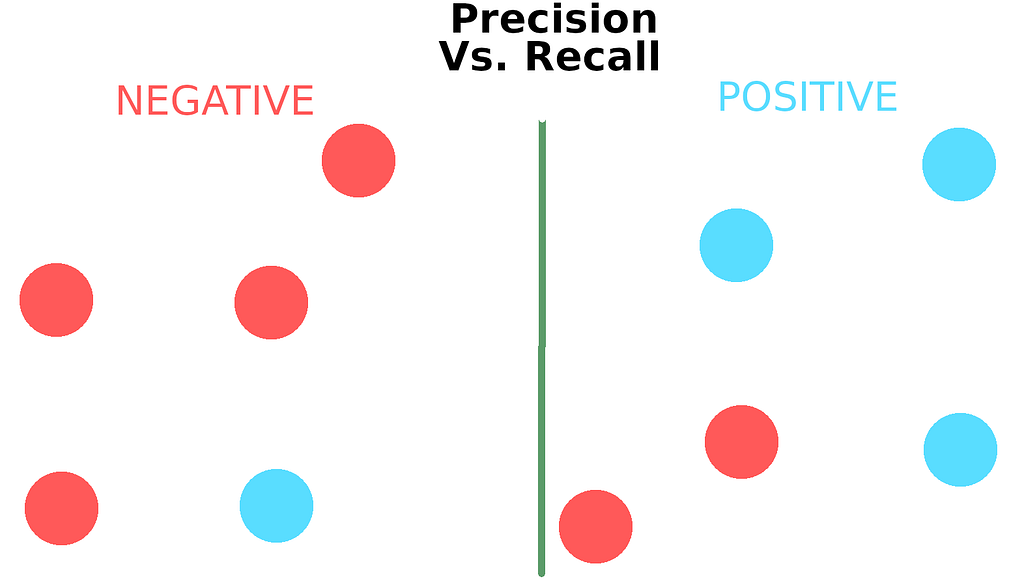
In the image shown above, we can see a classification problem. How can we know if this model is good or bad? Let’s delve into this in the following paragraphs.
The most common metric.
The goal of each classifier is to assign one label to one input according to their characteristics, in other words, classifiers can distinguish the instances belonging to different categories. But how can we measure how well a classifier performs this task?
The first idea that comes to our minds is probably to calculate the ratio between the correct predictions and the total of instances. This is, in fact, the definition of accuracy, formally it is:
With the equation shown above, we can calculate how well our model performance is, right? One issue using this method is that in many scenarios we have unbalanced datasets, this is, the number of instances belonging to each class is different. Let’s see a simple example and let’s suppose we have a classifier that identifies malignant tumors and benign tumors. Our imaginary dataset conforms in the following way:
10 malignant tumors.
90 benign tumors.
If we have a classification model that for every input assigns the label “benign tumor” we can calculate the accuracy as:
We have 90 % of accuracy, a really good model, right? in this particular problem, the model says that all malignant tumors are benign, and this can be a big problem. But how can we know if our model is good or bad?
Positive and Negative labels.
The scenario presented before is a clear example of an unbalanced classification problem when we have a dataset with a different number of instances per class. Due to this, we need to use other kinds of metrics to evaluate the model performance. But first, we need to establish over what label we want to know if its classification is good or bad. To do this, in binary classification problems we used the terms positive and negative labels.
According to this definition, for binary classification problems, we can encounter the following outputs.
True Positive (TP): A true positive output is an instance from the positive class that was classified as positive. This is one correct prediction.
True Negative (TN): A true negative output is an instance from the negative class that was classified as negative. This is one correct prediction.
False Positive (FP): A false positive output is an instance from the Negative class that was classified as Positive.
False Negative (FN): A false negative output is an instance from the Positive class that was classified as Negative.
Defining Accuracy, Precision and Recall in terms of TP, TN, FP and FN.
Now let’s express accuracy in terms of both Positive and Negative predictions. The equation is:
Precision
Let’s say we want to know how many mistakes the model makes predicting positive labels, in this kind of scenario we can measure the ratio between the number of correct predictions and the total of positive predictions. Thus we have the definition of Precision.
So, models with high precision will make few mistakes predicting the positive label, that is, the number of False Positive outputs tend to be close to zero. In the extreme scenario where the model is 100 % precise we can trust that all the instances predicted as positive are, in fact, the positive class. Let’s see a simple example of a model with high precision.
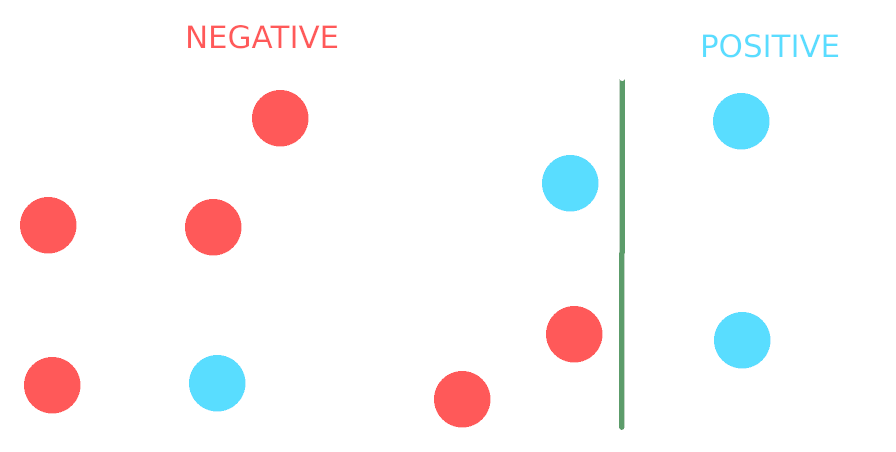
In the image shown above, we can see the most simple model that we can build, a simple line, this line separates the Positive instances (blue) from the Negative instances (red). Let’s calculate the precision for this simple model.
True Positive: we have 2 positive instances classified as positive instances, then TP =2
True Negative: We have 6 negative instances classified as negative instances, then TN = 6.
False Positive: There is any negative instance classified as positive, so in this case FP = 0
False Negative: We can see on the left side 2 positive instances classified as negative, so the FN = 2
The model shown above can classify positive instances correctly, however, we can encounter some positive instances classified as negative, thus the model cannot identify all the positive instances. We might have a high number of False Negatives.
Recall
But what happens with False Negative Outputs? Is one model with high precision able to find all the positive instances? probably not. So, how can we measure the ability to find all the positive instances?. If we want to measure how well the model identifies positive instances, we have to take into account all the positive instances in the model output, this implies considering both the True Positive and False Negative instances. Thus, we can define the Recall metric as:
If the model can find all the positive instances, the False Negative outputs tend to be close to 0, then a model with high recall can identify all the instances belonging to the positive class.
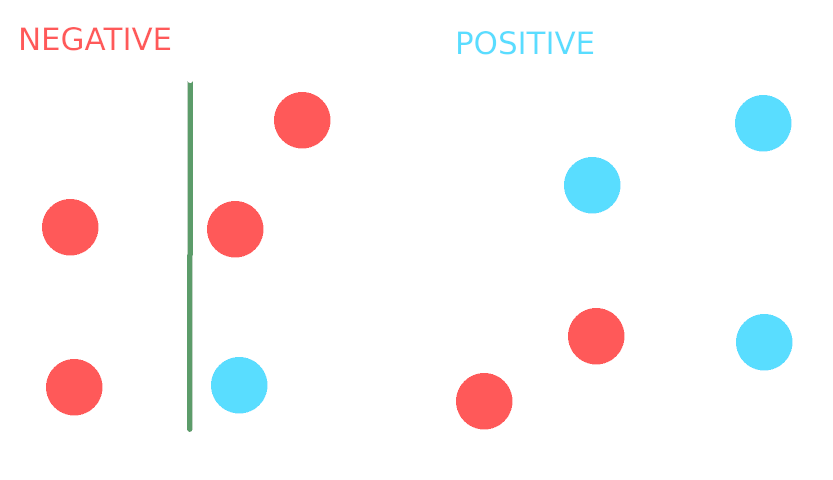
Now in the image, we have a model with high recall, let’s calculate both recall and precision for this example.
True Positive: In this case we have 4 instances from the positive class classified as positive instances, then TP = 4
True Negative: We have 2 instances from the negative class classified as negative instances, then TN = 2
False Positive: On the right side of the line we can find 4 instances from the negative class classified as positive, then FP = 4
False Negative: On the other hand, the left side does not have any instance from the positive class, then FN = 0
The model can find all the positive instances, nonetheless, it makes some mistakes classifying negative instances as positive ones.
Which is better, presenting the F-score?
So, how can we know if our model is doing the task good or bad? how can we compare this model with others?, To answer these questions we can use a metric that combines both recall and precision. This metric is called F1-Score and is defined as:
The F1-Score penalizes both low precision and recall, thus in models with high F1-score we’ll have high precision and high recall, however this is not frequent.
We can use the last equation when both recall and precision are equally important, but if we need to give more importance to one specific metric we can use the following equation, which is the general F-Score definition.
This more general equation uses a positive real factor beta that is chosen such that recall is considered beta times as important as precision. The two most common values for beta are 2, which weighs recall higher than precision, and 0.5, which weighs recall lower than precision.
It’s all about context.
For every problem that we are dealing with, we need to pay special attention to the problem context. In this way, we might prefer a model with high precision rather than one with high recall or vice versa. For example, let’s consider again our tumor classifier, in this scenario we want to identify all the possible malignant tumors (high recall) even if this implies making some mistakes and classifying some benign tumors as malignant tumors.
Let’s consider this situation, if one patient has a benign tumor and by error is detected as a malignant tumor, it is probably that this patient will obtain more medical attention, and eventually this error will be detected. Conversely, if we classify a malignant tumor as a benign tumor, this patient maybe won’t have more medical attention until the consequences of this mistake be evident and perhaps too late to fix this error.
Conclusions
In this post, I talked about the importance of considering other metrics to evaluate models, beyond the simple definition of accuracy, and also we learned that we have to pay attention to the context. The problem can give us clues to decide what metric can be better according to the specific problem that we are trying to solve.
However, in real life we can find scenarios where we need to consider more than two classes, these problems are called multi-class classification, and in these cases, we don’t have Positive or Negative instances, nonetheless, we can make some assumptions to deal with this kind of problems.
I am passionate about data science and like to explain how these concepts can be used to solve problems in a simple way. If you have any questions or just want to connect, you can find me on Linkedin or email me at manuelgilsitio@gmail.com
Is customer success just a buzzword? A jazzed-up, rebranded version of customer service?
Or could it be something more?
What is customer success?
Customer success is all about making sure that your customers get exactly what they want while using your offerings. It revolves around the philosophy that you succeed only when your customers succeed. An effective customer success strategy could be the difference between having a high churn rate and having customers that turn into brand evangelists.
Essentially, customer success is exactly what it sounds like — setting your customers up for success.
How is customer success different from customer support?
Customer service tends to be reactive in nature. It’s all about resolving the customer issues after they arise. You solve their problems and hope to make them happy.
Customer success takes another approach. It’s proactive. Customer success teams try to solve problems before they even arise. Customer success involves constantly looking at feedback and data, hunting for ways to streamline the experience and help customers achieve their goals.
Customer service representatives help with customers only when they have questions or issues, but customer success teams work together with customers proactively to help them get the most out of their purchase.
While customer service tends to be transactional, customer success is all about building and nurturing relationships. Customer success involves understanding your customers’ organizational goals and KPIs, ensuring that your offerings help them exceed their goals.
Why is customer success important for your business?
Your business cannot succeed in the long run if you do not focus on helping your customers succeed. That would leave you with abysmal retention rates, forcing you to spend a ridiculous amount of time, money, and energy trying to acquire new customers, most of which would not stick around with your business for too long.
Customer success management is very effective at helping you retain customers for the long haul, but it even helps you earn new customers. When you make efforts to help them achieve their goals, your customers will turn into brand evangelists.
Research shows that only 1 in 26 customers who face issues tend to reach out and complain. And 91% of customers who don’t complain, simply leave. That means, without a proactive customer success strategy, without looking to resolve issues before they arise, you stand to lose most of your unhappy customers. Now you’re back to spending absurd amounts of money hunting for new customers when you could have got recurring revenues from your existing ones by focusing on customer success.
How does customer success influence your customer experience?
Customer success helps your business look at the customer experience and understand it better. It involves using data and feedback to find potential gaps in the customer experience and also looks for ways to improve the experience and create new peaks.
Essentially, customer success is a part of the overall customer experience, but it plays an important role in understanding the improving the overall customer experience.
How does customer success drive revenue for your business?
The most obvious way in which customer success helps drive revenue is by renewals. When you set your customers up for success and guide them, solving problems before they arise and help them get the most out of your offerings, they’re likely to stick around. If you have a subscription-based business, this means they won’t need to spend too much time figuring out whether renewing their subscription is worth the investment.
But that’s not the only way it helps you increase your revenue.
Your acquisition activities got them in the door, your customer success activities got them to stay, and they played a key role in getting your customers to trust you. This means that it paved the way for you to cross-sell and upsell them.
They already know that you will be there for them when they need help with these new solutions as well.
3 powerful customer success tips
1. Do not limit customer success to silos
Your customer success team should never alienate itself from other departments in your organization. They should work with all these departments, collaborating with the common goal of eliminating customer problems and helping them get the most out of your solution.
If yours is a SaaS company, this could involve working with the tech team to solve problems before they arise.
2. Create a well-defined customer success program
You can’t just wing it. You need to have a clearly thought-out plan and allocate dedicated resources if you can afford it.
But, you need to remember that planning it is not a one-and-done activity. As your business evolves, so should your customer success program.
3. Provide your customers with all the information they need
You know that most customers who face issues don’t reach out. A lot of them will try to solve the issue on their own — give them the resources they need to do that.
Create a knowledge base and maintain a blog that deals with common issues that might arise.
To make it even easier, create a chatbot that helps them find the information they need without having to navigate through your website. Or eliminate the effort involved in opening your website by deploying the bot on WhatsApp, Messenger, Telegram, and other channels which they spend time using.
TLDR
It is impossible for your business to succeed if you do not focus on helping your customers succeed. Set up a dedicated them that focuses on helping them make the most of your offering and eliminates issues before your customers even face them.
Deploy an intelligent bot that can answer all their questions in their language of choice, without making them wait at all.
Setting your customers up for success is a surefire way to increase customer loyalty and cause a massive spike in your customer lifetime value.
I’ve made an automated flow via a landing page. Posted the landing page link to a instagram direct message as a test. Doesn’t redirect or bring me to the Facebook messenger chat. Anyone know how to make this work?
hello there! I’ ve already asked in the NLP subreddit, and a user suggested me to ask here.
So, here i am. I’ ve developed a little PC App, where user has to enter several inputs in several windows. The App read a dataset (excel file), processes the user inputs and shows the results. Finally, the dataset is updated.
Now, the App kinda works as intended (already implemented in a GUI via PySimpleGUI. Next task i’m trying to develop, is the vocal command. So, if the input is to “enter number”, i’m trying to achieve an automatic way to extract those informations from the vocal and automatically entering these inputs into the right input box (there are input boxes, listboxes, checkboxes etc…).
I’ve already worked a little bit to the starting point: from vocal to text. Has to be refined, but it kinda works.
I’m a bit more focused on the text part. I’m currently using SpaCy library. What i’m trying to understand are a couple of thing:
1)What is the best approach? Working with Regex for a fixed extraction of values, or trying to go deeper with a machine learning model or neural network? Pros and cos?
2)I’m figuring the pipeline like this: i need a NLP apporach in order to extract the right values, so, point is, trying to design a script who extracts the right informations. If, for example, the user is speaking, saying things don’t related to the inputs to enter, the model needs to understand that those words are not inputs. Then, the model has to extract the right informations. Final part is to create a dictionary in order to use the values stored, as inputs (that normally, would have been entered by user via keyboard).
3)So, my problem is actually a 4 parts problem: extracting text from voice; understand the sentences spoken by user; understanding correlations in order to extract only the “right” informations; create an object to store those informations in order to use them as input (problem for another day).
Now, could you help me figuring out the best approach and how to achieve it? It’s a bit overwheling, i must admit
Chatbots are a common feature of modern websites. Many B2B businesses now understand the value that a chatbot offers, so there is a surge in demand for such solutions, especially in the marketing sector. According to industry research, about 15% of buyers have used a chatbot to communicate with a business in the past year.
However, when it comes to ABM or the Account-Based Marketing approach, the extent of engagement differs from what you strategize during other promotional campaigns. It is a customized approach to marketing that allows organizations to target specific profiles. These accounts can be top-level executives or prospects that may end up offering business to the organization.
The level of personalization is high, and it enables businesses to improve product awareness among leads, which can drive their purchasing decisions. In addition, the creative content created during the ABM campaigns is in sync with the targeted profiles’ specific pain points.
However, engaging targeted profiles through content is an excellent approach; you will have to predict the mindset of an account. This is where a chatbot can help you with AI-based algorithms that gather data from targeted profiles through questionnaires, analyze them, and offer insights into their specific issues.
So, let’s see how you can build a chatbot for your ABM campaigns? But before we do that let’s understand what a chatbot is?
What is a Chatbot?
A chatbot is a computer program or software that mimics human conversations through speech recognition and Natural Language Programming(NLP). It stimulates the interaction between humans and machines in a way that is close to what people do in routine life.
The conversational capabilities of chatbots can be leveraged by marketers to generate leads and conversions. In addition, you can use chatbots to engage your target audience for better data capture and use AI-based algorithms for content suggestions.
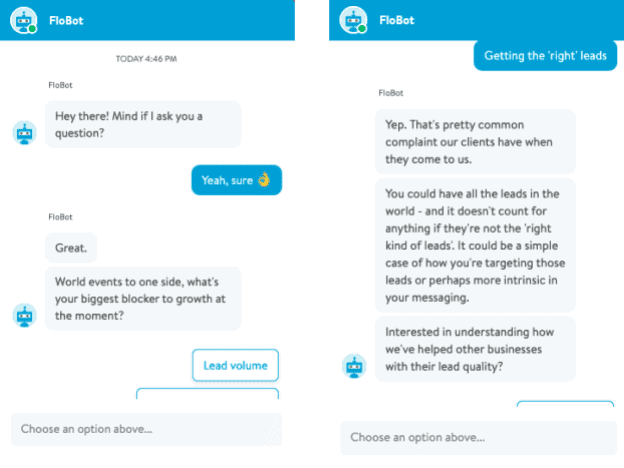
There are several use cases for chatbots for marketing automation also. For example, you can use chatbot forms that ask for specific information through data inputs. It merges the gamification approach with the human-to-human-like interactions to enable higher engagements. Such chatbot forms can help identify critical targets for your ABM campaigns and then suggest relative content to these profiles based on that data.
However, one of the essential elements of any chatbot is its architecture that allows organizations to execute their marketing logic for target profiles. So, let’s discover what the architecture of a chatbot for your ABM campaigns is.
The first step towards building a chatbot is to decide on what is the use case? The pre-defined usability will ensure that you make a custom logic that aligns with your ABM goals.
Usability
It is like deciding exactly what you will expect from the chatbot to deliver? For example, if you are pitching the chatbot upfront for an ABM profile to have a conversation, problems similar to this can start by asking questions about pain points.
Once the profile specifies the pain point like scaling issues or database management problems, the chatbot will suggest the content of the projects conducted by your firm to solve similar issues for your clients. Irrespective of what are the pain points, chatbots can ask for data about the size of the profile’s organization.
These two factors– team’s size, and relevancy of pain points can qualify a lead to either go to a human for closing the deal or offer relevant content for the top of the funnel profiles. Apart from this, there are several possibilities for the usage of chatbots.
However, whether to build a chatbot or not for your ABM campaigns also depends on the budget and scale of the promotional program. But, before we discuss these aspects, let’s discover more about the chatbot architecture.
Architecture
A chatbot’s architecture establishes its functionality and response to the user’s request for data. Behind the scenes processes for chatbots deal with data access and executing the business logic during the interaction with an ABM profile.
Receiving the user request for data needs a medium like websites, applications, or even software. Once the data request is placed through voice, text, or other inputs, the Natural Language Understanding(NLU) model analyzes it to identify the user’s intent. Once the algorithm embedded in the chatbot architecture gains a high confidence score on the user’s intent, it has to decide the further course of interaction.
For example, an ABM profile related to a startup wants to know about different ways in which they can gain funding for their business? Once the chatbot identifies the intent of the profile, it retrieves the information from the database related to similar use cases within the organization, which can help promote your services and offer value to the profile.
At the same time, If the chatbot offers data from an external source, it uses API calls to create a data exchange between heterogeneous systems. The entire conversation is managed through dialogue management systems that save every data. Now that we have a basic idea of how a chatbot architecture functions, let’s look at some types of chatbots that you can leverage for your campaigns.
Types of Chatbots
There are several different types of chatbots that you can build for your ABM campaigns. Some of them are based on pure interactions while others form inputs and questionnaires. Understanding the types and functions of these chatbots is essential for their usability and the extent of budget you will need to build them.
#1. Contextual Type– It is a type of chatbot that leverages Artificial Intelligence and Machine Learning. Algorithms try to identify the user’s intent and analyze them. They also save unique searches for each user for references.
#2. Keyword Type– It uses the concept of keyword search along with advanced NLP to power search-based interactions. The chatbot offers content suggestions based on the keywords that your ABM profiles may perform on different platforms.
#3. Voice-based– These are chatbots that receive user requests as voice inputs through smart devices, apps, or websites. Identify the exact intent through speech recognition and then leverage empirical patterns to offer data.
#4. Service-based– It uses the service request as input and asks several questions related to it. The type of service interacts with the user for data exchange and execution of specific tasks.
Conclusion
Chatbots can be the future of ABM marketing if executed well. However, you will need to work on several aspects of building such an intelligent solution like identifying profiles, offering the data on profiles to bot algorithms, and even creating an architecture that offers rich interactions. Thus, while it may seem easy on paper, you will need reliable solutions to counter the challenges of building a chatbot for marketing campaigns.
Writing every single line of code grounds up in every project you work on is reductio ad absurdum. Often times we need to look at and understand code written by our team members or some employees who no longer work on that project.
So if you are new to a project, here is what you could do before you ask one of your colleagues for assistance and try to increase your skills to debug existing code.
Read Product documentation
This is mostly the best place to start because this is where your customers start. For you to know a feature from end to end, this should give references or content that your customers actually go through to set up or use the feature. If you don’t find this, just imagine how a customer who doesn’t even have access to the code would be using the feature!
Try the feature in a lower environment
After you read up the documentation and you have some context, always try the feature yourself in a test account in one of the lower environments (something that’s your Continuous Integration environment). This will always give you the ability to be comfortable with some network calls and also with some interactions happening from the client which can help you kick start looking at code.
Go through the Technical Documentation
Every project ought to have some technical design document or some form of documentation for the feature that you are about to venture into. Going through the technical documentation will give you an idea of why a particular feature is developed in a particular way. It might answer some questions like `What were the design drivers, considerations, challenges?`, `What’s still to be done for the project?
Endpoint Identification
This section is only applicable if your application has HTTP (RESTful, GraphQL, SOAP, or such) Endpoints, Asynchronous Messaging Endpoint, Scheduler-based Endpoint, etc exposed that the client invokes to achieve a business functionality. Once you have the endpoint, you have to look for the endpoint pattern in the codebase of your application gateway (if you have a multi-tiered application) or the codebase of the microservices.
This may seem weird to a few people, but unit test cases, if well written, can easily act as a guide to understand the business functionality and the output of a specific core business functionality for a given set of inputs
Specifically, as you write code and if you are debugging your application, always try to ensure that you have the call stack and its arguments written at each level. This gives an idea of which stack was invoked with what values to arguments. And NEVER PRESUME ANYTHING. One should make no presumptions around the code and start debugging every stack and every code within a method.
For example, let’s take a sample code where you are trying to start a group call with a participant where you first validate if a group call already exists with the participant, if not fetch the participant detail and then start group call.
public GroupCallDTO startGroupCall(GroupCallRequest request) {
final GroupCall groupCall = getExistingGroupRequest(request.getRequestId());
if (groupCall != null && groupCall.alreadyExists()) {
log.error(“Group call already exists for request: {}”, request.getRequestId());
throw new GroupCallExistsException(“Group call already exists”);
}
final Optional<CallParticipant> optionalParticipant =
log.error(“Participant: {} does not exist”, request.getParticipantId);
throw new ParticipantException(“Participant does not exist”);
}
final CallParticipant participant = optionalParticipant.get();
final GroupCall groupCall = groupCallService.startGroupCall(participant);
return convertToDTO(groupCall);
}
The code is a core logic and you would’ve gone through a lot of cases to understand each step. But what truly helps is something like
Dividing the code into logical chunks
So always try to break the methods into smaller logical chunks based on the business workflow. Always understanding code based on business use-case mapping is easier.
Chatbots take care of a significant portion of customers’ needs in today’s ultra-fast and competitive real estate market. When implemented on the website for any given company, these AI bots can answer prospect questions quickly and efficiently, help them search for properties to buy or rent with ease, and solve anything that may happen while browsing through listings. The best chatbots offer significant advantages to both the business owner and potential prospects: it reduces operational time spent by employees, which allows more deals to be closed faster.
Chatbots have been growing in popularity and for a good reason. With the rise of social media, people want information now, and they want it in an easy-to-digest form. Chatbots offer this type of information with the click of a button. In the process, these bots learn about the individual, their likes and dislikes, and when it is most convenient for them to be contacted. As a result, companies can provide a more personalized service that will increase customer satisfaction and interactivity on behalf of the company.
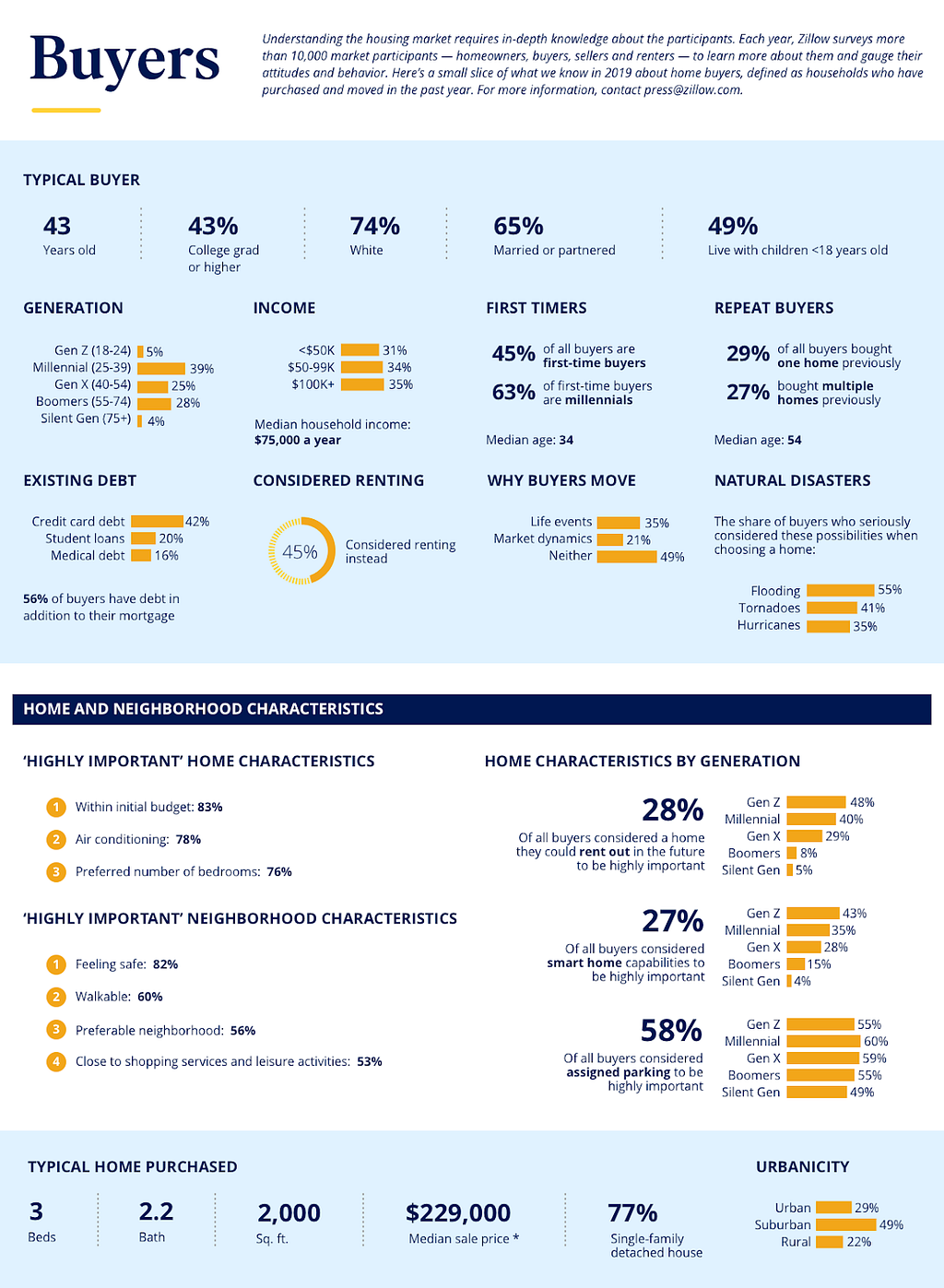
Millennials and Gen Z buyers now make up 44% of all American property buyers as of 2019.
With a younger demographic of homebuyers moving in, it has become even more important to implement these tech tools to make the buying process seamless and hassle-free. Millennials and Gen Z buyers now make up 44% of all American property buyers as of 2019. Today’s customer wants more convenience with fewer hassles when purchasing homes or commercial properties — and this is where new technologies come into play!
But before we dive too deep into how you can implement chatbots into your real estate business, let’s explore first what a chatbot is and a bit of the history of artificial intelligence.
What is a Chatbot, and where did they come from?
A Chatbot is a computer program that conducts conversations via auditory or textual methods. Chatbots are designed to simulate human conversation using artificial intelligence and conditional logic.
Believe it or not, the history of AI dates back from ancient Greece when philosophers like Aristotle discussed animism — how everything has some soul (or life force), whether animate or not — and believed that natural causes move the world within themselves rather than outside influences. This idea was later expanded by Islamic scholars who added “intelligence” to the definition and further discussed how this intelligence is present in everything around us.
Since antiquity, the concept of AI has existed, but it wasn’t until 1956 when a group of scientists at Dartmouth College led by John McCarthy coined the term artificial intelligence. Since then, advancements in text-based interactions with these types of bots have made them more usable for businesses today — genuine estate companies looking to make their customer service experience faster and easier!
As we know them today, the first chatbot was called Eliza, and its purpose was to psychotherapeutic treatment for people with psychological problems by pretending it had the same emotions as humans do. In today’s times, these bots have evolved into answering questions about products in an e-commerce setting or providing general customer service online through text messages/phone calls.
Although chatbots and the idea of artificial intelligence have been around for a very long time, it was not until the past five years or so that more businesses could put them to use. Companies like ManyChat, Chatfuel, and Mobile Monkey make it more attainable for companies to build out their own chat marketing solutions without knowing how to code.
While there is a bit of a learning curve for using these tools, there is so much education to help you accomplish your goals. Or, if you would prefer to have someone build them for you, I can help with that.
So how can chat automation help your real estate business?
Instantaneous responses 24/h a day, every day of the week — no more “call us during office hours” or dealing with hold times while you’re trying to show your house on an open house. This also eliminates human error when working with other people in charge of answering phones and emails for messaging back and forth about customers’ questions!
Less friction: Sometimes, customers are not quite ready to talk to a human. A chatbot can act as an in-between to help customers get the information they need while assisting agents in capturing important contact information and data about their needs.
Here are just some ways chatbots are transforming the real estate industry today:
Qualify Leads:
Chatbots can be used to gather information about leads that clients are providing. This is important because it enables agents to get a better idea of customer needs and preferences outside the context of a single sales process. This helps agents improve the effectiveness of their selling strategy and identify areas where they need to focus attention.
Here’s how it works:
Chatbots are trained to filter out unqualified leads for the sales and marketing teams. At each stage of the lead scoring process, chatbots ask questions that qualify leads or send them through to a human sales or marketing person to continue engaging with them. Any leads not qualified by the end of the questionnaire are then marked as invalid and not passed along.
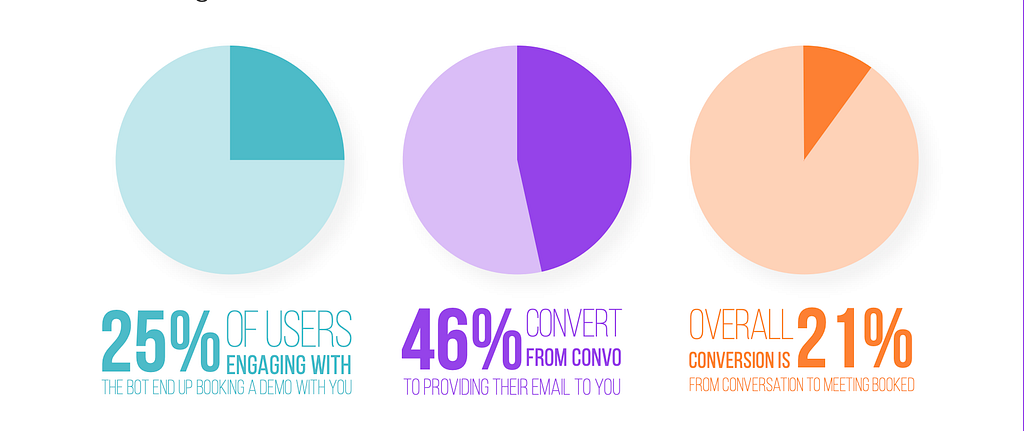
According to a 2016 report by the Boston Consulting Group, companies using chatbot technology have seen a 26% increase in customer satisfaction scores and a 30% decrease in their cost per acquisition.
Companies using chatbot technology have seen a 26% increase in customer satisfaction scores and a 30% decrease in their cost per acquisition.
Automated appointment setting:
Getting prospects on a call or to a pre-listing appointment can be the difference between a new customer and a missed opportunity. Chatbots can help a real estate agent book more calls by having leads book directly inside the chat automation. Most chatbot builders integrate with scheduling services to eliminate friction and make it super easy to book appointments. Calendars are updated automatically, and everyone is kept in the loop.
According to a case study by chatbot platform Chatfuel, one of their clients saw an increase of 567% in appointments by adding a bot to their websites. They went from around 30 appointments a month to 200 appointments a month, all through the power of bots!
Booking more calls and listing appointments means more money in your pocket.
You can be on 24/h a day, every day of the week, with some help from a chatbot! Your customer will never have to wait for you or call back later if they need something because they know that when they contact you — you’ll always be there waiting for them. Plus, leveraging the power of AI to make your website stand out and get that sale you’ve always wanted. According to WebFX, 89% of people shop with a competitor after a poor online user experience, and 38% of people stop engaging with a website if it’s unattractive. A Chatbot helps make the user experience better by providing an automated and easy way to get the information and answers they need in real-time.
According to WebFX, 89% of people shop with a competitor after a poor online user experience
Captured offline leads:
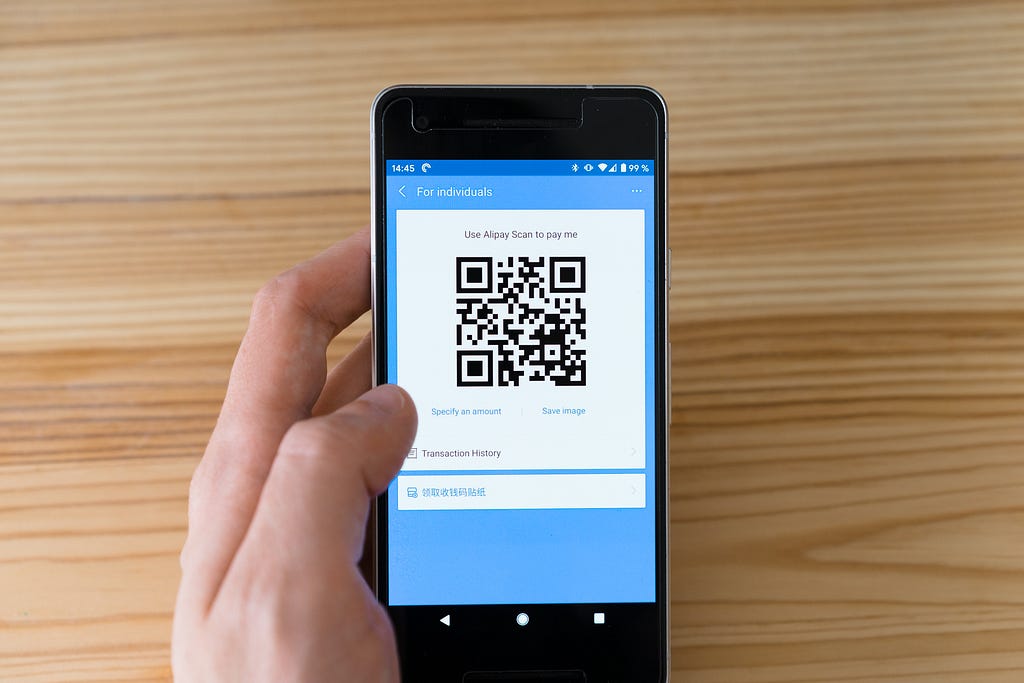
People want convenient experiences everywhere, including buying homes, so using QR codes at live events, trade shows, open houses, etc., becomes crucial. Before this technology existed, people could show up interested but leave without giving any information about themselves (i.e., Name, email address). Nowadays, with QR code scanning and chatbots, you can capture their data in real-time!
QR codes are the most common form of dynamic data collection in mobile apps today. When the user scans a code with their camera, a URL is opened to display content and receive input from the user interactively. Nowadays, all mobile devices can scan a QR code by opening the native camera app and hovering over the code.
With the help of a chatbot, you can even make the experience more personalized by creating an interactive chat experience after they scan. Give valuable information about a home they are viewing, share video tours, and get their contact information, all with the help of a QR code.
The future of chatbots and ai
Chatbots are just one example of how artificial intelligence will continue to transform the world as we know it. The industry is advancing at a rapid pace. Real Estate agents who adopt technology to help their clients and grow their business will see success in an ever-competitive landscape.
Around 90% of the world’s data was only produced in the last two years
If it feels like technology is growing more rapidly by the second, you are not wrong. Although the internet was invented half a century ago, around 90% of the world’s data was only produced in the last two years. In the first half of 2017 alone, we created as much digital data as we did in all of the 20th century.
The exponential rise of both digital data and technology is a phenomenon we are experiencing firsthand, but it is also something that futurists have been predicting for decades. Everything from artificial intelligence to virtual reality to the blockchain is supposed to be on the brink of an explosive new phase of growth — some even say revolutionizing society as we know it. Innovative businesses will jump on and start adopting these fast-evolving technologies now or risk falling behind in the coming years.
Real Estate companies and agents who have started to utilize chatbots in their lead generation and marketing are already far ahead in the race to dominate the market.
Chatbots are a valuable tool for real estate agents and brokers to use to increase their sales. This article has gone over some of the reasons why chatbot technology is worth exploring and how it could be used in your business.
If you’re considering using an automated assistant like this on your website or social media channels, set up a call so I can help walk through all the steps with you and get you on the right path! I’ll save you time by taking care of the installation and setup while also teaching you more about how these bots work. Whether you need assistance making sense of what’s possible now or instead focusing on getting started right away, my team will provide one-on-one guidance every step of the way. www.StellarMediaMarketing.com