Thanks to ongoing advancements in the fields of artificial intelligence and machine learning, computers can perform a growing number of cognitive tasks. As a result, businesses are able to rely on machines for critical functions once thought impossible to automate. In particular, the rise of conversational AI platforms such as chatbots and virtual cognitive agents has given organizations in a wide range of industries the ability to improve customer support and HR activities — and these platforms are only getting smarter.
Interest in conversational AI skyrocketed in 2020, as did corporate investment in machine learning platforms. This was in large part due to the COVID-19 pandemic, which forced companies in nearly every sector to find ways to do more with less. The sudden spike in customer inquiries received by banks, retailers, and airlines, for instance, exposed the limitations of human customer-support teams and the urgent need for automated capabilities. Moreover, the pandemic has altered our expectations as consumers, increasing the demand for digital-first customer experiences.
So where are we now?
A Salesforce survey conducted prior to the pandemic revealed that 62% of consumers were open to businesses incorporating AI into customer interactions. That percentage has likely increased, as have the capabilities of AI platforms. In order for conversational AI to truly become ubiquitous as a customer engagement tool, however, a few obstacles must still be overcome:
1.Detecting emotions. For starters, most platforms are still relatively unsophisticated when it comes to detecting emotions. Human communication depends as much on emotion as it does on language, and a change in tone could completely alter the meaning of spoken or written dialogue. In order to train computers to detect subtle contextual cues, product teams need troves of data containing many different human voices. Finding all that data is no small challenge.
2. Learning new languages. Most of the world’s population doesn’t speak English. Global organizations that hope to use conversational AI to interact with customers outside the United States would need platforms that understand not only different languages, but also various regional dialects and cultural differences. Again, this would require large amounts of multilingual speech and audio data from diverse communities and a wide range of situations (e.g., TED Talks, debates, phone conversations, monologues, etc.), and that data would need to cover a variety of topics.
3. Identifying the right voice. Training AI to detect a single speaker among a multitude of voices is another challenge, one that’s likely familiar to anyone with an in-home smart speaker such as Google Home or Amazon’s Alexa. In a crowded living room, these platforms might respond to commands not intended for them or might be unable to distinguish commands over multiple conversations. This usually creates minor frustration and perhaps some comic relief, but when business transactions involving sensitive customer data are being conducted via voice commands, it’s imperative that the AI doesn’t confuse user accounts.
Despite these obstacles, conversational AI holds immense potential for businesses of all kinds. Shaip is here to help you unlock that potential, and it all starts with data. We can provide product teams with hours of transcribed, annotated audio data in more than 50 languages. Using our proprietary data-acquisition app, we’re able to streamline the distribution of data-collection tasks to global teams of experienced data collectors. The app interface allows data collection and annotation service providers to easily view their assigned collection tasks, review detailed project guidelines including samples, and swiftly submit and upload data for approval by project auditors.
Used in conjunction with the ShaipCloud Platform, our app is just one of many tools that equip us to source, transcribe, and annotate data at virtually any scale needed to train sophisticated algorithms for use in real-world customer interactions. Want to learn what else makes us the leaders in conversational AI? Get in touch, and let’s get your AI talking.
Don’t waste time scrolling through the website, just ask the AI chatbot (source: unplash.com)
It is one of the first of its kind in Central Europe
You don’t have to be a superhero who sacrifices his whole life to save others. Periodic blood plasma donating takes only a few hours a month and it can have the same effect. In addition, Czechs will now receive all the necessary information about donations from a new and unique artificial intelligence voicebot. It is available on the website of sanaplasma donor centers since the beginning of June 2021.
How is the collection of blood plasma? Who do the drugs made from it help, and what conditions must donors meet? These and many other questions regarding blood plasma donation will be answered by a new digital assistant of the company sanaplasma, which operates eleven donor centers in the Czech Republic. It is one of the first solutions of its kind in Central Europe.
Feel free to ask anything related to blood plasma donations (source: unsplash.com)
One of the first Czech AI medical chatbots
The solution in the form of a clever chatbot was developed by the Czech-Slovak startup Born Digital, which focuses on digitizing contact centers, in cooperation with QUANTIMA company. The main task of the solution is to provide all the needed information about the collection of blood plasma to those interested in donating, and thus save time both for them and the healthcare professionals.
“It is one of the first Czech AI digital assistants to connect healthcare facilities and their visitors. Chatbot represents a great step forward in the field, where similar solutions are not implemented much yet,”
The chatbot will be waiting for donors in a visible place on the website. Thanks to modern design and artificial intelligence, communication with it is easy and pleasant.
“It will very quickly offer answers that people would otherwise have to look for on the site. You can communicate with it using preset queries, but also with your messages, which can be much more specific. Thanks to advanced technological solutions, the conversation is natural and very similar to exchanging messages with a human operator,”
described Innovation Lead Manager Born Digital Linette Manuel.
The chatbot will take good care of everyone interested in donating blood plasma (source: unsplash.com)
Chatbot’s duty started in June 2021
Visitors to the sanaplasma website had first met the chatbot at the beginning of June when the pilot phase of the project begins. Since the start of its’ duty, the chatbot already has all the necessary knowledge. He can answer not only all general questions about plasma donating but also questions concerning, for example, the influence of the donor’s health on the possibility of donation.
“In addition to our specialists, healthcare professionals and doctors were also involved in the preparation of the solution, overseeing the right formulation of the answers and participating in the testing themselves. Thanks to this, every information that the chatbot provides is checked by the professionals,”
added Manuel.
The new AI digital assistant not only far surpasses classic chatbots, which often require meaningless repetition of questions and provide only a few preset answers. It also has advantages over human operators.
“It can be easier for many donors to confide their details about their health to artificial intelligence than to write it to another person. The digital assistant will always remain neutral. In addition, data security is crucial to us, so we anonymize all the information obtained,”
said Jan Štěpánek, who manages the sanaplasma centers. He also adds that chatbot needs almost no personal data. Only when it is necessary to connect the caller with a doctor due to a specific question, the chatbot will ask for his name and contact.
Not only AI experts but also doctors played their role in the chatbot development (source: unsplash.com)
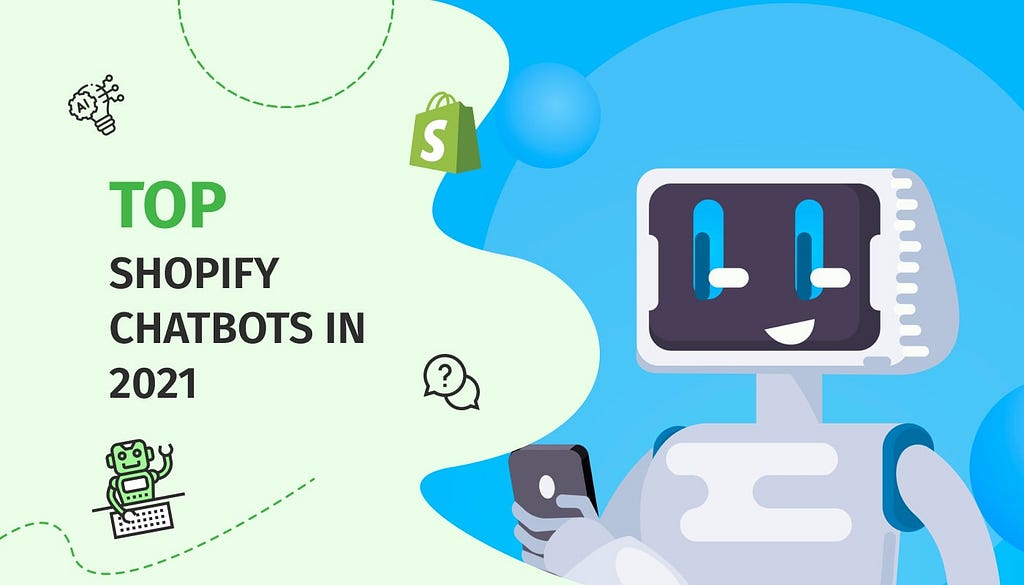
The e-commerce revolution has obliterated the limitations set by 20th-century business. Subsequently, practices such as geographical zone, economic spheres, and verticals. However, It has only been possible with the advent of digital technology. Further, the new and old generations have embraced the digital form of business. On the other hand, it has led to the market for e-commerce firms to rapidly expand. Above all, the most useful tools for assisting big and small players alike are Shopify Chatbots. AI chatbots help merchant sellers feature at top ranks on Shopify. In return, It also helps their websites become more interactive, engaging, and more customer-centric. The website also improves ranking on google as well.
Advantages of using Shopify chatbots
Below are some advantages of using Shopify Chatbots:
Firstly, Chatbots enable customers to place product orders via chat. Such a feature makes the seller profile much more interactive and thus engaging. So, it directly enhances the conversion rate.
Secondly, AI chatbots assist customers in selecting the best products by inquiring about customer preferences. The chatbots showcase the most suitable products that meet the specific needs of the customer without the customer having to manually browse through hundreds of products. So, it saves the customer’s valuable time and makes shopping much easier.
Thirdly, Top AI chatbots render stellar customer support service by automating the answering system for FAQs. So, customer queries are addressed in a jiffy and it leads to a more satisfied and loyal customer base. Hence improves brand visibility.
Want to see a LIVE chatbot in action, watch the video below:
This chatbot is used by one of our clients ML Delicate to engage with their customers who landed on their website.
Top 4 Shopify Chatbots
Hope you are excited to install a chatbot for your Shopify store. So, we have done the hard work already in researching which one is the best available in the market. However, the choice is yours which one to choose. Below is the list of the best and most efficient available chatbots for your Shopify store:
QuickReply.ai is a ready-to-use conversational commerce solution for online stores. Such as Shopify, WooCommerce, Magento, etc. Soon after plugging in, QuickReply syncs information about the store’s products, inventory, coupons, customers, and orders. Firstly, It comes pre-trained with 40+ common e-commerce use-cases such as abandoned carts, order status, refunds, replacements, etc. Secondly, QuickReply can attend to more than 70% of customer queries over multiple channels (Web, Facebook Messenger, WhatsApp, etc) — All Automated. Most importantly, the rest 30% are transferred to one-inbox (for all channels) where human agents also get all the required information about the customer. Hence they can see their orders within the same panel. Nevertheless, They do not have to open multiple tabs to seek information to help the customer. This helps them to reply to their customers quickly and most efficiently.
Features
Order via chat
In chat payment
Re-ordering
Cart recovery through chat and additional channels
CRM integrations
Sales analytics
Automated query answering
Product discovery
Additional channels such as FB messenger and WhatsApp
Gobot offers seamless integration with your Shopify store. It also helps your customers find the perfect products within moments. But all you need to do is populate your bot’s product carousel with all the listed products on your seller account, with a click of a button. Hence boosting your sales.
Features
Product discovery
Easy integration with Shopify store to get products
Revenue tracking
Order status
CRM integrations
Limitations
Does not offer Order via chat or in the chat payment system.
Does not offer Upsell and cross-selling features
No post-purchase feedback
Not Omnichannel
Tidio Live Chat
The live chat app enables merchants to communicate with customers easily. Moreover, Tidio chatbots and Shopify connect seamlessly to help e-commerce merchants to boost their sales.
Features
Send targeted discounts
Greet new and regular customers alike
Recover abandoned carts
Engage visitors of a specific product
Prevent visitors from leaving the store (leaving intent feature)
Generate leads while offline
Notify about promotional offers.
Provide delivery status.
Additional channels in FB messenger.
Limitations
Order via chat and in-chat payment system not available
Lacks sales analytics
More focused on live chat
Lacks CRM integration
Relish.ai
The platform offers personalized turn-key solutions for retailers. It also provides the branded conversational voice-shopping meant for e-commerce retailers. It also serves its customers through popular voice assistants such as Google, and Amazon Alexa.
Features
Automated query answering
Cart recovery
Product discovery
Re-ordering
Voice e-commerce
Limitations
Lacks order via chat
Lacks in chat payment
Basic Analytics
No post-purchase feedback system
Not Omnichannel
Performing a comparative analysis to choose the best one for your radiant. Also, Shopify experiences can be a hassle-free way to handle your works. So, make sure to choose only the bestAI chatbots to build a wide and satisfied customer base. Which in return will give you more profits and more business.
Start for FREE today and start delighting your customers.
In December 2018, the sci-fi series Black Mirror released Bandersnatch. Much like the choose-your-adventures books we’ve grown up with, Bandersnatch was an interactive film where viewers make decisions for the main character, Stefan- who is designing his own interactive game. We start to see the framework of how to create a game in this genre. Starting from the pages of decision trees to the decision fatigue of having to come up with every alternative for each option.
Choose-your-own-adventure genres of media are an elementary, low-tech version of interactivity, long before today’s complex open-world games were available. We now live in an environment where interactive interfaces are everywhere. Phones, laptops, smartwatches, tablets, chatbots, and televisions are integral parts of our daily lives. Every decision we make, every channel we flip, every button we press, is a choice, and each choice needs to have an outcome because dead-ends aren’t pleasant for anyone.
What all types of interfaces have in common, is that they are used, in part or entirely, by humans. That’s why we call them User Interfaces, and with it came User eXperience, to focus on how their experience when using and designing an interface.
The rise of the interfaces
Since these interfaces play an integral role in our everyday lives, it has to be easy to use. Imagine how frustrating it would be if one day, all of your applications stopped working- The television always reverting to “channel not found,” your voice assistant giving you 1,000 options before the one you wanted, and your phone shutting down every time it didn’t understand you. Wouldn’t that be the most frustrating day ever?
Now, here’s the issue- there are many, many chatbots that continue to provide service like this. So, why aren’t you designing more easy-to-use interfaces?
We need to remember that one of the most important ways that humans are taught to interact with the world is through conversation. And conversational UI is all about making information accessible.
Information drives technology and culture, and we can’t get enough of it. It’s the reason the internet age has so radically transformed us: for the first time the individual’s access to information is almost infinite. As a species, the primary questions no longer center around how to obtain and share information, but how to consume, prioritize, and contextualize it now that it’s at our fingertips.
The most natural way for us to transfer our information, our culture, is by talking with each other and asking questions. And this is what Conversational UI strives to replicate at its core. If done correctly, Conversational UI can do something really incredible. While most of us shy away from asking questions to others, Conversational UI takes that barrier away and allows anyone to ask without judgment.
With Conversational UI, we get the comfort of a humanized interaction without this fear. This is such a transformative experience for information because it breaks down that barrier in a way that is especially accessible.
These interfaces are so powerful, yet to this day, we still see them being under-utilized. The truth is, most chatbots simply aren’t trained to handle even the simplest of queries. While it’s easy to put all the blame on your chatbot, your brand reputation ultimately takes a hit. But fear not! Unlike the company Tuckersoft in Bandersnatch, we’re here to guide you through the process of perfecting your chatbot script.
Recount your steps
It is often said that the dialogue elements used, with the dialogue flow, can make or brake your chatbot. – Medium article on chatbot script.
Remember, designing a chatbot script is a lot like writing a script for a choose-your-own-adventure story. The past is our greatest teacher, so take a step back, and think about what they did.
For example, Stefan from Bandersnatch, even R. L. Stine, the author of Goosebumps, made great use of using decision trees, but what led to Stefan’s downfall was that he didn’t have a cohesive story or a goal in mind.
Designing a conversational interface is a lot like writing a script for a choose-your-own-adventure game, filled with the decision trees and that decision fatigue. So, let’s look at this step-by-step.
Step 1: Meet your characters
We meant it literally when we said, approach this like it’s a story. Before we set up our goals, we have to establish a few characters.
Think of your user as the protagonist of your story while the second character is your chatbot. Designing your user should be easy since you’ll have a history of previous interactions to refer to. Using this will help you define a persona for the protagonist.
The real challenge is designing your chatbot’s character. The brand voice of your company should ideally be reflected in your chatbot’s character design. That’s when your sales, marketing, and support teams will come in handy. Use their insights to design your bot.
Step 2: Define goals
Now it’s time to dig deep into the analytics of your brand- Think about what your users would want to achieve after interacting with your chatbots.
While you can’t control what your protagonist will say in each situation or their wants, you can always predict it. Ask yourself- What do your users want your bot to do? This can be as simple as just answering the most frequently asked questions or providing real-time recommendations while shopping.
The types of questions will determine the sophistication of your chatbot. It’s easy to jump in on the technology hype cycle and use a chatbot that incorporates heavy NLP but sometimes that isn’t the need.
Step 3: Basic must-haves
Remember, the dialogue of a good play both advances the plot and gives us a glimpse into the characters’ personalities. Likewise, your chatbot’s dialogue should both move users towards their goals and tell them about your brand. So let’s start writing.
Conversation starters- You only have one shot at making the first impression, so make your greeting as appealing as possible. And don’t forget to entice your users to write back.
At this stage, it can be a good idea to use buttons, quick replies, and carousels to illustrate different options users have for interacting with your chatbot.
Small talk fragments- they are great for simulating real conversations. Just keep the chatter to a minimum for utilitarian bots.
“How’re you doin’? Here’s a cat GIF to cheer you up.”
Objective-related fragments- Interacting with a chatbot typically includes a number of questions that help you qualify the potential customer and make the conversion.
Conversation finishers- All you have to do after a user makes a conversion is to thank them for attention and remind them to come back if they ever need something.
Your last message is extremely important as it’s the first thing your users will see when they open the messenger. You can be specific, creative, or inciting, but never boring!
Write each fragment separately and then map them onto your conversation flows.
Strung together they’ll form countless dialogue paths.
Remember, users can only travel one path at a time. So make sure that each separate conversation has a good flow and makes perfect sense in and of itself.
9 Tips on How to Write a Perfect Chatbot Script
1. Introduce your chatbot
At the very beginning of the conversation, the chatbot must introduce itself to the user and list the services it can provide. The first message of your chatbot script may look like this one:
“Hi, Alex! My name is Unicorn chatbot. I can help you place an order, check the order status, and restore your password at the XYZ.com website.”
This way, your customers are aware that they’re interacting with a robot, and not a customer service representative. It will help you to avoid misunderstandings and improve overall customer satisfaction.
2. Provide guidelines
Once the chatbot has introduced itself, it needs to direct your customers to the next step. The bot should provide basic guidance to direct the conversation in the desired direction.
For example, here’s a snippet from a conversation with a travel chatbot assistant. It perfectly explains to the customer what to say to check for flight prices in December.
Travel Bot: Find the best flights. Hi! I’m Travel bot, your personal travel assistant. Want to check out some flights from Dubai to California? Just say something like “Flights from Dubai to California in December”
The instructions are clear. If your customers want to book a flight from Paris to London, they will type a short message:
“Flights from Paris to Dubai in December”
Such a reply will allow the chatbot to keep the conversation going. The chatbot will process an incoming message fast and accurately.
Now imagine that the chatbot hasn’t provided any directions to the user. The chances are the user will write a message similar to this one:
“I would like to book a flight from Paris to Dubai. What are the cheapest options available for the end of the year?”
This message is wordy. This means it’ll take the chatbot more time to process the request and provide the answer. Besides, such wordiness may negatively affect the accuracy of the chatbot.
Yep. Clear guidelines are really important.
3. Suggest options
Another way to smooth the communication flow is to suggest the user with a couple of answers in your chatbot script.
Here is how it works. You need to write a question along with a few relevant answers. The user will need to click a suitable answer instead of typing a message.
If you build your chatbot conversation flow this way, it will require less effort from your customer to interact with the chatbot. The conversation will become more ‘meaningful,’ and your customer will get a better experience.
4. Use conversational language
Do you want to make the most of your chatbot? Use conversational language — choose an active voice over a passive voice. Make your customers feel like they’re talking not to a robot, but to their friends.
Here is an example of the use of passive voice:
“Your coupon code has been successfully activated”
You can rewrite the sentence in the active voice:
“I’ve successfully activated your coupon code. You’re all set! Enjoy the discount!”
By using conversational language, you engage your customers in conversations and make them feel more comfortable talking to the chatbot.
For some people, chatbots are still a new thing. So it’s better to use an appropriate amount of chit-chat and an active voice to encourage interactions.
5. Add emotional appeal
Your chatbot should behave in the same way as your customer service representatives do. Your bot should be polite, friendly, and should express gratitude, empathy, compassion, and other feelings and emotions.
Imagine you are designing a script for an airline chatbot. And you crafting a reply to travelers who are complaining about the lost baggage. You have two choices:
You can write a standard, robot-like reply:
“Please, provide the reference number to file the complaint.”
Or, you could write a more human-like response:
“Oh, no! I’m so sorry to hear that your bag hasn’t arrived on time. Let me help you fix this issue, so you can enjoy your trip to the fullest.”
Can you guess what will work better? The second choice. Travelers will be glad to get some empathy even though they know that they are talking to a robot, not a human.
6. Include the right level of personalization
Modern marketing is all about personalization. So, when you are writing a chatbot script, you should find a way to personalize your message.
The first thing you can do is to use a personalized greeting. If your customer has already provided you with their name (for instance, while filing a signup form), you can use it to your advantage.
Besides, you can personalize dialogue nodes using users’ date of birth, location, age, gender, and other personal information.
Just make sure that you don’t cross that ‘creepy line.’ Try to be relevant and useful. Don’t overuse personalization.
7. Set the right tone of voice
Who your target audience is? What tone of voice do you use communicating with your customers on social media and via emails? You should keep your tone of voice consistent across all communication channels, and your chatbot is not an exception.
Let’s say your target audience is law students. Your tone of voice can be friendly and informal. Can you use internet slang, informal expressions, and emojis in your chatbot’s script? Definitely.
Now imagine that your target audience is qualified lawyers. Can you use the same tone of voice? No, you can’t. You need to make your chatbot’s messages sound more formal. You should get rid of emojis and informal words and add some legal words.
8. Proofread the text
Whether you write a chatbot script in a formal or informal language, you can’t ignore grammar rules. You should proofread the messages and make sure that they are free from errors and typos.
Seriously. Don’t ignore the proofreading process. In a chat, every minor mistake will be visible. Make the text perfect in terms of grammar before display it to users.
9. Strive for simplicity
While trying to make your chatbot perfect, you might create too much content. So, once you build the main dialogue nodes, you need to simplify them. You should drop all the words and phrases that don’t add meaning and rewrite long sentences.
Keep your dialogue nodes short and sweet, and your chatbot will attract more users.
Do’s and don’ts for chatbot scripts
Do: Give Your Chatbot a Personality
“…Personality is the new user experience.”
That is, according to Ultan O’Broin from Chatbots Magazine.
Personality plays a huge role in engaging users. When a social messaging bot has an interesting personality, people want to stick around and continue chatting with the bot. When a customer support bot has a warm, inviting personality, they feel comfortable approaching it for assistance.
To help you create a well-written bot personality, answer these simple character development questions about your Chatbot:
Who might your brand be if it were a character? Would it be an animal or a human? How about a robot? Would it be male, female, or gender-neutral?
How might your brand’s character speak face-to-face with your customers? Would it be lively and positive? Helpful and warm? Straightforward and concise?
What attitude, tone, and style will resonate with your customers? Are your customer’s millennials, baby boomers, or both? How does your target demographic communicate, and how can you tap into that to make your bot relatable?
What is the primary function of your Chatbot? Is it to help customers with their issues? (If so, try a bot that is friendly but professional.) Is it to keep customers engaged? (If so, consider a bot that is lively and fun).
Don’t: Make Your Chatbot Too Cold — Or Too Hot
One of the reasons people like engaging with Chatbots is they’re light and fun. Cold or overly robotic Chatbots come off as too serious and transactional and don’t inspire continued use.
As human beings, we respond well to things that sound human, even if they’re not. By adding a kind, or mildly amusing air to your serious Chatbot, you will be able to prevent them from being too robotic.
While it pays to be friendly, don’t make your Chatbot too peppy, or you run the risk of making it obnoxious. You don’t want your Chatbot’s personality to outshine — or ruin — the service that you are providing.
Do: Use Buttons to Speed Conversations up
Buttons let users quickly choose an option instead of typing it out. This can come in handy for Chatbots — after all, it’s often faster and more convenient to engage with a single click rather than several typing clicks.
Buttons also are a great way to give customers options and show available bot offerings. They keep users on track, and within the realm of what the Chatbot knows.
We’ve found that when Chatbots include buttons in conjunction with quick replies, users spend more time interacting and send more messages.
Don’t: Forget Text
Buttons may be easier for some functions, however, don’t disregard text responses.
Text can be more engaging for customers who like to mess with bots and test what they’re capable of. It can also prove faster and easier for users who just want to tell your bot what they’re looking for, rather than click through a maze of buttons.
While bots that use text can be a bit more time-consuming to develop (their decision trees will be longer!), they become more portable and can grow far more advanced than their button-using counterparts over time.
Many effective bots use a combination of text and buttons to keep customers engaged, and successfully fulfill their functions.
This keeps the conversation with the bot flowing smoothly, while still allowing the user to give personalized responses.
Do: Be Upfront About Limitations
It doesn’t matter how many things a Chatbot is designed to do: every bot has its limitations.
Whether your chatbot finds its limitations in conversation or in functionality, it’s just as important to tell your customers what your bot can’t do, as it is to explain what it can do. When designing your bot, take the time to plan for the unknown.
The best way to tell users what your Chatbot can’t do is by reinforcing what your Chatbot does well.
Don’t: Let Your Chatbot’s Limitations Dictate its Quality
Often, external limitations aren’t as much of a barrier to Chatbot success as they may seem.
While you certainly want your Chatbot provider to offer a robust set of features, the biggest deciding factor in the quality of your Chatbot isn’t what bells and whistles are available at the time of design — it’s the quality of your copy and your decision tree.
As User Experience Designer Vaibhav Verma writes, “…when it comes to Chatbots, a copy is a new design. This is the ultimate mantra for designing a magical Chatbot.”
The better your copy, the more engaging and helpful your Chatbot. This is unconditionally true, no matter what external limitations exist. The more paths you add to your Chatbot’s journey map, the more powerful it will be. And, the more information and similar questions you add, the better your Chatbot will be able to assist your customers.
Do: Break Up Information as Needed
There are lots of ways for your Chatbot to push useful and engaging material. Depending on your Chatbot’s purpose and design, your Chatbot could send images, links, GIFs, and emojis to break up information, and make the conversation more colorful.
Have your Chatbot break up information by mimicking the flow of regular human messaging conversations. That means having your Chatbot send users multiple short messages, instead of one long one.
For customer service Chatbots, your bot can push links to helpful content and knowledge base articles, or can even automatically redirect users to their desired page.
Don’t: Send Huge Blocks of Text
Don’t send your Chatbot users large blocks of text; they are difficult to read and may frustrate, discourage, and/or overwhelm users.
Don’t: Assume Conversations Will Always Move Linearly (or Smoothly!)
Users may want to change the topic of the conversation or ask a follow-up question. They might use sentence fragments, abbreviations, misspellings, and region-specific jargon while expressing themselves.
Chatbots can be prone to misunderstanding these shifts, as well as the subtleties, complexities, and colloquialisms of regular speech patterns.
Don’t forget to account for multiple word choices, phrasings, and start options when creating your bot’s journey map, or you will end up with a frustratingly inflexible Chatbot.
Do: Prepare for interruptions and misunderstandings
Chatbots have to be designed to handle every possible misunderstanding in any step. That means that a specific error message needs to be set just in case a misunderstanding happens. That would help us to get your users back to the scope without having to restart.
You also need to allow these users to change their minds, ask another question, or switch from a serious conversation to simply messing with your bot. Keep your journey mapping flexible; train your chatbot to deal with interruptions, rather than pushing users down a rigid decision tree.
Program your Chatbot to deal proactively with any ambiguities and misunderstandings. If your bot detects various keywords and is unsure of a response, have it cleared with your customer before offering them an answer. Related questions are a great way to suggest a possible next step and remedy misunderstandings. That way, if your Chatbot’s answer wasn’t satisfactory, your users will have several other questions to choose from that might be.
By responding to vague questions with multiple clickable solutions — and asking users to rephrase queries that the bot does not understand — you can manage to keep the conversation on track and satisfy your users.
Misunderstanding-proofing your Chatbot is a tricky task, and will likely require several attempts. Be sure to look back over Chatbot data and response history to constantly create better fallback responses.
Don’t: Rush Chatbot Design
Some Chatbot software makes bots so easy to set up, you may find yourself wanting to rush through configuration to get it live already.
Before you rush through Chatbot design, think about the negative effects that an ill-equipped Chatbot can have on your user experience. For example, a rushed customer support Chatbot might result in reduced customer satisfaction, more customers calling in for support, and a growing number of users who will do anything to avoid using your Chatbot a second time.
Do: Edit your chatbot before, during, and after it’s live
Test your Chatbot internally before letting your customers have at it. This will help you work out any kinks before it reaches customers. By asking users within your company to test the Chatbot, you will be able to catch early on where conversation flow is breaking.
Once your Chatbot has gone live, review transcripts and continue editing them. Give customers the option to rate how helpful the bot was to help them learn what is working and what isn’t.
Ensure that you don’t have any loose ends and that the branches of your decision tree work well together.
Don’t forget to test your Chatbot on mobile devices to make sure that it is ready to meet a mobile audience.
Can you create sales funnels using chatbot scripts?
The most important thing which you need to understand is that chatbots are built for effective filtration and not for closing sales for your business.
Your initial conversation can create an MQL for your business which can later be passed on to an agent to convert them into your customer. Integrating Live chat platforms with your chatbot can be effective in this process.
1. The Awareness Phase
The awareness stage consists of your launch message.
Here are some examples of how your launch messages must look like:
Hi there, can I guide you in the right direction/destination? (Display your options to choose from)
Are you looking for assistance in sales or support? (options for Sales or Support)
Won’t you love to have some savings on your monthly bills? (options with a Yes, No, I prefer paying more).
2. The Consideration Phase
Once you complete your first stage, the next task is to break down the conversations from the options chosen above. You now need to create an individual chat flow for all the available options. Try going deeper to solve your customer’s problem.
You can include questions like:
Great! When are you planning on reviewing your existing package? (Options — Right now, next month, after 6 months).
That sounds perfect. I’ll now get our agent into this conversation to help you better! (Let your agent handle it from here, they can probably convert your MQL into an SQL).
Amazing! Here’s a link to get more information on the following topic (the link). If you need any additional support feel free to come back again.
I hope this helped! Is there anything else you want me to assist you with? (Add a Yes or NO option).
3. The Decision Phase
The last and final stage is the Decision phase. The last phase of the script can have 2 endings:
a. Either they would connect with your agent, OR
b. They would like to know more information before progressing ahead.
Creating a flow can help create an effective navigation channel. You can either have:
(i) A custom landing page with free downloads, OR
(ii)Obtain leads and nurture them through the mail.
Here’s the list of response you can add:
That’s Amazing! Here’s what I’d suggest… (Landing page/Download now/CTA, etc)
Perfect! Please help me with your email id so I can get in touch with you. (Your response once they submit their email address, could be — Thank you, we will connect with you over mail soon!)
Oops! Looks like all our agents are tied up at the moment. Would you like to wait or provide us with your email so that we can get in touch with you?
Wrapping up
If you want people to interact with your chatbot, you should write a script that makes sense and flows smoothly.
There is no magic wand that would help you to create a perfect chatbot script overnight. So, get ready to work hard. Analyze your target audience, define common questions and answers, and outline the basic conversation scenarios. Make your chatbot more human, and you will achieve success.
Chatbots are becoming increasingly popular at the moment, in part because the technology is so good now that they’re often indistinguishable from human agents, especially for simpler interactions like queries about order status and delivery time.
Chatbots are great because they don’t get tired and can be active around the clock, something that’s difficult even for larger companies. They’re a sort of “set it and forget it” approach that can allow you to offer a much greater level of customer service and on a network that your customers are already using.
The other main advantage of chatbots is that they’re almost infinitely customizable, and you can put them to all sorts of different uses. Customer service is the obvious one, but it can also be useful for information sharing of any type. Some brands are even able to build bots that are purely based on providing entertainment.
Since you’re probably already well aware of the potential for chatbots to revolutionize your business, let’s jump on in and take a look at just a few of the top development companies on the market.
Now that you know why you might want to use a chatbot for your business, the next step is to understand the different types of chatbots that are out there. Let’s take a look.
AI chatbots tap into the awesome power of artificial intelligence and machine learning to create powerful bots that are almost indistinguishable from human agents. The good thing about using these technologies is that the bots can get better over time as they’re exposed to more and more inputs and outputs. These tend to be the most powerful and customizable types of chatbots.
Top 10 ChatBot development companies in 2021
Zfort Group
Zfort Group is a specialist provider of innovative software that’s custom-built to solve business problems, rather than just to satisfy a brief. They’ve developed their own custom methodology that’s tailored to eighteen major industries, meaning that the chances are that they have specific experience in whatever industry you happen to work in.
As strategists instead of mere service providers, they’re able to go above and beyond what most engineering teams can do, bolting on to your company as an extension of your own team. This is particularly important for chatbots because there are usually additional use cases above and beyond what the client has thought of.
Founded in 2000, Zfort Group is able to bring over 20 years of experience to the table and has completed over 1,500 projects on time and on budget. They have experience working with both startups and established companies and have a track record of proven success when it comes to creating world-beating chatbots that pick up both engagement and conversions. There aren’t many companies that can compete when it comes to both technical capabilities and affordability.
This Indian chatbot development company has over 180 engineers and boasts the ability to work on large-scale chatbot projects, although they might not be able to offer such a high standard of English when compared to a team consisting of English natives.
Still, they have 15 years of experience, along with a reputation for building high-quality solutions for huge international companies like Samsung and McKinsey. They’ve also worked with SunPharma, demonstrating their ability to work in more highly regulated industries.
BotsCrew
The first time we came across this company, we misread their name as “Bot Screw”. Have no fear on that front though, as this crew won’t screw you over. Headquartered in Ukraine and with five years in the game since their 2016 formation, BotsCrew is a decent option when you’re looking to outsource to a company with low overheads and an affordable service.
As the name suggests, this company specializes in artificial intelligence bot development and has experience of working with voice technologies. On the downside, they don’t have any particularly impressive clients on their books, but maybe you can be the first!
ThirdEye Data
When two eyes aren’t enough, ThirdEye Data can help you out. They were founded back in 2010 and are headquartered in Santa Clara, California, with around fifty employees servicing their clients across multiple different industries.
ThirdEye is particularly worth thinking about if you work with Azure as that’s one of their specialisms, although they have experience with other languages too. Their noteworthy clients include most of the tech giants including Intel, Microsoft, Google, and Amazon.
Katpro Technologies
This company was founded back in 2009 and specializes in working with SMEs to bolster their in-house capabilities with app development and blockchain deployment. Their offices are in India and they’re known for their work in more regulated industries like healthcare, real estate, and the government. On top of these clients, they’ve also worked with Microsoft and Mindteck, amongst others.
ValueCoders
The clue is in the name, here. When you sign up with ValueCoders, you know that you’re going to save some cash and get a pretty cheap chatbot that will still get the job done. The value isn’t just in terms of the prices that they charge — they’ll also help you to offer a little extra value to your customers.
ValueCoders has been in business in 2004 and has worked across a range of different industries including healthcare, retail and ecommerce. Major clients include Dubai Police and RiskLogic.
Itrex Group
This custom software company was established in 2009 and is headquartered in Belarus, with additional offices in Ukraine and the United States (Los Angeles). Their software development services cover mobile apps, websites and Internet of Things integration, with customers ranging from small businesses to big multinationals. Historic Itrex Group clients include 21st Century Fox and Warner Brothers.
Nybble Group
When a big bite is too much, how about a Nybble? This Miami-based tech company does a little bit of everything, including chatbots. They were founded in 2005 and have experience working with AI, which is good news if you’re looking to create an AI or hybrid bot.
Of course, the fact that they’re based in Miami means that they’re not going to come cheap, but it’s a case of getting what you pay for and with former clients like British American Tobacco, Coca Cola and Budweiser, you know that there’s a precedent for high-quality work.
PixelPlex
PixelPlex is a New York City-based blockchain and mobile app development company with experience building chatbots for clients like BMW, Microsoft and Oracle. As well as their American offices, PixelPlex also has offices in Amsterdam and Minsk, with just over fifty employees servicing a range of international clients. They were founded in 2007 and mostly work with enterprises in the financial services industry.
Celadon
Based in Dubai and with offices in Belarus, Celadon was founded in 2012 and has rapidly grown to a team of 70+ developers covering chatbots, custom software and web and mobile apps. In contrast to PixelPlex, the previous entry on this list, they focus on SMEs and typically work across business services, education, healthcare and medical industries. Their most notable client is HP.
Why Hire Zfort Group
Compared to the competition, Zfort Group just makes sense because they’re highly skilled and affordable with a solid reputation for building world-beating chatbots across a variety of industries. They work with companies of all shapes and sizes and will happily take on custom builds with unique operating requirements.
So if you’re in the market for a chatbot build but you don’t know where to turn, consider giving Zfort Group a try. Get in touch with them today to find out more about how they can help you to take on the competition.
One of the most important goals of any chatbot is to seamlessly behave as a real human. Today, we can see how many artificial intelligence applications accomplish this in a range of different scenarios. From diagnosing medical conditions, to enhancing the customer service experience, and even producing art, AI might seem unstoppable.
However, one particularly frustrating hurdle chatbots continue to face is common sense. “Common sense” can be defined as a large pool of background information in regards to how the world works. As people, we do not explicitly learn common sense in school, but rather by living and experiencing different events and circumstances as we grow up.
Unfortunately, developers cannot program the “gut feelings” that we humans use to help us make decisions. While neural networks can train bots to behave in certain ways based off of different scenarios, they simply fail to manufacture the ability to infer what decision to make based on subtle, basic information.
One example of this flaw is witnessed by the deep learning network GPT-2.
In October 2020, GPT-2 was posed this prompt:
What happens when you stack kindling and logs in a fireplace and then drop some matches is that you typically start a …
GPT-2’s response? “Ick.” On another try, GPT-2 responded that the fireplace would cause an “irc channel full of people.”
For any real human like you or I, we can easily recognize that kindling, logs, an matches will create “fire.”
For context, GPT-2 isn’t just any neural network. GPT-2 is considered an extremely advanced program, being able to generate entire paragraphs about a given topic when provided with just a sentence of prompting.
GPT-2 failed to come up with “fire” as the correct response to this prompt because it essentially required the bot to read between the lines of the question and apply implicit information.
This is why common sense is sometimes referred to as dark matter in the realm of artificial intelligence. When creating a bot, we explicitly train it using all the rules and examples they will encounter to fulfill its specific task. But, common sense is open ended.
One attempt to conquer the common sense dilemma was by interpreting common sense as a database of millions of different rules. Each rule would describe a different way that the bot or the environment would act in a given situation.
In 1984, a project called Cyc set out to construct such a database. However, it was realized that this technique quickly ran into several different problems in practice.
For example, consider a rule that declares: If a person goes outside when it’s raining, they will get wet. If you take just a few seconds to think about this statement, you will realize that there are many exceptions to the rule. If a person wears protective clothing or stands underneath an umbrella, then this statement becomes void.
Even if these exceptions were detailed to a bot, there are further rules that dictate when and how those exceptions work. For example, the bot would need to consider the angle and intensity of the rain along with the texture of the protective clothing. If the person stood underneath an object, the relative position of the object and its width would also be important factors.
Beyond the complexity of every rule, the sheer number of rules is too much to tediously handcraft one at a time. With Cyc, more than 1000 human-years were spent on the project.
Another approach uses deep learning AI systems that are meant to imitate the layers of neurons in human brains. The idea is to allow a bot to learn patterns without requiring the developers to specify the rules in advance. We can see similar applications of this type of pattern recognition in self-driving cars or powerful chess playing bots.
A newer approach incorporates elements of this concept and the Cyc approach, forming the ultimate COMET project. COMET, short for “commonsense transformers”, defines common sense thinking as a way to use reason to create responses to an input. This contrasts with Cyc’s mechanics of making the “perfect” deduction with the help of an enormous database.
COMET’s results show drastic progress. Between these two approaches, about 80% of COMET’s responses were found plausible by a group of human evaluators. That’s less than 10% away from expected human performance.
Still, the apparent flaw in deep learning methods is that numbers, rules, and statistics are not the same as true understanding. In short, a neural network won’t ever comprehend that matches and logs will start a fire or that rain makes people wet. Still, some bots can do a pretty good job of convincing you that they can.
Can You Teach Common Sense? was originally published in Chatbots Life on Medium, where people are continuing the conversation by highlighting and responding to this story.