8 reasons why Conversational AI is important for contact center automation in 2022 — Technoscriptz
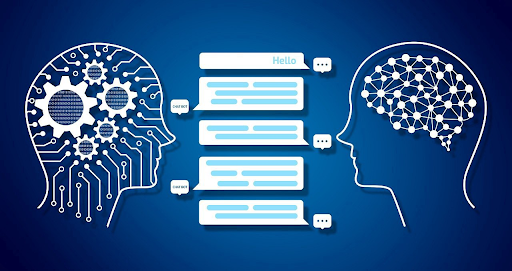
A contact center is an integral part of a business. Agents are hired to talk to customers, address their queries, and provide a good support experience. However, if these agents are not empowered with the right tools and a conversational AI is not used, the experience can be unsatisfactory.
Contact center automation (CCA) with conversational AI is an intrinsic part of every contact center, regardless of size. Why? A CCA with conversational AI makes it easier for agents to do their jobs in the contact center.
In this blog, we’ll show you how conversational AI can help your business, whether it’s a contact center or any other business that utilizes a contact center.
8 reasons why conversational AI is required for contact center automation
1. Repetitive Interactions Waste Your Agents’ Time
Repetitive interactions are a scourge of contact centers. These interactions include:
Answering the same questions over and over again,
Repeating the same instructions to customers
Transferring customers multiple times because they keep calling back with the same issue.
You can’t expect your agents to handle this kind of workload indefinitely. At some point, they will get tired, frustrated, and even burned out by their jobs.
You can use Conversational AI to answer frequently asked questions (FAQs) or provide pre-recorded responses to common issues like password resets or account changes with contextual routing. It can also be used for automatic phone transfers based on specific criteria such as caller ID or call type (e.g., credit card inquiry vs. complaint). The possibilities are endless.
2. Long Wait Times Reduce Customer Satisfaction
Long wait times are one of the customers’ most common complaints about businesses. Not only are long wait times frustrating, but they can also lead to decreased customer satisfaction. Zendesk Customer Experience Trends Report 2020 found that 60% of customers feel long wait times are one of the most frustrating parts of customer service.
3. Your Customers Want 24/7 Access to You
As the world becomes increasingly connected, customers expect 24/7 access to businesses and organizations. This is especially true when it comes to customer service and support.
With conversational AI and machine learning, you can provide customers with the best possible service and support and meet their expectations for 24/7 access.
4. Voice Assistants are More Robust Than Chatbots
Voice assistants can often provide a more natural and human-like experience for your customers using NLP (natural language processing). This can help build trust and rapport and improve customer satisfaction.
5. Your Call Efficiency Metrics Will Significantly Improve
One of the most critical aspects of customer service is call efficiency. This metric measures how quickly and effectively customer services representatives can handle calls. Here’s how conversational AI helps improve their call efficiency:
This saves the customer time and frees up the customer service representative to handle other tasks. As a result, the customer service team can work more efficiently and improve their call efficiency metrics.
6. You Won’t Need to Overstaff to Meet Demand in Peak Times
Conversational AI allows you to effectively meet customer demand during peak periods as it handles more customer interactions in less time, further increasing your ability to meet customer demand. This use of conversational AI during peak seasons can lead to significant cost savings for your business.
7. Live access to detailed conversational data
If you use the conversational AI model in your business, you have live access to detailed datasets about every conversation. This speech data can be used as training data, which is precious in helping you improve your customer service, resolve issues more effectively, and even train your staff more effectively.
8. Your Customer Service Agents’ Jobs Will be Much Easier
With conversational AI, your agents can handle more customer queries in less time, and they’ll be able to do it efficiently.
Instead of doing repetitive tasks, conversational AI makes customer service agents’ jobs much easier.
Conclusion
AI will change how we interact with technology. Once you get used to conversational AI and it becomes a seamless part of your life, you’ll wonder how you could have ever done without it.
There are no limits to what AI can do for us in the future, and it doesn’t look like it will be long before we see even more advancement in this space. The question is: will you enjoy the benefits of this technological revolution or not?
Vatsal Ghiya is a serial entrepreneur with more than 20 years of experience in healthcare AI software and services. He is the CEO and co-founder of Shaip.com, which enables the on-demand scaling of our platform, processes, and people for companies with the most demanding machine learning and artificial intelligence initiatives.
A large community of Angular developers constantly looks for new functionalities and features from the Angular team at Google. Hence, last year, in Nov 2021, the Angular team released the latest v13 of their open-source framework for web app development.
Integrating a chatbot into an Angular application can provide a more interactive and personalized user experience, and can also help automate tasks and answer frequently asked questions. The integration process may involve using a chatbot platform, such as Dialogflow, and a JavaScript library, such as ng-botkit, to connect the chatbot to the Angular application. Additionally, the Angular 14 version can provide features and functionalities to improve the performance of the integration.
This year, the Angular community released the all-new Angular 14 on 02 June 2022. From shifting to 100% Ivy in the previous release of Angular 13 to adding new features in the Angular Component development kit (CDK), this is how the new features get introduced with the release of Angular 14.
This blog post highlights the features of Angular 14 and how to upgrade it.
Why is Angular So Popular? An Overview
Angular is an open-source JavaScript-based framework developed by Google to build complex gaming and single-page applications for businesses of all sizes.
As of Nov 2022, Angular holds a 20.39% market share for the most preferred web frameworks by developers worldwide. It employs standard JavaScript syntax for coding. In addition, it enables developers to use directives to develop reusable components for better flexibility.
The framework employs the HTML template language that’s easy to learn and implement.
It supports MVC architecture which helps organize the code more logically.
It has built-in data binding and routing that make web development much easier.
What Are the New Features Added in Angular 14?
Angular 14 was expected to offer components such as Typed Forms to enhance typing, independent components from models, micro frontend architecture for scalable development, and many others. Let’s see what it actually includes:
Typed Angular Forms
Angular 14 addresses and resolves one of the most significant issues: the implementation of strict typing for the Angular Reactive Forms package. Angular Typed Forms ensure that the values inside the groups, form controls, and arrays are type-safe across the entire API surface.
It makes forms safer, especially for highly nested complex cases. In addition, it becomes easy to add typing to your existing forms gradually with full backward compatibility via incremental migration to typed documents. NgUpdate will substitute all form classes with an untyped version, so you can enable types on your own.
Streamlined Best Practices
Angular v14 has the potential to convince you that the advanced features incorporated in this latest are designed to streamline the development process. The new change detection instruction on angular.io, Angular v14, incorporates built-in tools to enable developers to build quality apps.
Standalone Components
It strives to simplify Angular and streamline the app authoring by reducing NgModules’ needs. Currently, standalone features are in developer preview and are all set to be used in apps for development and exploration, but they need to be more stable.
By leveraging the advantage of the open source, the Angular team ensures that standalone components are designed to be released as a stable API.
Angular CLI Auto-Completion
Angular 14 offers a much-required CLI auto-completion feature. It allows you to see real-time auto-completion of commands in the terminal without any complexity. If any Angular and Typescript developers find challenges in learning framework, this makes things all the easier — no more looking up commands online!
Built-in Enhancements
One advanced feature that Angular 14 comes with is TypeScript 4.7. In addition, CLI will enable you to deploy small code without devaluing it. You can also directly link to protected component members from templates, providing access to the reusable components’ public API surface.
Advanced Template Diagnostics
Developers can ensure improved template diagnostics for compiler matching to typescript code. The diagnostics tests also align with the private compiler that comes with Angular 14. The compiler warnings will help developers save time and avoid mistakes in their code. In previous versions, the compiler would stop executing if it encountered a problem and did not inform you of the issue.
Extended Developer Diagnostics
Angular 14’s extendable framework provides advanced insights into your templates and suggestions for boosting performance.
Online Angular DevTools
The new online mode for Angular DevTools in the revamped debugging extension is a welcome improvement. This feature is available as a Mozilla Add-on for Firefox users.
With Angular 14, app development has become more easy and fast. Thanks to the amazing features that come with Angular 14. The Angular developer community seeks to cater to web developers to get improved versions of the Typescript-based framework while simultaneously allowing them to remain on track with the other online ecosystems and user requirements.
If you are an expert at the latest Angular upgrades and features or can hire angular developers, it is recommended to move to Angular14!
Do you know OpenAi, the trending artificial intelligence???
Today, OpenAi is one of the hottest trends in software development as a powerful artificial intelligence platform that makes it easy for developers to create AI-powered applications.
Laravel in two words???
To talk briefly about laravel, Laravel is an open-source web framework written in PHP respecting the model-view-controller principle and developed in object-oriented programming.
How to use OpenAi with Laravel ?
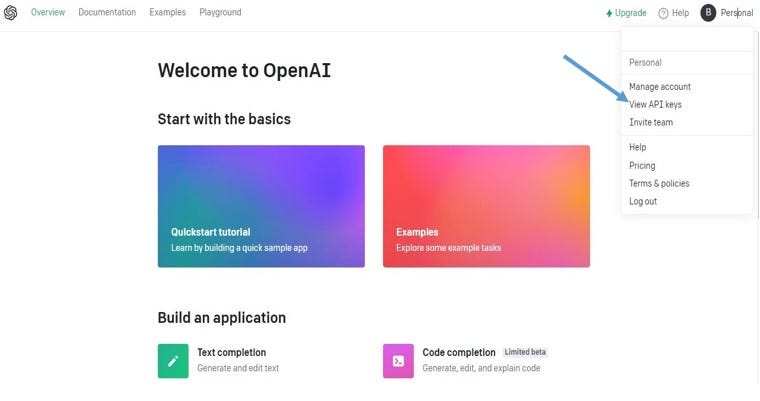
Before you start, you need to register for OpenAi.
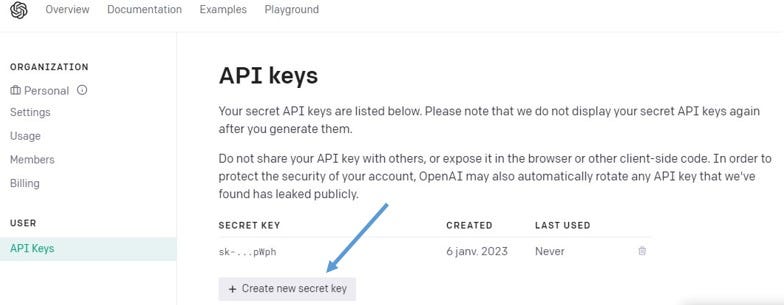
After registering, create a new key:
Enter your API key in your “.env” file:
OPENAI_API_KEY= "your_key_openai"
2. Install OpenAi PHP client (allows to interact with OpenAi API) using composer with this command:
composer require openai-php/client
3. Create a service that uses the OpenAi PHP library to communicate with the OpenAi service, for example:
<?php
namespace AppServices;
use OpenAI;
class GeneratorOpenAIService { private $client;
public function __construct() { $this->client = OpenAI::client(env('OPENAI_API_KEY')); }
Before moving on to the next step, I quote a few remarks about the body of the “Create” request.
model : The OpenAi API is powered by a family of models with different capabilities and prices. For me, I’m using the latest and greatest version of the GPT-3 language model. GPT-3 can do everything other models can do, often with higher quality, longer output, and better instruction tracking (have 4000 tokens).
temperature : 0,9 (for more creative applications)
prompt : the text
max_tokens : The number of tokens in your prompt plus max_tokens cannot exceed the template context length (4000 tokens).
4. Inject the service into your controller where you want to use it and call the “generateResponseOpenAi” method
<?php
namespace AppHttpControllers;
use AppServicesGeneratorOpenAIService;
class OpenAIController extends Controller { private $openAiService;
public function __construct(GeneratorOpenAIService $openaiService) { $this->openAiService= $openaiService; }
public function chatOpenAi(Request $request) { $question = $request->question;
Artificial intelligence (AI) is rapidly becoming a common feature in school classrooms and adult educationworldwide, with many educators and instructors exploring the potential of this technology to improve teaching and learning outcomes. While AI could offer many exciting possibilities, we must be aware of the realities, risks, and ethical considerations that come with powerful models like GPT-3 (the model behind ChatGPT).
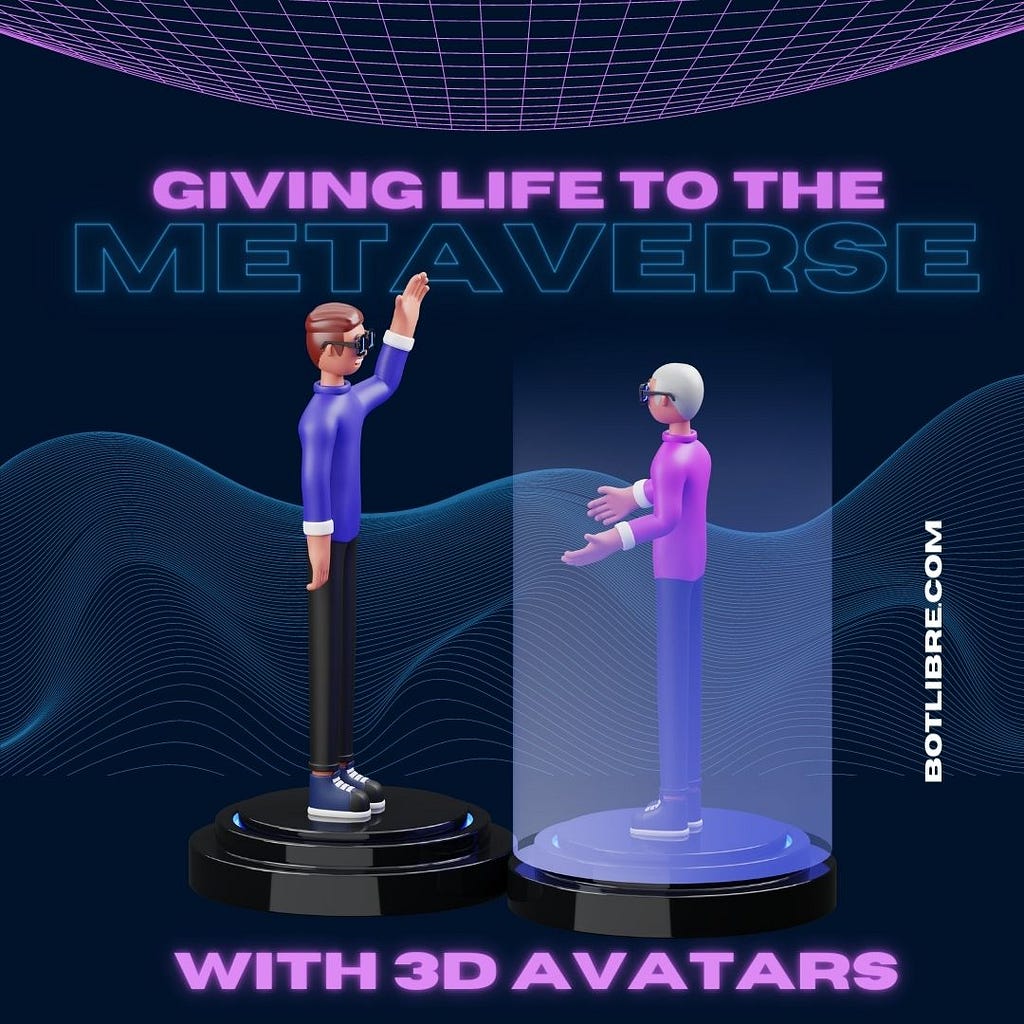
They say a house is not a home if there is no one there. Well what good is an advanced virtual space without access to digital assets like 3D chatbots to interact with?
3D chatbots are the bridge between the physical and digital as it grants that human-like connection in addition to providing a more seamless, diverse and immersive experience. Without these digital agents, the metaverse would simply be a limitless but lifeless virtual vacuum of possibilities
For persons working, playing and creating in the metaverse, 3D chatbots can react and respond to various actions performed by participants to offer a more personalized experience. In addition to the text and voice based conversational capabilities of chatbots, 3D chatbots will enhance user experience through intelligent actions such as facial expressions, body language, emotions and physical interactions.
Bot Libre 3D — Digital Humans for the Metaverse
Within the metaverse, Bot Libre 3D chatbots can act as customer support officers, tutors, event hosts, conference facilitators, designers and even friends. You can build your bot from scratch or choose from thousands of our language independent bots available, train them and deploy them across varying virtual spaces. For instance they can be added to a storefront to answer shoppers’ questions and even study customers’ habits to offer more personalized recommendations.
These digital humans can teach you a new language, resolve your banking issues, help you sell your NFTs, offer cool recommendations on what to purchase or places to visit in the metaverse, talk about politics and even dance for you. The 3D avatars can also be used to realistically represent humans at conferences, concerts or even when having friendly conversation with others.
Bot Libre currently offers an APK app to its metaverse solution where persons can experience how they can engage their customers in the metaverse with chatbots. We are also accepting members to our Metaverse program where you can get early access to our metaverse solutions and one on support to develop your product or service for metaverse.
To learn more about Bot Libre metaverse solutions, send an email to sales@botlibre.com .
Learned something? Please give us a clap below and share!
In Dialogflow, the session for agents is maintained by Dialogflow itself. Session continuous the conversation flow between the agent and the user.
Why is it necessary to extend the Dialogflow session?
In the conversation with the chatbot, if a user takes longer than 30 minutes to respond to the agent then the session between the user and the Dialogflow agent will expire. In such cases, the user will have to restart the conversation with the agent from the beginning. So to overcome this problem we need to extend the session for Dialogflow.
Problem statement
Suppose the user is talking to a chatbot regarding fashion. During the conversion, the bot asks the user about the size he prefers wearing, for which the user is unsure. So the user confirms his size with his wife and responds after 30 minutes but as the session has expired the flow for the bot will not be continued and the user will have to restart the conversion. And will have to go through the flow once again to reach the previous stopping point.
Here is a conversational example:
Bot: Hello Welcome to shopify What would you like to wear.
User: Tshirts.
Bot: So, tell me what is your prefered style?
    - Polo
    - Casual
    - Dyed
    - Dry-fit
User: Casual
Bot: Okay, What size do you wear ?
User: ( After 45 minutes ) XL
Bot: Sorry, could you say that again?
What is the session deadline for Dialogflow?
In Dialogflow, agent responses can be set in two ways from Dialogflow itself for basic responses and another is to set dynamic responses using webhooks. Complex conversation can be created using webhook services.
The Dialogflow session is only maintained for 30 minutes. The user must respond within 30 mins to continue the flow of the agent. After that chatbot will not continue the flow and we can say the session deadline occurs. Any response given after 30 mins will set the agent back to Dialogflow fallback intent.
How to extend the session timeout for Dialogflow Agent?
To resolve the above issue, we need to extend the session deadline. The following are steps to extend the session timeout:
Step 1: We need to access our Dialogflow agent with Dialogflow API. In the Dialogflow API, we need to pass one unique user id to identify the user.
Step 2: We manually create a session name consisting of the user id such that every user has their own unique session Id.
Step 3: We then create a Database (DB) to store the user id and currently active context of Dialogflow intent.
Step 4: When a user inputs the data we take the data as query text and create an API call to Dialogflow, which detects the intents from the context and sends a response. The user id and the relative context are stored in the Database (DB).
Step 5: After some time when the user enters another input a similar request is made to Dialogflow and responses are displayed. Keeping the session active even though it has been some time since the last input.
Step 6: Contexts and parameters will keep on changing in DB on every query input given by the user.
If we consider the above same conversation as an example, then after extending the session timeout in Dialogflow, the conversation with the bot should be:
Bot: Hello Welcome to shopify What would you like to wear.
User: Tshirts.
Bot: So, tell me what is your prefered style?
    - Polo
    - Casual
    - Dyed
    - Dry-fit
User: Casual
Bot: Okay, What size do you wear ?
User: ( After Infinite amount of time ) XL
Bot: Okay , What colour would you prefer?
You can extend the session indefinitely by following the procedures above. Hope it will be useful in resolving the significant session time increase problem in Dialogflow ES. If you face any problems when implementing this functionality, kindly comment below.
HR Guide to Conversational AI — How HR Chatbot Solve Remote work Challenges
It is the month of February when employees are usually looking out for new opportunities. Your HR chatbot receives several questions about benefits, pay raises, bonuses, perks, etc.
Data gathered from the HR bot will tell you that your employees feel under-rewarded and are looking for ‘better’ opportunities. That’s your cue to get things sorted with your employees.
Do you want to create custom metrics to track critical KPIs for your business?
Want to understand what your employees think about the latest changes in your remote working policies?
Do you want to know what your employees feel about the changes in the work timings?
All of the above and more can be handled by HR chatbots. They are an incredible addition to your arsenal of automation tools.
No Code — Free Conversational AI Chatbot Get Started
What is an HR chatbot?
HR chatbots are specially trained to reprise the role of HR staff in your organization. They change the way how HR departments function across verticals and geographies. HR management is not only about hiring, interviewing, and payroll management. There is much more to it. HR teams today are strategic business partners, enablers of brands, catalysts in change management, and so on.
Organizations today have turned extensively to AI and automation tools to carry out various HR-related tasks. HR chatbots can automate repetitive tasks and HR-employee interactions.
If your employees working remotely want to understand the leave policy, they don’t have to email HR asking for details or search the length and breadth of the employee portal for answers. They can go directly to the HR chatbot, choose the section for the HR chatbot and get the answers. It will take anywhere from seconds to a few minutes.
HR professionals have a lot of ‘grunt work’ such as filling out forms, responding to emails, approving applications, etc. There are many repetitive tasks in payroll management, maintaining employee records, updating policies, and answering emails and calls. They take considerable time and prevent them from doing their core tasks.
Unfortunately, the struggle of manual tasks lowers their productivity and causes burnout. They would instead focus on important tasks such as employee experience, learning, and development, employee retention, employee relations, etc. than perform paper-pusher tasks.
According to the State of Chatbots Report, the #1 use case for chatbots is “getting a quick answer in an emergency,” and the #2 use case is “resolving a complaint or a question.” To sum up, chatbots solve some of the most significant issues that plague HR teams.
How are chatbots used in HR?
According to Gartner, 70% of employees will interact with conversational platforms daily. HR teams get to engage with each employee via HR chatbots. They can communicate with the employees regularly and help them deal with multiple things. These HR chatbots help employees access documents, policies, guidelines, notifications, and forms and track their attendance, leaves, and so on.
HR teams are inundated with challenges, day in and day out. When things go well, everyone takes them for granted, but if there are hiccups anywhere, it can affect the organization as a whole. HR teams are one of the most vital cogs in an enterprise. Apart from handling routine and mundane tasks, they are also responsible for bigger issues like employee engagement, employee satisfaction, and increasing retention rate.
1. Improves the onboarding experience:
For any employee, the first day can be tough. There is a lot of uncertainty and unfamiliarity. There are documents to pore through and sign, training manuals to read, and several HR-related tasks to complete. You also need many seniors to make onboarding new employees a smooth affair.
If you have an HR chatbot, the new employees can get most of their queries solved. From perks to job responsibilities, everything will be spelled out clearly. The chatbot can even provide step-by-step onboarding for the employee. Even if the new hire wants access to a particular platform, the HR chatbot can enable it without involving the IT desk.
2. Creates a unified experience:
Organizations that have many employees usually struggle with one thing: inconsistent experience. It so happens because processes and knowledge aren’t shared between teams. Without having to involve multiple departments, HR chatbots can feed the relevant information, and the employees can access it. If you don’t want certain information to be shared across all levels of employees, it also allows you the option to manage access controls.
3. Create automated workflows:
When there are automated workflows, your employees do not get bogged down doing unnecessary tasks. It will result in a sharp productivity increase and high spirits. HR chatbots can help create automated workflows that can provide everything from how to give access to specific tools to getting approvals from other departments. On average, HR chatbots reduce six actions to just one request when an employee searches for something. It enables the employees to focus on what they are hired to accomplish.
4. Provides customized employee support:
For employees that are working remotely, if they do not get their queries answered in a reasonable period, they’ll feel unheard. What if they could get instant answers? HR chatbots provide all the solutions in a single place, and more importantly, it uses previous chat history and other activities to provide personalized employee support. With an HR chatbot, the employee can get personalized employee support that will save time and reduce effort.
5. Offer quick feedback:
Knowing what the employees in your organization think is essential. Chatbots are an incredibly effective tool for candidates and employees who want to share their feedback about the happenings in the organization. Sharing forms, collating the data, and trying to analyze them is a difficult process and takes up a lot of time. Collecting feedback via chatbots helps you collect unbiased feedback within seconds.
HR chatbots can be used to gather information on employee satisfaction. When your immediate boss sends out survey forms, the average employee is more likely to share positive feedback to curry favor with the higher-ups. But an HR chatbot’s anonymity helps them be open about their emotions.
The fact that sentimental analysis and natural language processing can be integrated with HR chatbots raises the expectations from it. The chatbot will be able to detect anger, sadness, frustration, happiness, etc., and special attention can be given to employees who feel negatively about the organization.
6. Reinforcing organizational culture:
Making sure that remote employees are motivated to complete their tasks without hiccups is the holy grail for most organizations. While multiple technologies can uphold employee motivation, nothing compares with a chatbot. HR chatbots can engage with employees frequently and can also personalize interactions to share specific information with a particular employee.
7. 24*7 access:
If you are working in a big enterprise, the chances are that the teams are spread across the world in different time zones. Employees who want certain information immediately will find that they have to wait for at least 24 hours to get back responses. In some instances, they might need immediate redressals, and unfortunately, that is not possible, especially since everyone is working remotely.
With these HR chatbots, instantaneous responses can be given to most queries without any delays or errors. Common queries, such as insurance policies, processes, standard policies, etc., can be handled directly by the HR chatbots. If there are complex queries that the HR chatbot doesn’t have an answer to, it can automatically transfer them to a live agent.
When there are a lot of changes happening in the organization, in terms of organization or strategy, HR chatbots help with change management. Changes can lead to confusion for the average employee, and their worries must be quelled before it boils over. The accessibility that HR chatbots offer is pivotal, especially for staff working in faraway locations. The chatbots give them a chance to be heard.
8. Employee Engagement:
Keeping your employees engaged with the organization, even when they are working from the office every day, is a difficult ask. Imagine if most of them are working remotely in different geographies. Newly joined employees have even more significant troubles to wade through as they are in completely uncharted territories.
HR chatbots can act as an effective self-service portal. AI-powered and NLP-driven HR chatbots can have conversations with employees, understand their sentiments, and offer relevant solutions. HR chatbots can engage with employees at any scale. It will also help the leadership to understand the sentiments of the employees.
Conversational AI HR Chatbot Metrics:
When introducing HR chatbots to your organization, remember that you need to keep evaluating their effectiveness. To do so, you need to have metrics in place to evaluate the chatbot’s performance. Let us look at a few HR chatbot metrics.
Accuracy rate: How often does the chatbot give accurate information? Anything above 80% is considered good.
The number of users: How many employees interacted with the chatbot?
Daily usage: How many employees interact with the chatbot on a daily basis?
The number of engaged users: Engaged users are those who repeatedly converse with the conversational AI HR chatbot.
Goal Completion Rate (GCR): Do the employees get sufficient answers to all their questions?
Transfer to Human Agent: How much percentage of the chatbot requests are transferred to human agents? If it is high, then the chatbot needs more training. There are also instances where the employee prefers interacting with a human agent if it is a complex query at hand.
Length of the conversation: This is a dicey metric. Why? Because you want the HR chatbot to take as much time as necessary to solve the customer’s problem but not so much that they quit the conversation. The organization needs to find the sweet spot when it comes to timing.
Are you ready to transform your organization with our HR chatbots?
As we have mentioned earlier in the article, HR chatbots are not only to share information but also a vital cog in several circumstances. HR chatbots help the organization get a holistic view of what the employees search for often, the issues that plague them, how they react to a particular policy change, and so on. The analytics gathered from the HR chatbot can be used to make business decisions.
If you are looking to empower your HR team with an intelligent automation platform, try out Workativ’s Conversational AI HR Chatbot. Our HR chatbot solutions are customized according to your specific HR needs. Workativ’s offerings are not standard for everyone, as we understand that each organization has its own unique issues and pressing HR problems. We take all of this into account when developing your HR chatbot.
Disclaimer: This blog was originally published here.
AI In Education — Breaking Barriers, Amplifying Learning
Education is one of the most important components of a society, so much so that it is Sustainable Development Goal (SDG) Number 4 for the United Nations Educational, Scientific and Cultural Organization (UNESCO). However, due to the high costs of tuition fees, books, stationery, food, geographic and language barriers, pursuing one’s studies can be most challenging.
To this end, the use of Artificial intelligence (AI) in education provides a welcome reprieve, as the technology is the getaway to a more inclusive, equitable, quality and immersive learning experience for all. It is no surprise therefore that the AI in Education Market size is set to surpass USD 80 billion by 2030.
AI not only provides more accessible learning resources to groups that could otherwise be marginalized, it also offers a more dynamic and personal learning experience. This is crucial in today’s world as learners are interacting with multifaceted and multidimensional internet experiences daily and so to remain relevant to students, stakeholders within the educational sector would need to be more creative and personal with their learning resources.
For instance, in the case where there is a singular textbook for a subject for every student, AI-powered machines can make an assessment on students’ comprehension levels and match them with materials that are more relevant and purposeful.
Bot Libre and Education
Bot Libre specializes in chatbot development and artificial intelligence solutions for the metaverse. One of their applications is Virtual English Tutor which provides key conversational English lessons and has a chat segment available. The app features a Bot Libre chatbot that takes the user through key conversational English lessons. These lessons have a chat segment where users can engage in conversation practice to boost learning outcomes. Virtual English Tutor is meant to offer English lessons to persons interested in learning English as a second language or to sharpen their current English skills. The app is also designed as a virtual education tool for use by English tutors to engage with students in the environments they spend most of their time, on the phone, and online.
Moreover, Bot Libre Metaverse is a great way to enhance learning experiences with its 3D/VR/AR interface. This allows learners to virtually navigate a classroom and get hands-on experience in various subjects such as algebra, construction, arts, history, French and more. Employers can also utilize this approach for training sessions to increase participation and retention. Also, Bot Libre’s 3D app offers a wide range of chatbots with the ability to build, customize and deploy a diverse set of avatars to a wide range of virtual scenes.
If you want any help creating a chatbot or AI-based educational service, contact us at sales@botlibre.biz . You may also join the community of metaverse experts and enthusiasts by signing up for Bot Libre Metaverse Enterprise for access to our solutions and one-on-one support.
Teachers haven’t had it easy over the years. Between managing a classroom full of unruly students and dealing with school administration, they’ve got a lot on their plate. The good news is that many of these tasks are becoming easier thanks to technology. Here are five things teachers shouldn’t have to worry about anymore in 2023: