 |
submitted by /u/Botmywork [link] [comments] |
Author: Franz Malten Buemann
-
Steps To Create Free Messenger Bot With No-Coding | BotMyWork
-
[Question] Google chat bot
Is there any tutorial on creating a complete chatbot (like end to end) on Google chat ?
submitted by /u/RstarPhoneix
[link] [comments] -
The 6 types of chatbots — Which one do you need?
The 6 types of chatbots — Which one do you need?
A chatbot on an eCommerce website would be totally unlike the one for Banking. Just how we contrast in our personality and talents, the same goes for chatbots in their appearance and activities!
In this blog, we’ll be touching upon what are the different types of AI chatbots, the different types of business chatbots, and their applications and their functionalities. This will give you a clear understanding as to how many types of chatbots are there and what would be the ideal chatbot type for your business!
Here are the types of chatbots
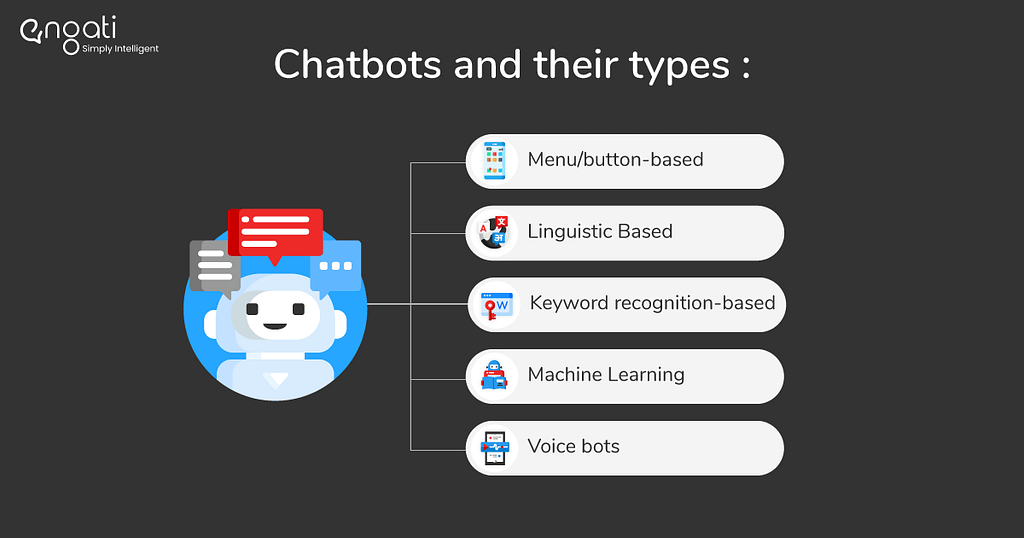
1. Menu/button-based chatbots
Menu/button-based chatbots are the most basic type of chatbots currently implemented in the market today. In most cases, these chatbots are glorified decision tree hierarchies presented to the user in the form of buttons. Similar to the automated phone menus we all interact with on almost a daily basis, these chatbots require the user to make several selections to dig deeper towards the ultimate answer.
While these chatbots are sufficient for answering FAQs that make up 80% of support queries; they fall well short in more advanced scenarios in which there are too many variables or too much knowledge at play to predict how users should get to specific answers with confidence. It’s also worth noting that menu/button-based chatbots are the slowest in terms of getting the user to their desired value.
2. Linguistic Based (Rule-Based Chatbots)
If you can predict the types of questions your customers may ask, a linguistic chatbot might be the solution for you. Linguistic or rules-based chatbots create conversational flows using if/then logic. First, you have to define the language conditions of your chatbots. Conditions can be created to assess the words, the order of the words, synonyms, and more. If the incoming query matches the conditions defined by your chatbot, your customers can receive the appropriate help in no time.
However, it’s your job to ensure that each permutation and combination of each question is defined, otherwise, the chatbot will not understand your customer’s input. This is why a linguistic model, while incredibly common, can be slow to develop. These chatbots demand rigidity and specificity.
3. Keyword recognition-based chatbots
Unlike menu-based chatbots, keyword recognition-based chatbots can listen to what users type and respond appropriately. These chatbots utilize customizable keywords and an AI application — Natural Language Processing (NLP) to determine how to serve an appropriate response to the user.
These types of chatbots fall short when they have to answer a lot of similar questions. The chatbots will start to slip when there are keyword redundancies between several related questions.
It is quite popular to see chatbots that are a hybrid of keyword recognition-based and menu/button-based. These chatbots provide users with the choice to try to ask their questions directly or use the chatbot’s menu buttons if the keyword recognition functionality is yielding poor results or the user requires some guidance to find their answer.
Trending Bot Articles:
2. Automated vs Live Chats: What will the Future of Customer Service Look Like?
4. Chatbot Vs. Intelligent Virtual Assistant — What’s the difference & Why Care?
4. Machine Learning chatbots
Ever wondered what is a contextual chatbot? A contextual chatbot is by far the most advanced of the three bots discussed previously. These types of chatbots utilize Machine Learning (ML) and Artificial Intelligence (AI) to remember conversations with specific users to learn and grow over time. Unlike keyword recognition-based chatbots, contextual chatbots are smart enough to self-improve based on what users are asking for and how they are asking it.
For example, a contextual chatbot that allows users to order food, the chatbot will store the data from each conversation and learn what the user likes to order. The result is that eventually when a user chats with this chatbot, it will remember their most common order, their delivery address, and their payment information and merely ask if they’d like to repeat this order. Instead of having to respond to several questions the user just has to answer with ‘Yes’ and the food is ready!
While this food ordering example is elementary, it is easy to see just how powerful conversation context can be when harnessed with AI and ML. The ultimate goal of any chatbot should be to provide an improved user experience over the alternative of the status quo. Leveraging conversation context is one of the best ways to shorten processes like these via a chatbot.
5. The hybrid model
Businesses love the sophistication of AI-chatbots, but don’t always have the talents or the large volumes of data to support them. So, they opt for the hybrid model. The hybrid model offers the best of both words- the simplicity of the rules-based chatbots, with the complexity of the AI-bots.
6. Voice bots
To make conversational interfaces even more vernacular, businesses are now beginning to use voice-based chatbots or voice bots. Voice bots have been on the rise for the last couple of years, with Apple’s Siri, to Amazon’s Alexa, and why? Because of the convenience they bring. It’s much easier for a customer to speak rather than type. Voice bots bring frictionless experiences directly to the customer.
So, which type of chatbot is right for you?
While deciding if a chatbot is right for you, place yourself in the shoes of your users and think about the value they’re trying to receive. Is conversational context going to significantly impact this value? If not, then it is probably not worth the time and resources to implement at the moment.
Another thing to consider is your target user base and their UX preferences. Some users may prefer to have the chatbot guide them with visual menu buttons rather than an open-ended experience where they’re required to ask the chatbot questions directly. All the more reason to have users extensively test your chatbot before you fully commit and push it live.
The right chatbot is the one that best fits the value proposition you’re trying to convey to your users. In some cases, that could require enterprise-level AI capabilities; however, in other instances, simple menu buttons may be the perfect solution.
What are some applications of Chatbots?
1. Appointment scheduling or Booking bots
Appointment scheduling or booking bots are the kinds of bots you usually find in the Healthcare, airline, and Hotel industries. These bots help customers book slots for appointments with the enterprise they communicate with.
Appointment bots are often linked to Google calendar, so when a customer books an appointment with you, it automatically gets stored in the calendar, creates an event, and sends reminders to both the customer and the business representative. The HR team also uses HR chatbots to schedule interviews for recruitment purposes.
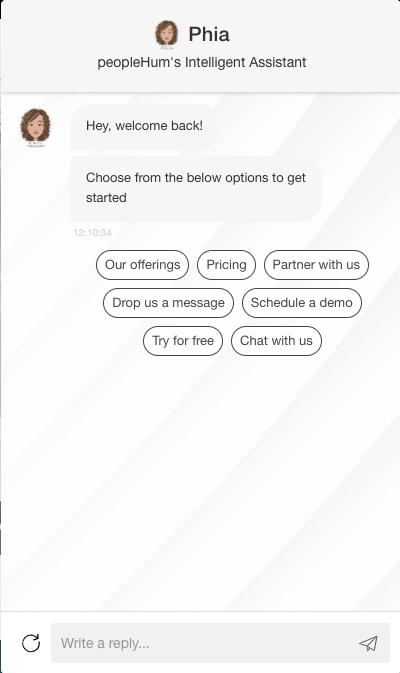
Phia — An intelligent HR chatbot for appointment scheduling So if you have a business that requires a lot of booking and scheduling, this bot serves the purpose! Some of the types of chatbots under this category are-
- HR Bot for scheduling meetings and interviews
- Healthcare Bot for booking appointments
- Travel Bot for flight bookings
- Number of active users
- Hotel Booking Bot to book rooms and services
- Number of active users
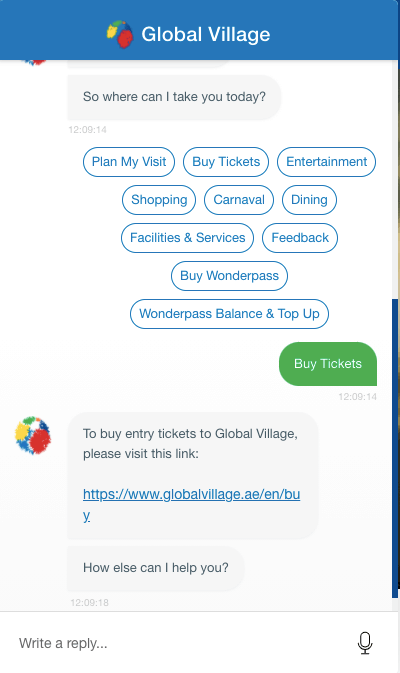
Global Village’s chatbot for tourism Global Village’s chatbot for tourism
- Appointment Slot Booking can be integrated with any type of business
- Cinema Bot to book movie tickets
- Service Bots for automotive businesses
- And so on…
2. Customer support chatbots
This must be the most popular use-case of chatbots! When someone says the word ‘chatbot’, the first thing to pop up in our mind is that one time we spoke to a chatbot for customer care. These types of chatbots perform all tasks a customer support representative would do. And it does them real good!
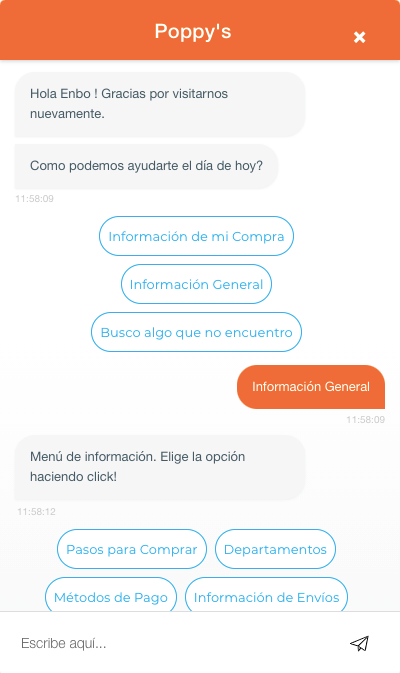
Poppy’s chatbot for retail engagement Features such as 24/7 hour availability, quick and easy solutions, instant replies, and live chat facilities make chatbots the ideal tool to improve customer service. It not only improves communication between businesses and clients but also builds a rapport with them to earn customer loyalty. They also gather customer feedback and send it to your team so that you can work on the shortcomings.
They allow your customers to easily interact with your business through stimulating conversations and also play their part in increasing sales.
Some of the bot templates under this type of chatbots are-
-
Retail Support Bot
To handle queries related to your retail product line. It’s also used to sell products directly -
Telecom Bot
To provide customers the convenience of checking their bill, make a payment, recharge plan, change plan, change number etc directly through the bot. It also procures any customer queries related to your service -
Techdesk Bot
To helps employees connect to the internal technical support team for issues related to the system and access to services/Applications. The bot is also used to send confirmation to the customer through email. -
Banking Bot
Caters to your banking needs in an interactive manner. It provides account related information, ongoing offers, helps you get an update on your checkbook, and also takes you to travel booking facilities -
Orders, deliveries, and logistics Bot
Order issues help handle issues with food delivery orders
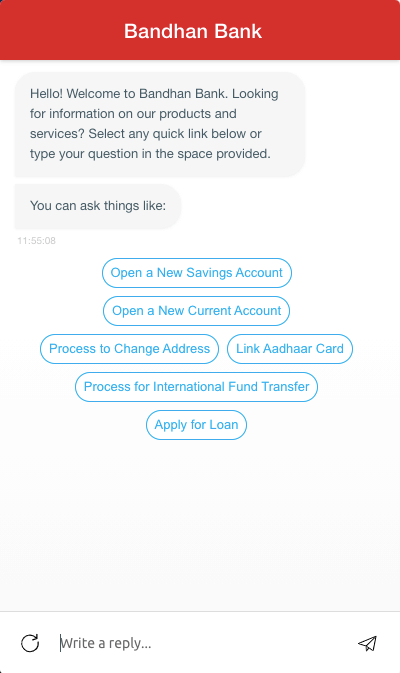
Bandhan bank’s service desk chatbot 3. Marketing and sales chatbots
Marketing and sales are the next most popular use-case of chatbots after customer support. So these intelligent bots are able to personalize the customer experience, have a larger engagement capacity, reach a wider audience, analyze customer feedback and data, sends relevant notifications, and moves customers seamlessly through the sales funnel.
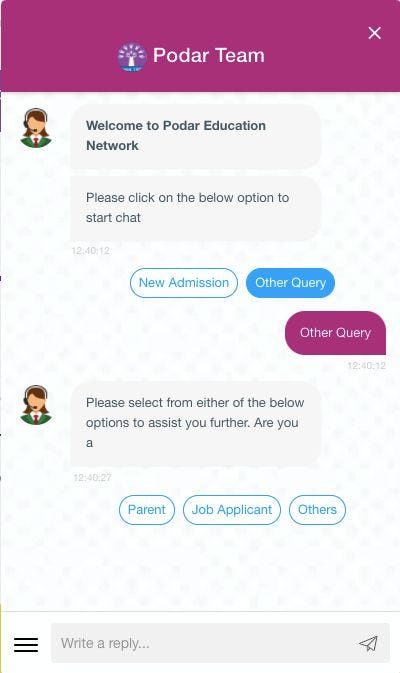
Podar Education chatbot to engage parents -
eCommerce bot
Browse through products directly from your chatbot. You can send your customers images through carousels and link your website for purchases -
Education-course bot
This bot allows prospective students to browse through various course offerings by an educational institution. The chatbot also provides details on course fees, duration, and admission mode per course -
Automotive Lead Generation bot
Allows customers to get details on cars, features, prices, etc, along with booking service -
Real Estate bot
Collect requirements from your customers on what they are looking for -
Quiz bot for market research
Generates a quiz around the market research. It comes with attractive wallpaper and button color customizations. Saves the answers provided by the user, calculates their score, and also sends an email to the user letting them know their score -
Social media marketing bot
A lead generation chatbot template for social media marketing agencies. Which notify the admin whenever a new lead is generated -
Lead generation
Google helps you take user information and save it in google sheets. So the prospects that are already on your product have strong leads. So this bot will help you store that information which can be used to market products to these customers or provide support to convert these leads -
Lead generation with Salesforce
Helps you take user information and save it in Salesforce. Prospects already on your product are strong leads this bot will help you store that information which can be used to market products to these customers or provide customer support to convert these leads
4. Entertainment bots
Entertainment bots are made for entertainment and media purposes. These bots include-
-
The tv show guide
A simple yet powerful chatbot to help track channels as per category for a service provider -
The go-karting bot
The ideal chatbot template for booking go-karting services. The bot also shows some information about tracks and karts -
Quiz bot
Serves a quickfire round of questions to those interested in a little harmless fun dose of quiz questions. It ends with giving a quick score based on the correct answers -
Riddle bot
To engage your customers through games to keep them coming back to your website -
News and media bot
To help users access news from different categories. So the bot flow leads the user to news categories where they can select the desired category to access news and can also subscribe to a category -
Cinema bot
Lets your customer’s book movie tickets, read reviews, browse through different genres -
The entertainment factor
A bot that assists users with everything at their favorite getaway location. Adding ease to their fun! -
Youtube channel bot
Deploy a chatbot using this template anywhere to use it as your new social media channel to share your youtube content -
The podcast bot
Helps the user learn about the universe with the help of podcasts or become a VIP member to get updates!
These are just to name a few among the wide range of templates we offer! Register with Engati to build an ideal chatbot for your business and browse through 200 bot templates in the Bot Marketplace that caters to every business need of yours.
Also, to gain a little more insight on chatbot technology, read up on some of these blogs!
Happy Botting!
Don’t forget to give us your 👏 !

The 6 types of chatbots — Which one do you need? was originally published in Chatbots Life on Medium, where people are continuing the conversation by highlighting and responding to this story.
-
6 Cool Tips for Branding Shopify Chatbot
A name plays a major role in the success of a thing, whether you are naming your newborn baby or a chatbot for your e-commerce store. The name has to be relevant to the subject and the purpose of its activities and it should also align with your Shopify Branding. There are many factors to consider when someone wants to introduce a chatbot to his/her online customers.
The kind of store, the products you sell, and the target demographic are a few of the factors that play a major role in determining the name of your very own bot.
1. What is your industry?
Whether you are birthing a real baby or launching a chatbot on your site, you must choose the right name. If you were to name your daughter Bill, would it work? Absolutely not!
So, you are trying to come up with a catchy name for your chatbot and as well for branding your Shopify store. Ask yourself a few questions. What kind of functions does your chatbot perform? Is it supportive, informative, transactional or does it provide recommendations? Keeping the function in mind, you may choose the name of a human, robot, or give a clever twist to it.
- A human name, like Cindy or Evelyn. These types of bot names are often a good choice for enterprises. They could be used as chatbots for banking, taxes, medical, or law. They offer a bit more formality and don’t distract from the purpose.
- A robot name, like iBolt or Alpha. Such names like these make it clear that the user is chatting with a bot rather than a human. Hence it helps avoid any confusion. You might consider a robot name if you’re in the tech industry.
- A descriptive name, like “Calorie-TrackBot”, helps users develop healthy eating habits. A chatbot name such as “Book Club Bot” for one that offers book recommendations. The advantage of such a naming style is that the user already understands the purpose of the bot before engaging in an interaction with it. Although these names aren’t always quite as personable or approachable, the clarity they offer serves the purpose, and serves it well!
- A clever name, like Penny for a personal finance advice chatbot, or Pam for a bot that provides prayer and meditation tips. Such a type of chatbot name is best for enterprises in industries such as travel, fitness, food, or beauty. It reflects a more casual, fun, and witty style. A clever name will also ensure that your chatbot stands out, and is likely to endear users to your brand and topic rather easily.

2. What is your bot’s personality?
Chatbots are highly customizable, but you can only have a few options when giving it the right name. As humans, we tend to give inanimate objects names. We base these names on certain characteristics that we see in them. Since website visitors and customers will find a personality in your chatbot anyway, you should give it a good descriptive name.
Giving your chatbot a character will make it more pleasant for customers and visitors to speak to. The lack of personality will make your bot boring and less engaging. If you have already assigned the bot a role and have developed its tone and speech, you will be familiar with the way your bot interacts. So, if your bot is assisting visitors at a shopping site, then a shopping assistant like Cynthia would be a good name.
Say, you have a spectacle and eye lens store on Shopify, then you could very well name your chatbot IRIS. So, are you getting the hang of naming your chatbot based on what you sell? another fun way in branding your Shopify store.
3. What does your chatbot do?
Another effective way to name your bot is by assigning its name based on the service it offers. So, what does your bot actually do? What is its purpose? What does it help its users do?
For example, TranslateBot could be a good name for a chatbot that automatically translates the content you send to it. On the other hand, Fitness Guru is a suitable name for a bot that keeps you motivated at staying fit. It would work for official websites of gymnasiums, trust me?
Trending Bot Articles:
2. Automated vs Live Chats: What will the Future of Customer Service Look Like?
4. Chatbot Vs. Intelligent Virtual Assistant — What’s the difference & Why Care?
4. Avoid brand names
Avoid getting too specific with your choice of bot names else it will hurt your Shopify store branding. Here’s what you should never do. Never give your bot the name of a brand. So, if you have a denim online store named John England, please refrain from giving your bot a name like JohnEngland Bot. It clearly lacks inspiration. Moreover, it is clearly out of the question if you try to use a brand name you do not own unless you want to get sued.
Example (of what not to do): BotteryBarn for a bot that assists you in finding home furniture. It is a play on a reputed furnishing brand called Pottery Barn.
5. Avoid being too descriptive
Now, I know it may seem like I am contradicting my previous to last point, but this is important. Nothing seems more boring to a visitor than a super-descriptive chatbot name. It is useful to use what your chatbot does as a starting point. However, just don’t make that the chatbot name, c’mon!
Example (of what not to do): Shopping assistant bot, a bot that assists customers while shopping. The only thing you might get from your visitors is a big yawn.
Generating traffic and expanding the reach of your shopping site depends on whether you can get the pulse of the customer or not. Practically everyone has a hard time every once in a while. Some kids might have fared poorly in a test, or a woman might have had a hard day at work. In such a scenario, adding a bit of humor to their day during the time they visit your site will create a lasting impact on your shopping site traffic. It is because everyone likes to feel good, and what is even better is feeling great while shopping.
At Quickreply.ai, we believe that the aim is to have fun with naming our chatbots (unless your bot is something super serious like a lawyer site, medical or tax-related). Most of your users will have their very first chatbot experience with your online store. Hence, we make their experience enjoyable and helps you branding your Shopify store.
Start for FREE today and present the creative side of your business right in front of your customers.
Don’t forget to give us your 👏 !
6 Cool 😎 Tips for Branding Shopify Chatbot was originally published in Chatbots Life on Medium, where people are continuing the conversation by highlighting and responding to this story.
-
13 Fun Slack Bots to Bring the Human Connection to Your Workspace

Photo by Priscilla Du Preez on Unsplash Finding new ways for teams to motivate and connect?
Here are 13 Slack bots that will bring fun and build a human connection to your workspace.
1. Trivia
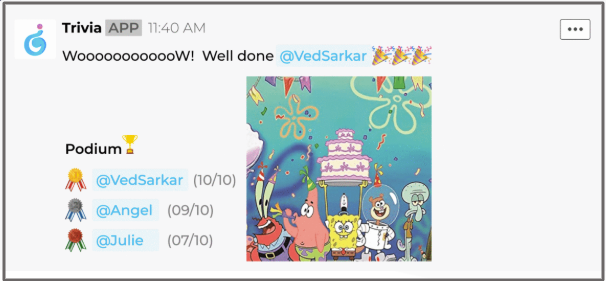
Trivia helps teams forge stronger connections by enabling people to conduct team-building activities and games and feel more productive. Trivia brings together teams to play real-time games and virtual water coolers right inside Slack, Microsoft Teams, and Google Chat.
2. EngageWith
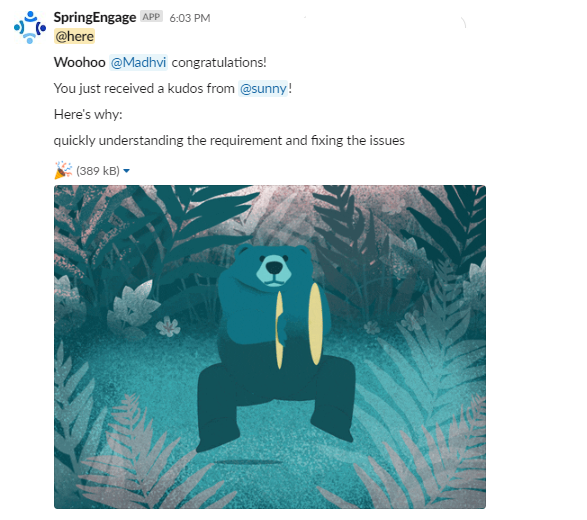
EngageWith is an employee recognition and rewards tool that enriches your company culture. It virtually brings recognition and fun within your Slack and MS Teams workspace.
3. Meme Bot
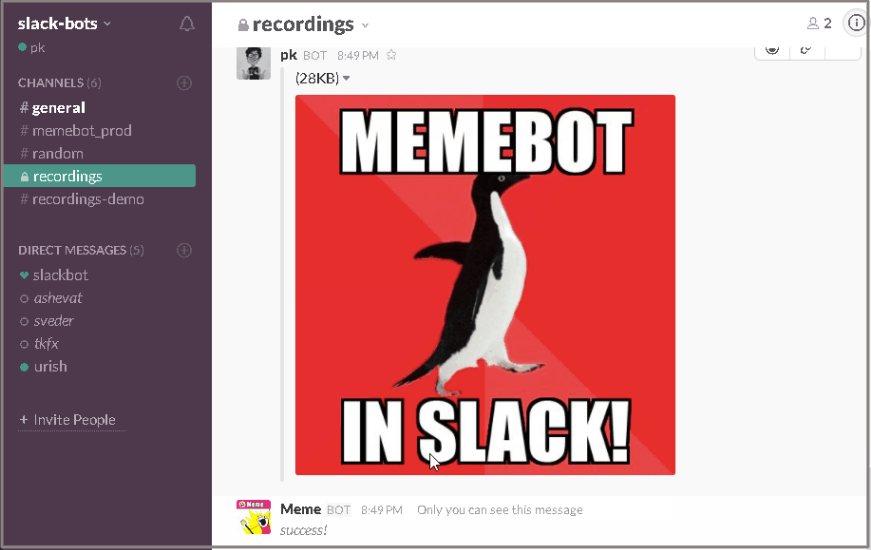
Tired of copy-pasting memes from google search? Use this Meme Bot with the /meme-list and /meme commands to generate instant memes from slack and be a meme hero.
4. Spoiler
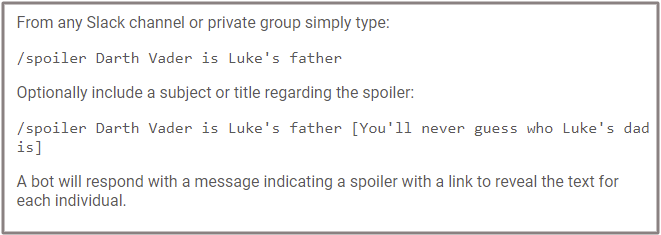
Spoiler is a free Slack add-in to warn your team of possible spoilers. Want to discuss The Force Awakens but a certain someone has not gotten around to it yet? Be the courteous one and warn your team that a spoiler lies ahead.
5. Decision Bot
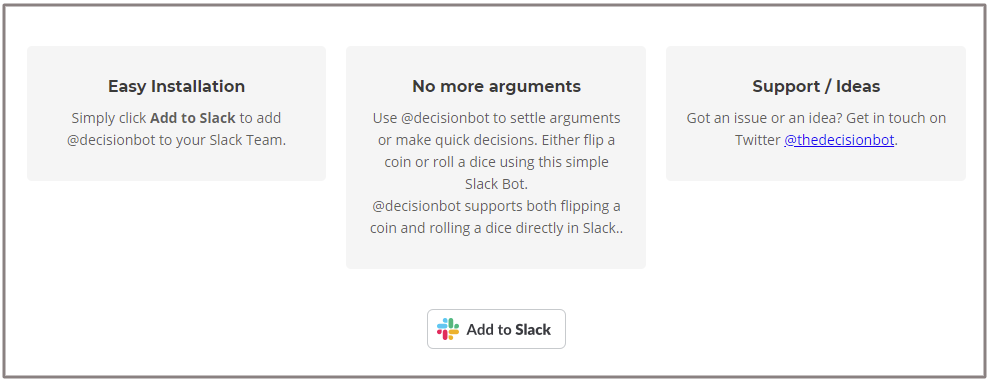
Need to make a team decision? Who makes the next coffee, where to go for lunch or who’s going to answer the phone. Use Decision Bot to get an instant decision. Use /coinflip or /diceroll to get an instant decision.
Trending Bot Articles:
2. Automated vs Live Chats: What will the Future of Customer Service Look Like?
4. Chatbot Vs. Intelligent Virtual Assistant — What’s the difference & Why Care?
6. Dog Facts
Add this app to your team’s Slack and use the available slash command (A Slack slash command /dogfact) to retrieve a fun fact about dogs!
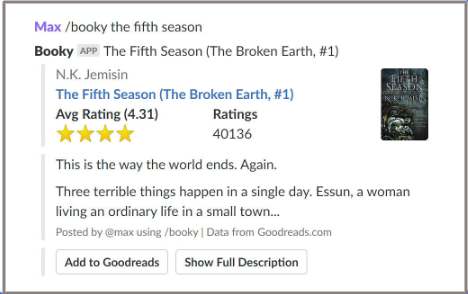
7. Booky
Booky lets you quickly share books read with your team. by using /booky you can search for books and post their descriptions allowing you and your team to add it to your Goodreads shelves right there in Slack!
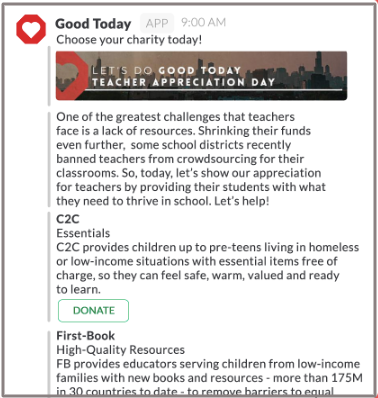
8. Good Today
Good Today is the easiest way for teams to making giving apart of their company culture. Engage, educate, and empower your employees to have a say in where your company’s charitable dollars go.
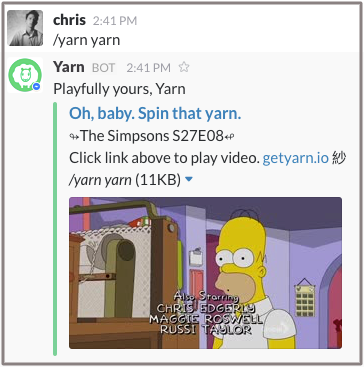
9. Yarn
Find video clips from your favorite movies, TV, and music videos. Enter a quote or lyric and Yarn automatically returns a short video clip that matches.
10. CoDo
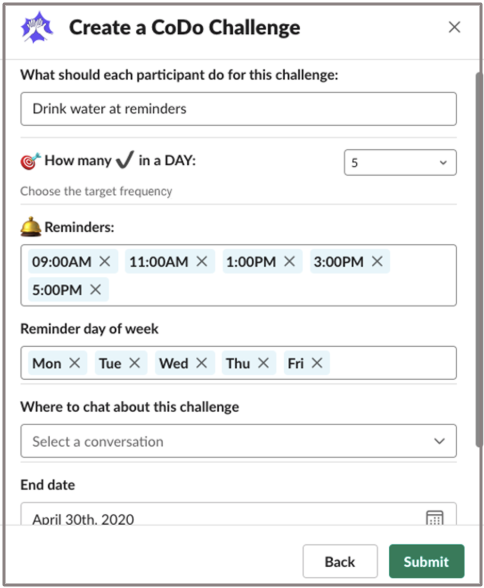
CoDo for Slack is a social motivation tool to help persistent daily and weekly achievement by making group challenges, tracking, and celebrating the progress with colleagues.
11. Lunch Buddies
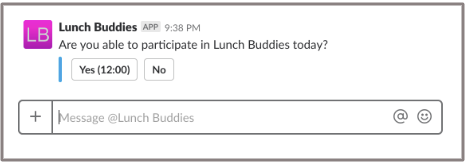
This app helps build strong team connections by scheduling participants into random groups for lunch. To initiate the process, invite the Lunch Buddies bot to any channel and say @Lunch Buddies create.
12. Snack
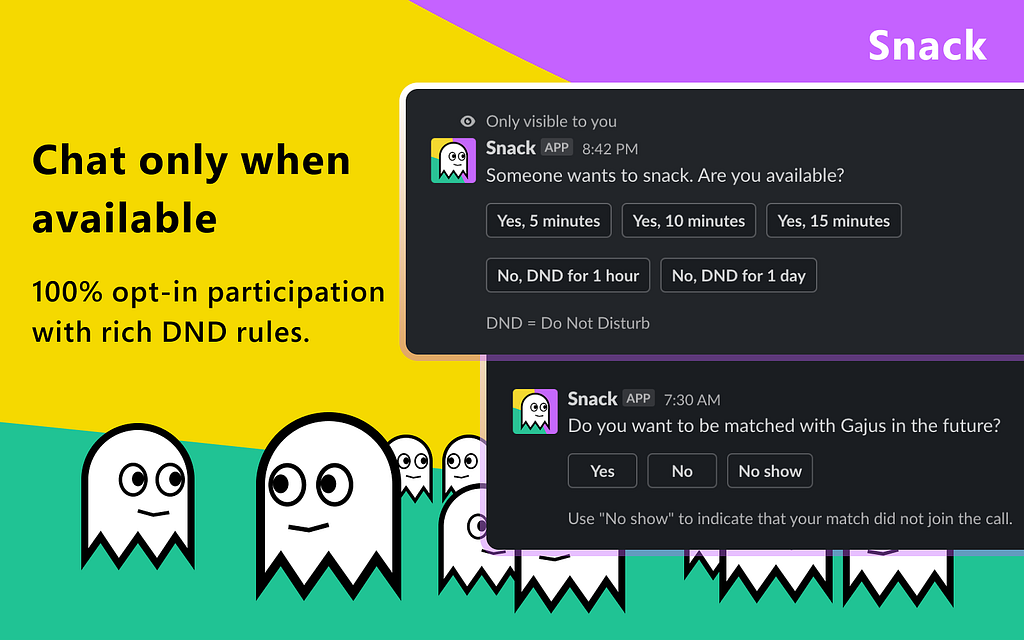
Snack is a 100% opt-in, distraction-free way for remote teams to have virtual coffee breaks. Distributed teams use Snack to build authentic relationships, promote collaboration and share knowledge within Slack.
13. ChatFox
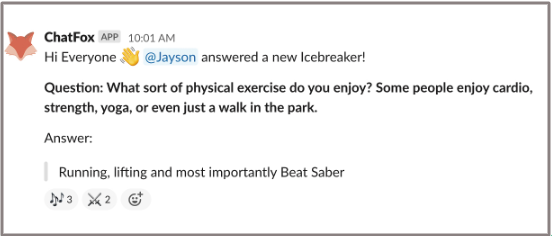
Remote teams that only engage through projects, tasks and deadlines do not foster a culture around shared values and goals. Use ChatFox to incentivize your team to have more meaningful conversations based on shared values.
Do you have any other fun slack bots? Please share here.
Don’t forget to give us your 👏 !
13 Fun Slack Bots to Bring the Human Connection to Your Workspace was originally published in Chatbots Life on Medium, where people are continuing the conversation by highlighting and responding to this story.
-
Building a Chatbot for Mental Health Awareness and Education
Let’s leverage technology for good.
Photo by Andy Kelly on Unsplash 💬 Chatbots have exploded in growth over the past few years, and for good reason.
According to Forbes, around 60% of millennials have used chatbots, and over 70% of them had a positive experience. On top of that, Accenture reported that 57% of their surveyed executives noticed that chatbots had huge Returns on Investment with minimal effort. Lastly, chatbots have huge potential for scale, and personalized experiences.
In recent years, chatbots have impacted several industries from retail, banking, finance, healthcare, to energy, investment has skyrocketed.
Which got me thinking, to broaden my knowledge within the realm of AI and chatbots, what problems can I solve using the power of tech?
Lo and behold, a mental health awareness chatbot.
Before we get started with the technical breakdown of the chatbot, I actually want to first provide some context on mental health specifically.
🧠 Here’s Why Mental Health Matters.
Photo by Nik Shuliahin on Unsplash For starters, mental health disorders and problems affect an estimated 792 million people worldwide.
That’s basically 1 in 10 people globally.
In Canada, where I’m from, the problem is even worse, as 1 in 5 Canadians experience a mental illness or addiction problem every single year, with 1 in 2 experiencing one by the time that they reach the age of 40.
70% of the mental health problems also begun during childhood or adolescence, and youth experiencing the highest rates than any other age group. The reason that this is such a big problem is that mental illness can reduce life expectancy by 10–20 years.
Furthermore, the negative economic effect in Canada alone is estimated to be around $51 billion CAD/year attributed to the “healthcare costs, lost productivity, and reductions in health-related quality of life.” [3]
At the end of the day, based on my analysis and research, some of the root causes of the problems that exist can be attributed to:
- the lack of access to services (due to the lack of funding, lack of accessibility w/ not enough adequate care)
- the stigma associated with mental health, creating an inability to voice concerns and preventing people from getting the help that they need
- the lack of systems to support those that need help and assistance
For my project, I decided to tackle the last 2 out of the 3 root causes and attempt to develop a solution to fill the gaps.
Here’s how I did it.
👨💻 Technical Breakdown
👋 Step 0: Preparation and Learning Resources
Since I was new to building chatbots, to get myself started, I consulted a few key resources:
- An article by George Kassabgi, on “Contextual Chatbots with Tensorflow”
- A video series by the YouTuber, Python Engineer
- Datacamp’s Course Track on Natural Language Processing (NLP) with Python
These were absolutely golden and extremely helpful along the way.
After I had a decent understanding of the theoretical standpoints, I started to break down the project into a few key steps, which are broken down in detail down below.
Step 1: Transforming Conversational Intents and Definitions to a Pytorch Model
Step 2: Building a Chatbot Framework for Response Processing
Step 3: Creating a Graphical InterfaceWith the theoretical understanding in place, I got started by opening Visual Studio Code and created a few core files that I knew that I’d need.
- app.py (for the graphical user interface)
- chat.py (for building a chatbot framework)
- intents.json (helping the computer understand the intents)
- model.py (a few lines of code integrating the deep learning components)
- nltk_utils.py (for the natural language processing with nltk and other libraries)
- train.py (for the training of the program itself!)
If you’d like to check out the code, the full repository can be found on Github by following this link!
Trending Bot Articles:
2. Automated vs Live Chats: What will the Future of Customer Service Look Like?
4. Chatbot Vs. Intelligent Virtual Assistant — What’s the difference & Why Care?
🚇 Step 1: Transforming Conversational Intents and Definitions to a Pytorch Model
A chatbot framework requires structures where conversational intents are defined. A simple and clean way to go about this is to use a JSON file:
Every intent contains:
- a tag (a label/name that you choose)
- patterns (sentence patterns for the text classifier in the neural network)
- responses (the answer that you would like the machine to give when done)
Now that we’ve handled all of the conversational intents through the intents.json file, we can move towards the next step, where we handle the initial NLP pre-processing.
The first thing to do is import the essentials.
Once that’s taken care of, the next task is organizing the documents, words and classification classes.
Throughout that process, I created a list of sentences that could then be broken down further into a list of the stemmed words, with each sentence associated with an intent (a class).
After the natural language processing is handled, I followed the tutorial and proceeded with building out the deep learning model, with Pytorch. For more information on how Pytorch works and the Deep Learning concepts, it’s able to apply, check out this article series.
After the model was built, I continued the tutorial to proceed and build out the training code as shown down below.
The purpose of this code down below is to load the intents.json file, apply the natural language processing code, create the training data, and begin training the model.
Now that the hard part’s done, let’s move towards the next section where I break down the chatbot response framework.
🏗 Step 2: Building a Chatbot Framework for Response Processing
The next step is to build out the framework for the chatbot, with the code displayed down below:
Based on the tutorial and other resources I consulted, I then structured the code and wrote my model the way I did to solve the classification problem of gathering the intent from the user intent, through classification (of the tag that the statement falls under, and thus picks a response from that).
💻 Step 3: Creating a Graphical Interface
Lastly, as a bonus, the final piece of the puzzle involved creating a quick graphic interface with Python, and Tkinter, connecting the code with a place that the user could directly click to open.
🔚 Final Thoughts
While this was one of my first Natural Language Processing projects, this was definitely a blast! I was able to play around with my new virtual friend Aura a few times, and I definitely want to build upon this, hopefully turning this into an actual startup to solve the huge gaps within mental health.
Lastly, to end off, I wanted to provide a few quick shoutouts to Darien Schettler, Victor Sami, Vitor Falleiros, Bryan Horowitz, and Afshin Nensi, who were all extremely helpful throughout the process, by providing feedback on my work, and/or sharing some of their thoughts surrounding the mental health chatbot space.
The full video is coming really soon, so keep your eyes peeled for that!
Don’t forget to give us your 👏 !
Building a Chatbot for Mental Health Awareness and Education was originally published in Chatbots Life on Medium, where people are continuing the conversation by highlighting and responding to this story.
-
Bots v/s live chat | What does your business need?
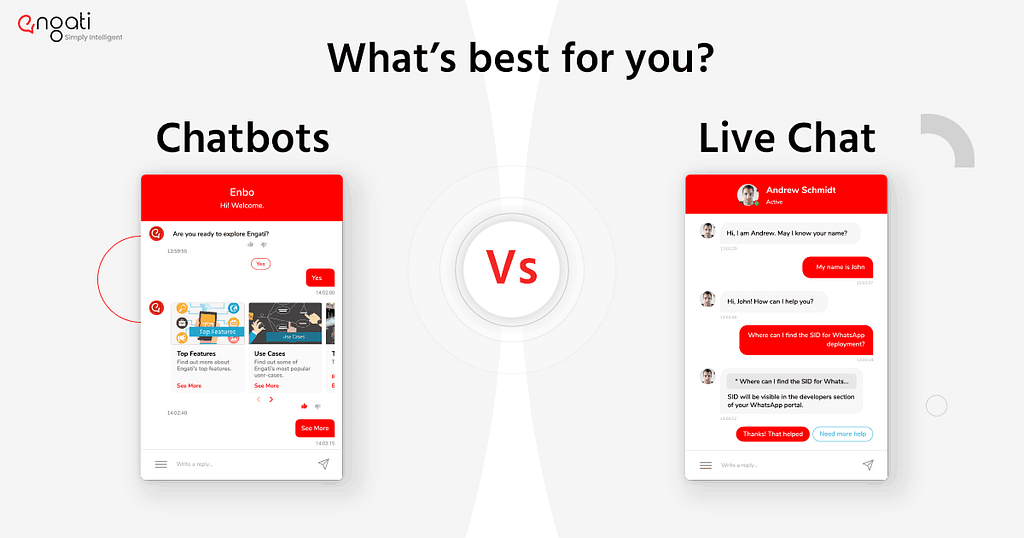
If you’re reading this, chances are that you’ve decided to engage your customers more effectively. But you’re confused. Chatbots and live chat both seem like they could help you. But you want to give your customers what they deserve — the very best option.
Allow us to help you with that.
We’re going to walk you through both of these options and then help you pick the perfect solution for your business.
Are you ready? Let’s get started!
Chatbots
Chatbots help you scale up your conversations by automating them. These bots can either be pre-programmed or they can run on artificial intelligence, allowing them to handle increasingly complex conversations.
They have the capability to handle around 80% of our inbound customer queries and eliminate wait times. To make it even better, a single chatbot can engage your customers around the world in multiple languages.
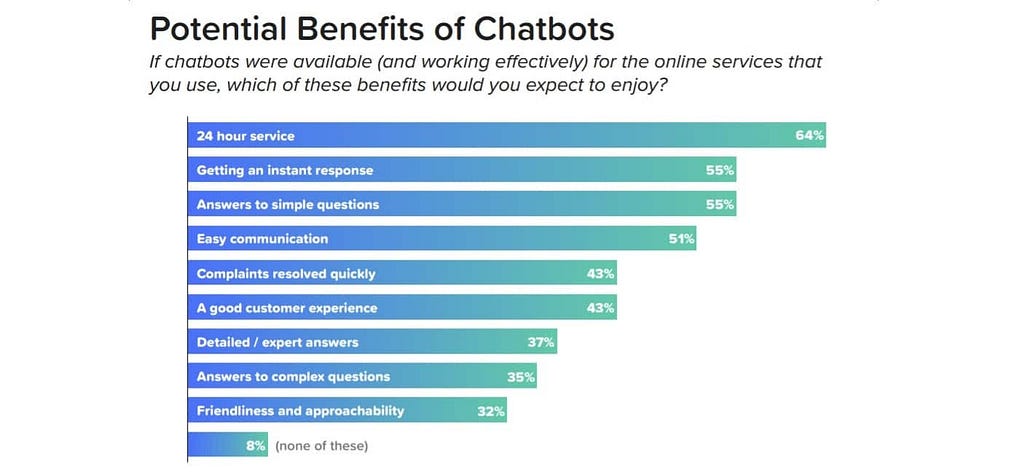
Benefits of chatbots (Source: AI Multiple)
Live Chat
Live chat empowers you to answer your customer’s most complicated questions without delays. It is phenomenally better than phone calls for one simple reason — your agents don’t need to take care of one customer at a time and keep everyone else waiting.
It spares your customers the immense frustration of waiting on hold, or worse, navigating through an IVR.
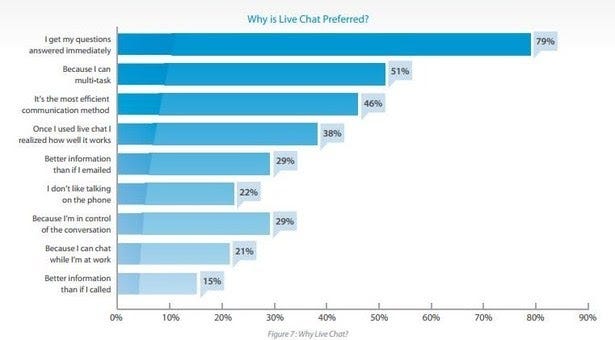
Why customers like live chat (Source: Econsultancy)
Chatbots v/s live chat: the face-off
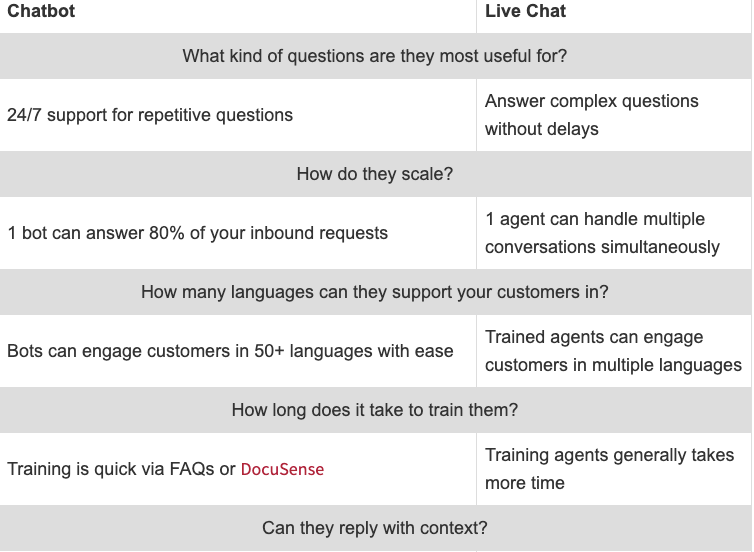
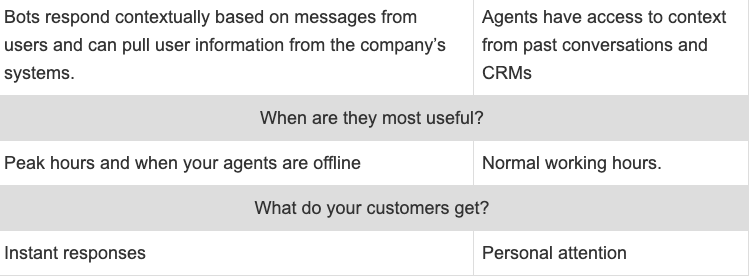
Now that you know what makes chatbots and live chat so different from each other, let’s get into the benefits that each of them has to offer.
The key benefits of chatbots
1. 24/7 support
Chatbots are working all day, every day. They don’t take breaks, they don’t fall sick, and they don’t go on vacation. They’re always online, continuously taking care of your customers and answering their questions.
That means that your customers always get an instant response and don’t have to sit and wonder whether you’re concerned about them at all.
2. Reduced costs
Let’s face it. Most businesses look at Customer Support as a cost center.
We could argue that high-quality support is more of an investment than an expense. We could show you how treating your customers right and taking care of them keeps them coming back to your business. We could even elaborate on how fantastic experiences make your customers tell everyone in their network about you.
Instead, we are telling you that you could create these amazing experiences and increase your customer lifetime value while lowering your support costs.
And yes, you can do that with chatbots.
You don’t need human agents to waste their time on all the repetitive queries that flow in. It’s a waste of their time and your money.
Reports have shown that engaging intelligent chatbots can cut your support costs by as much as 29%.
Trending Bot Articles:
2. Automated vs Live Chats: What will the Future of Customer Service Look Like?
4. Chatbot Vs. Intelligent Virtual Assistant — What’s the difference & Why Care?
3. Personalization
By pulling information from past conversations and from your internal systems (if integrated with them), bots can get a better understanding of your customers. The bot now knows your customers’ interests and needs and can deliver recommendations and create experiences that are hyper-personalized for individual customers.
4. Speed and accuracy
Bots help you engage with your customers faster, without delays. But that’s not all. Powered by artificial intelligence, these chatbots increase the accuracy of your responses and reduce the scope for human error.
Explore this article to understand chatbots and their benefits in detail.
The main advantages of live chat
1.Real-time responses to the most complex queries
Intelligent chatbots help you answer 80% of your customer queries. But the remaining 20% need human attention. And you can’t force customers to wait for an email. Making them call you up and wait on hold isn’t the best idea either.
Live chat empowers you to answer these questions without any delays, minimizing customer frustration.
2. The personal touch
Live chat allows you to have 1:1 conversations at scale. A good agent could even have 7 of these conversations simultaneously. Your customers get the personal touch, without having to wait.
That allows you to develop real connections with your customers and get to know them better.
3. Increased trust
90% of customers in an ATG study said that a live chat widget makes them trust a website more. It makes them feel like they won’t be left fending for themselves if they do end up having issues after making a purchase.
And when your live chat system is integrated with your CRM, your agents will be able to support and guide them more effectively. Your customers will start seeing your agents as trusted advisors.
4. Convenience
Scouring through your entire website isn’t the most convenient thing for your customers. If they see a live chat widget, however, they can get all the answers they need with ease.
It’s more convenient for your agents too. With a one-view inbox, they no longer need to hop across multiple chat channels to engage with your customers.
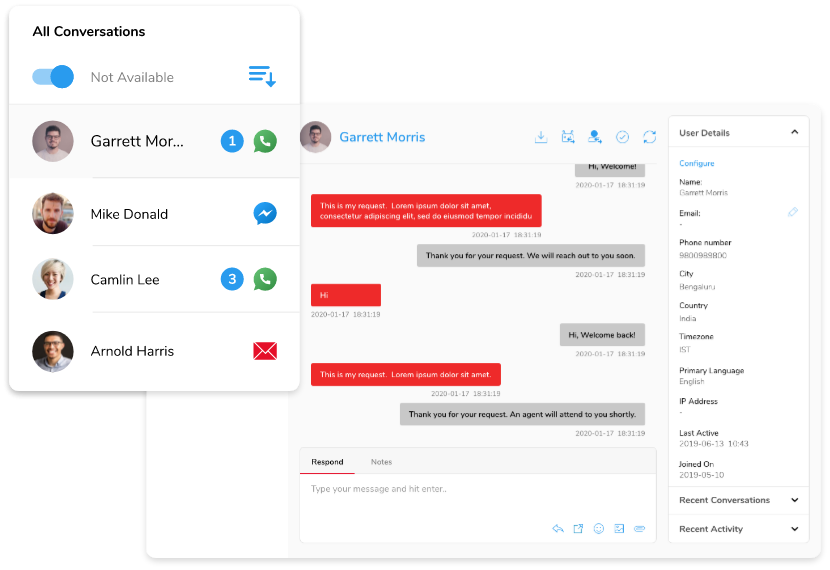
One-View inbox If you’d like an in-depth breakdown of the benefits of live chat, check this out!
What does your business need: Chatbots or live chat?
Both chatbots and live chat have their own benefits. But what’s going to be the perfect customer engagement solution for your business?
What’s going to prove more advantageous to you — automation or the personal touch?
Cognizant has reported that 69% of their survey respondents prefer chatbots due to their instant replies. Forrester’s research shows that 44% of customers believe that live chat is the best feature an e-commerce website can have.
At this point, the real question is, ‘Do you really need to choose just one?’ What if you could have a solution that offers both in a single, unified module?
That’s where Engati comes into the picture.
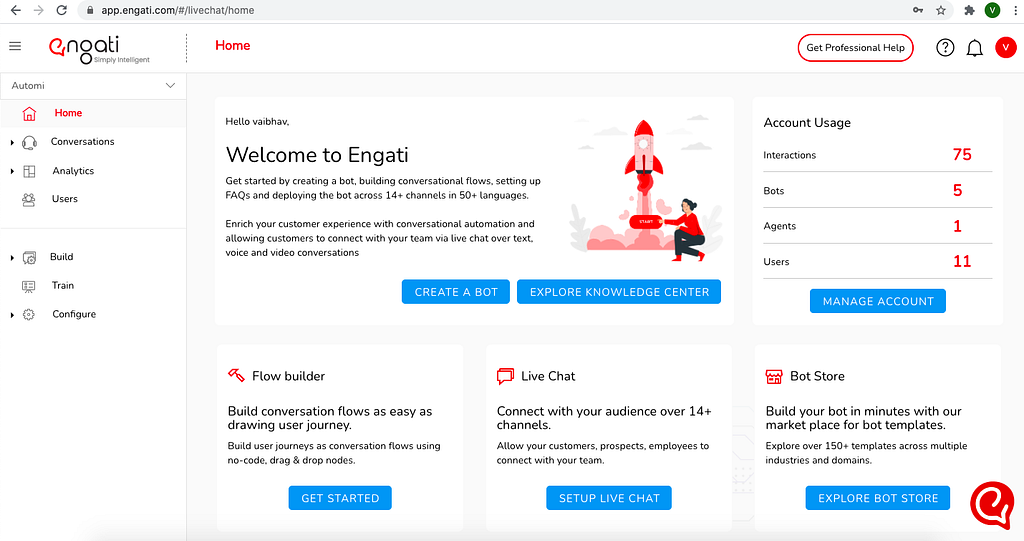
Chatbots and live chat
Unified module
We have combined our chatbot and live chat solutions into a single module to ensure that you get the best of both worlds.
You get the speed that chatbots offer, along with the personal, human element that live chat brings to the table. All that, in one solution. And you don’t even need to set them up separately. Your agents can be onboarded while you’re setting up your chatbot.
It even allows your live agents to take over conversations from your bot with ease. And if your agents happen to be unavailable, your bots can take over from them.
After a live chat session, you can even use a bot to effortlessly collect feedback about the conversation.
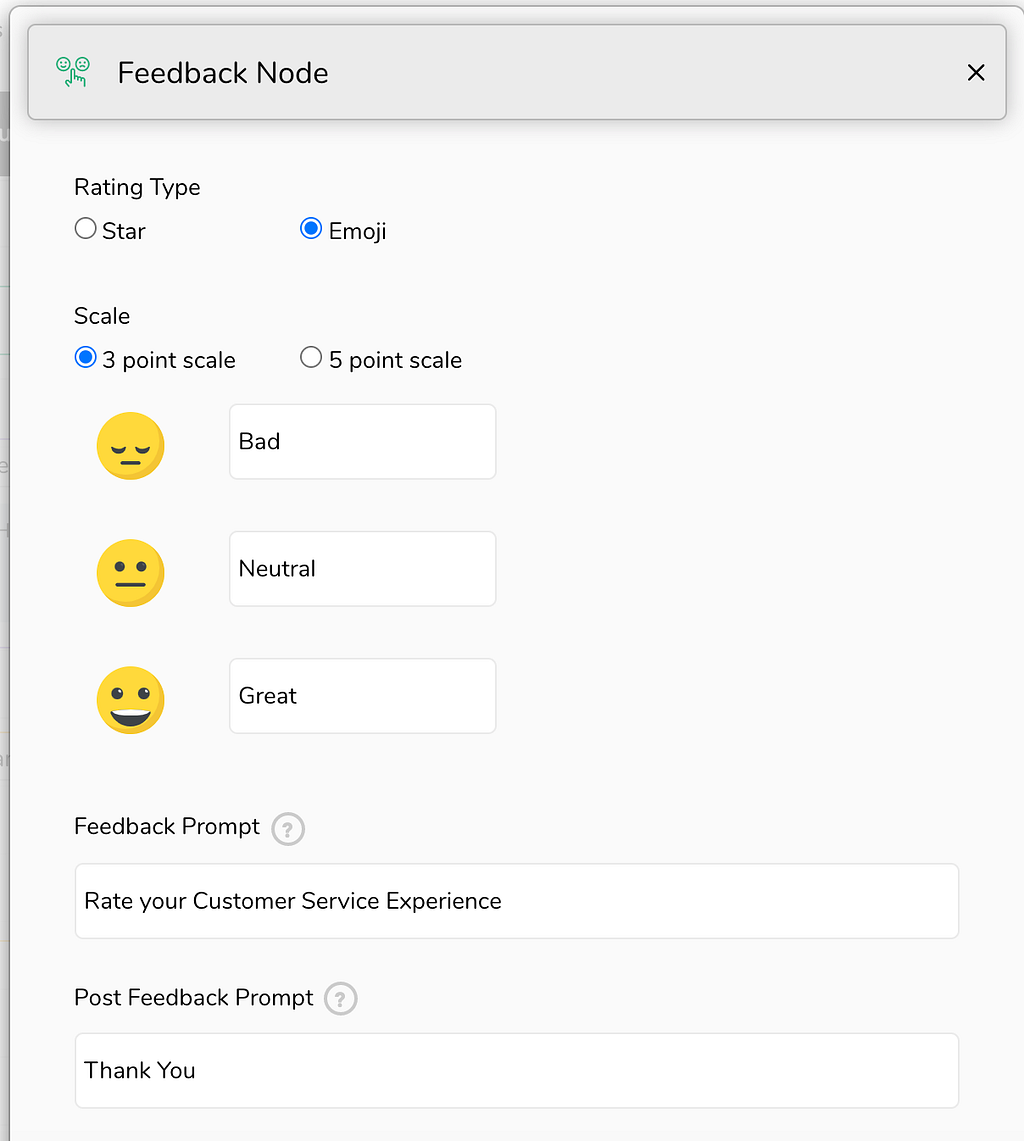
Collect feedback after the conversation TL;DR
Chatbots allow you to serve all your customers quickly and efficiently, with negligible costs. They also help you personalize your customer engagements to a large extent.
Live chat’s main advantage lies in the fact that it empowers you to answer your customers’ most complex questions without delays.
But the good thing is that you don’t need to choose just one. You can get both, in a single solution.
A combined solution like the Engati platform allows you to seamlessly switch between bots and live chat. It empowers you to give your customers instant responses, while also engaging them in real, human conversations!
Explore Engati’s unified chatbot and live chat solution today!
Don’t forget to give us your 👏 !
Bots v/s live chat | What does your business need? was originally published in Chatbots Life on Medium, where people are continuing the conversation by highlighting and responding to this story.
-
What are chatbot flows? How do you build them?
Your chatbot flow is the most critical factor when it comes to creating a bot that feels natural. But how do you make one that takes into account every possible scenario?
In this article, we’re walking you through the art of building chatbot flows that feel right. Let’s get started!
What is a chatbot flow?
A chatbot flow is a structure that determines how a conversation will take place, taking into account the questions your chatbot would ask and the various replies that a user could provide. A chatbot flow is a series of paths that a user’s responses could trigger.
Each path would consist of nodes that either display, request, or process information. Some of these nodes could even be used to integrate your chatbot with third-party software.
Questions to answer before building your chatbot flows
1. What is your chatbot’s purpose?
Determine what you intend your chatbot to do. I’m not saying that your bot has to have only one goal. It can have multiple objectives, but you need to outline them clearly. This is the foundation upon which you will build all your chatbot flows.
Do you need it to drive sales? Maybe you need it to schedule appointments. Perhaps you want to use it for 24/7 customer service.
Whatever your goals are, you need to define them clearly.
2. Who are your users, what do they need, and how do they behave?
Identify who your chatbot’s primary users will be. Are these going to be prospects who are just hearing about you? Are they new customers who haven’t quite understood how to best use your offerings yet? Are your bot’s users customers who face sudden issues with your offerings and need help?
There could be many other types of users. You need to identify your primary customers, the ones you seek to serve the most through your chatbot.
Now, what are the most common issues they face? What do they already ask your sales and support teams about the most? These are the issues that you need to train your bot on the most. Your bot needs to be able to resolve as many of these queries as possible. In case some of these are too complex for the bot, you need to make it possible for your chatbot to transfer customers to a live agent.
Finding out how your users most commonly behave is also very important for building chatbot flows. Understand how they navigate across your website, which sections leave them confused, and where they would be most likely to ask your bot a query.
3. Who is your bot?
You don’t want to leave your customers talking to a dull bot. You need to give your bot a personality, preferably one that matches your brand. Give your bot a persona and a story.
For example, when George Hanshaw, Director of E-learning at Los Angeles Pacific University, was building a chatbot for a nursing course, the team built the bot based on a colleague’s personality.
This colleague had earned the name Agent R because she was always going on trips to distant lands before the pandemic and coming back with fascinating stories. They lent her personality to the bot and even created an avatar that wore a nurse’s outfit and sunglasses to display a cross between a nurse and an agent.
Giving your bot a personality makes it vibrant. It even fascinates your users. So, what’s your bot going to be like?
After you answer that, it’s time to get started with the chatbot flows.
Trending Bot Articles:
2. Automated vs Live Chats: What will the Future of Customer Service Look Like?
4. Chatbot Vs. Intelligent Virtual Assistant — What’s the difference & Why Care?
How do you make a chatbot flow?
Sure, you could dive straight into the platform and wing it. But we’d suggest preparing in advance. Get out a pen and a paper (or a whiteboard) and design a rough flow chart for your conversations.
You don’t need to fill in the actual responses just yet. Just keep the general purpose of the message in mind.
Once you have a rough draft, you can finetune it on a tool like draw.io. You can get a little bit more specific in this step.
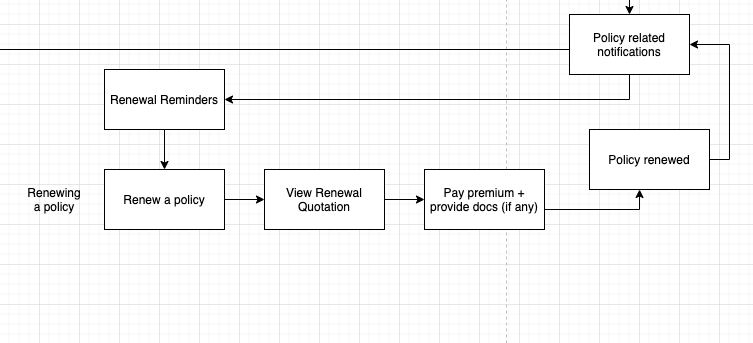
How to make a chatbot flow
Once you’re done with that, you can replicate it on Engati’s no-code visual flow builder.
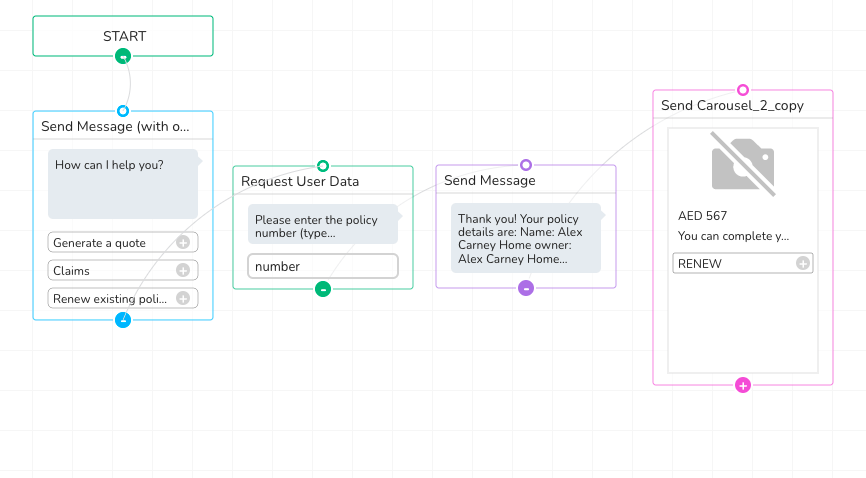
Making the flow on Engati’s chatbot builder
Fill in rough messages in the nodes for now. Don’t spend too much time here; you can always fine-tune them after your flow is ready.
While you could build your entire chatbot flow in a single path, that isn’t the best idea. Creating separate paths for different scenarios will make it easier for you to understand your flow and edit it in the future. These paths can be connected using the Trigger Path node.
Once you’re done making your flow, proceed to polish the messages in the nodes. Make sure that they match your bot’s personality.
Now, it’s time for your to test your flow. You can test individual paths by pressing the play button on the top left corner of your path builder.
Building your chatbot flow is not a one-and-done task. You need to keep improving it as your customers, and your business evolve.
You can train your chatbot in two different ways on Engati.
First, you can upload FAQs either individually or in bulk.
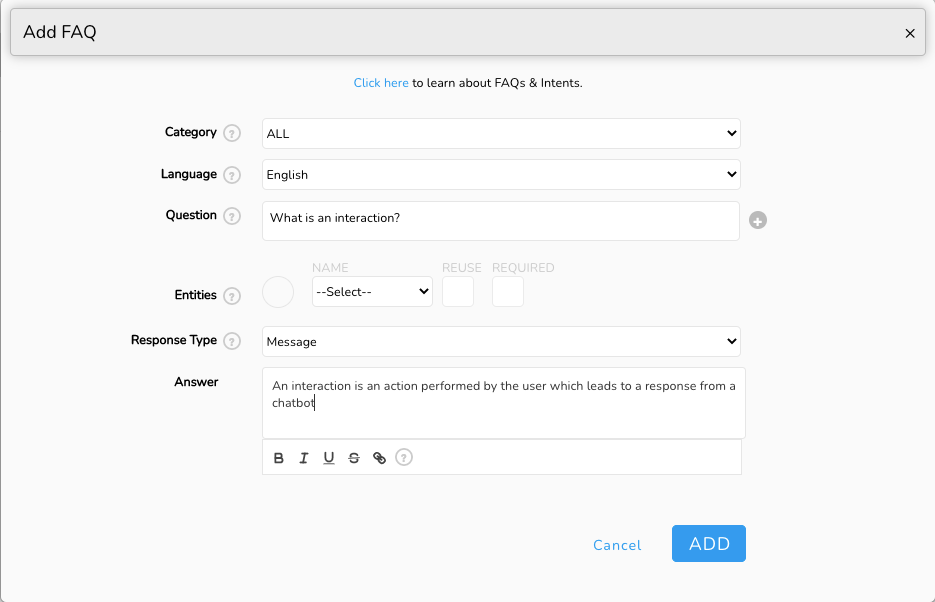
Uploading individual FAQs
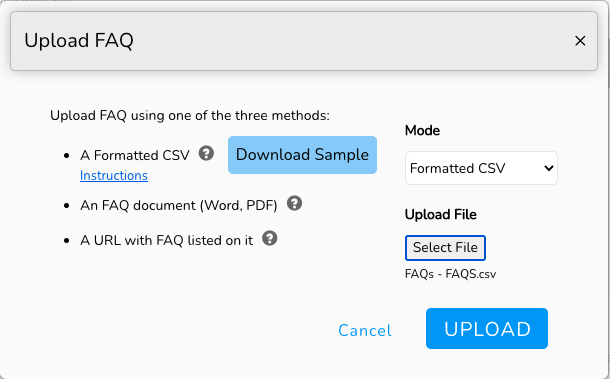
Uploading FAQs in bulk
However, you don’t need to upload these FAQs manually. With Engati’s DocuSense technology, you can automate the training process. All you need to do is upload your documents. Your chatbot will use cognitive search to parse through your documents, 12 pages every 8 seconds. It will pull answers directly from your documents and deliver them to your customers.
And the best part? You don’t even need to format your documents into questions and answers.
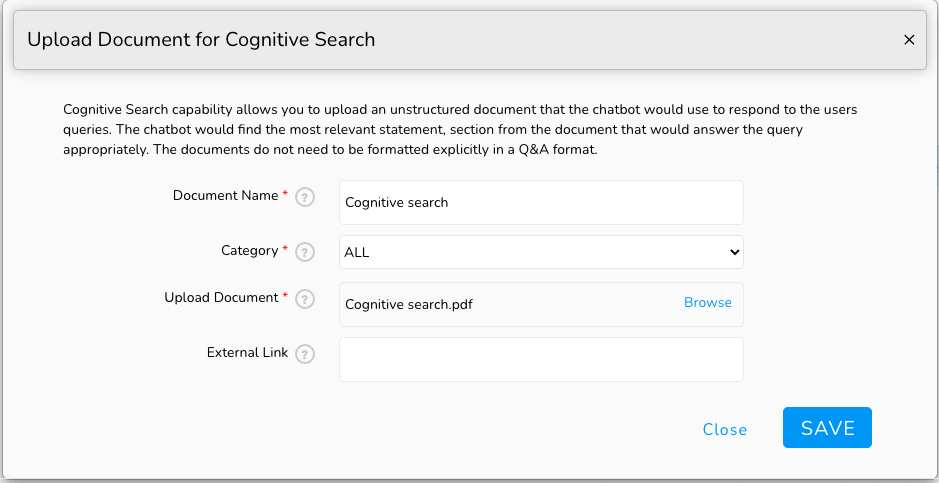
Train your bot via DocuSense
Now that you know how to build a chatbot flow, it’s time to address another question.
How do you end a chatbot flow?
Too many companies allow their chatbot flows to end abruptly after a user’s questions are answered. That’s far from ideal.
It feels unnatural. Worse, it looks as though you though care enough about your customers.
Make sure to conclude the conversation by thanking your users for giving you the opportunity to help them. And don’t forget to let them know that you’re always there for them, just one message away.
A list of nodes that you can use in your chatbot flow
These nodes can be segmented into four categories:
- Display Information Nodes
- Data Input Nodes
- Processing Nodes
- Integration Nodes
1. Display Information Nodes
These nodes are used to present information to the end-user.
- Send Message Node: This node is used to send basic text and emoji messages to your users.
- Send Message With Options Node: Use this node to send a message with predefined options for your bot users to choose from.
- Send Image, Video, and Audio Nodes: These nodes allow you to make your bots more interactive by sending images, videos, and audio files.
- Custom Card Node: With this node, you can create your own custom code via HTML and CSS
- Send Carousel Node: This node helps you send interactive messages with images, text, subtext, links, and buttons. It is primarily used to display offerings.
- Randomize Messages Node: Use this node to send messages from a particular set at random.
2. Data Input Nodes
You can use these nodes to collect information from end-users.
- Feedback Node: This node allows users to provide feedback in the form of ratings.
- Identity Node: Use this node to collect user input in an input form and add an authentication validation
- Request User Data Node: It enables the chatbot to read inputs and save them as attributes or entities. It is beneficial for generating leads and personalizing experiences.
- Slider Node: It allows the user to provide inputs visually using a slider.
- Form Node: This node gives you more control over the validations of each field. It’s critical for lead generation and data capture.
- File Upload Node: This allows your users to upload files to your bot. They do this either as a public upload, a private upload, or a direct upload.
3. Processing Nodes
These nodes help you handle & process information and make conversation flow branching decisions.
- Script Node: It allows you to insert custom Javascript code to get executed along with the path. This helps you build complex flows with logical operations, data processing/transformation, etc., without having a separate backend infrastructure.
- Filter FAQ Node: This allows users to limit the category/categories of FAQs addressed in a path.
- Send Email Node: You can configure an email node anywhere in the bot and send out notifications to your users.
- Pause Node: Use this to slow down the conversation, allowing the user to process the information you have sent.
- Send SMS Node: It allows you to send SMS notifications to your users.
- Trigger Live Chat: This node routes the conversation to one of your live agents.
- Trigger Path Node: Use this node to send your user down another path.
- Subscribe/Unsubscribe From Campaign Nodes: This allows your users to opt-in or opt-out of the campaigns you’re running over your chatbot.
- Decision Node: With this node, you can direct the chatbot flow based on the user and the bot’s interaction.
- Webview Node: This is used for use-cases that involve a third-party web interface. It has inbuilt parameters for Stripe and Google OAuth.
4. Integration Nodes
These nodes allow you to extend your marketing and support systems by integrating them with Engati.
- Salesforce: Integrate Salesforce with Engati to make it easier for your bot and your agents to handle tickets.
- Zendesk: Use Engati with Zendesk to create tickets, retrieve ticket details, and update them directly over your bot.
- Freshdesk: Like Zendesk, integrate Freshdesk to create tickets, retrieve details, and update them from your chatbot.
- Google Sheets: This node allows your bot to pull data from the sheets, add new data, and modify existing data.
- Google Calendar: It allows your bot to schedule appointments, demo calls, time slots for activities, and team meetings.
- Zapier Integrations: You can use Zapier to integrate Engati with any of the cloud services they support.
- JSON API: Engati allows you to use JSON REST APIs with the GET, POST, and PUT methods.
Best practices for building chatbot flows
1. Inform users that they’re chatting with a bot
Do not mislead users into thinking that they’re chatting with a human. Let them know that they’re conversing with an intelligent bot, and if need be, you can route them to a live agent.
2. Cut your messages short
You wouldn’t want to read a message that looks like a massive chunk of text. Don’t force your customers to do that either.
3. Give your customers a chance to reply
Don’t send too many messages in rapid succession. Give your customers a chance to read them and respond.
4. Collect feedback
Ask your customers how they felt about their interaction with your bot. You can use the feedback node to collect ratings. You can even ask them for subjective feedback. This will not only help you improve your chatbot flow, but it will also make your customers feel like you care about them.
5. Enable small talk
Don’t assume that your customers just want to talk business and keep it to the point. Your bot should be able to respond to questions like “How are you doing?” or “Good morning.”
All you have to do is go to the Conversations section in the Configure tab and enable small talk.
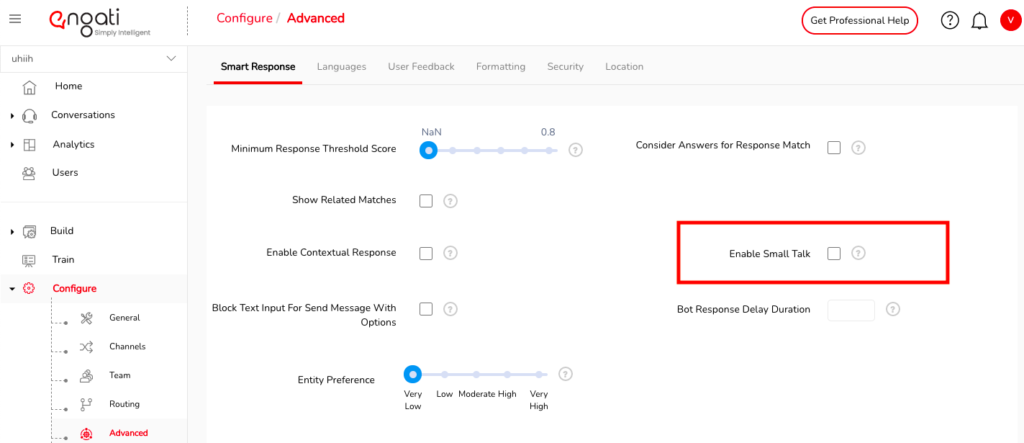
Engati’s chatbot builder screen for enabling small talk There you have it. Everything you need to build chatbot flows that your customers will love. Now it’s time to give it a shot yourself. Try Engati’s visual chatbot flow builder today!
Don’t forget to give us your 👏 !
What are chatbot flows? How do you build them? was originally published in Chatbots Life on Medium, where people are continuing the conversation by highlighting and responding to this story.